Things to do
20-
Anakena
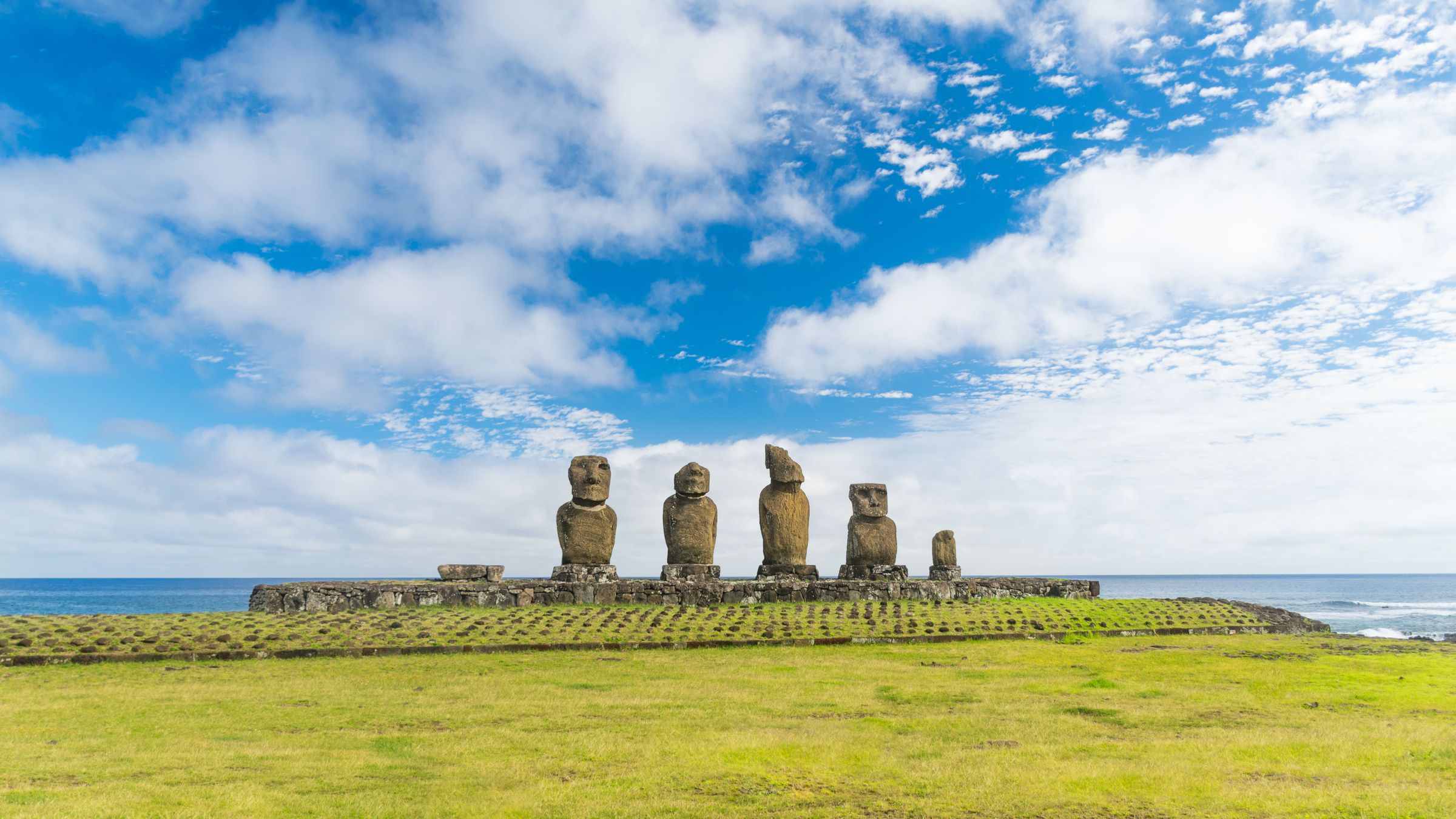
On an island walled by sea cliffs, Anakena is the bay where you can swim, with moai standing on the dune behind your towel.
View more → -
Rano Kau
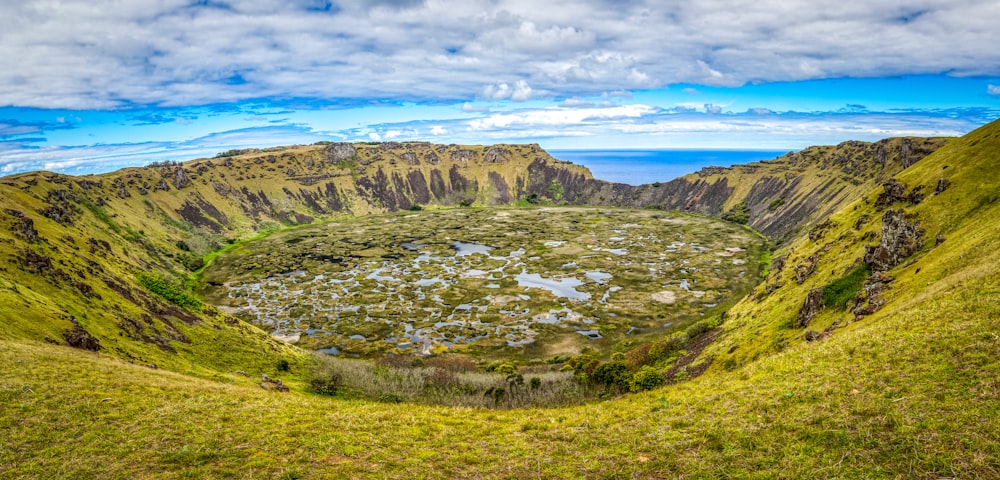
Two sights share one crater rim here, and you see both in a morning: a lake hidden under floating reed, and Orongo, the stone village of the Birdman ceremony.
View more → -
Rano Raraku
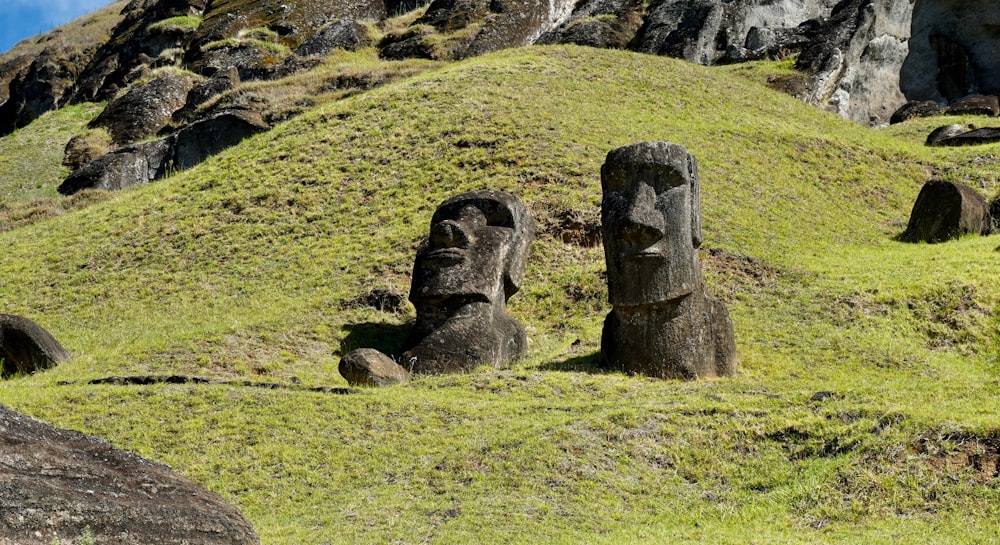
From the outer slope, on the hillside that supplied almost every moai on the island, you walk among statues still joined to the rock or buried to the neck. Then you climb over the rim of Rano Raraku to the reed-ringed lake inside.
View more → -
Ahu Akapu
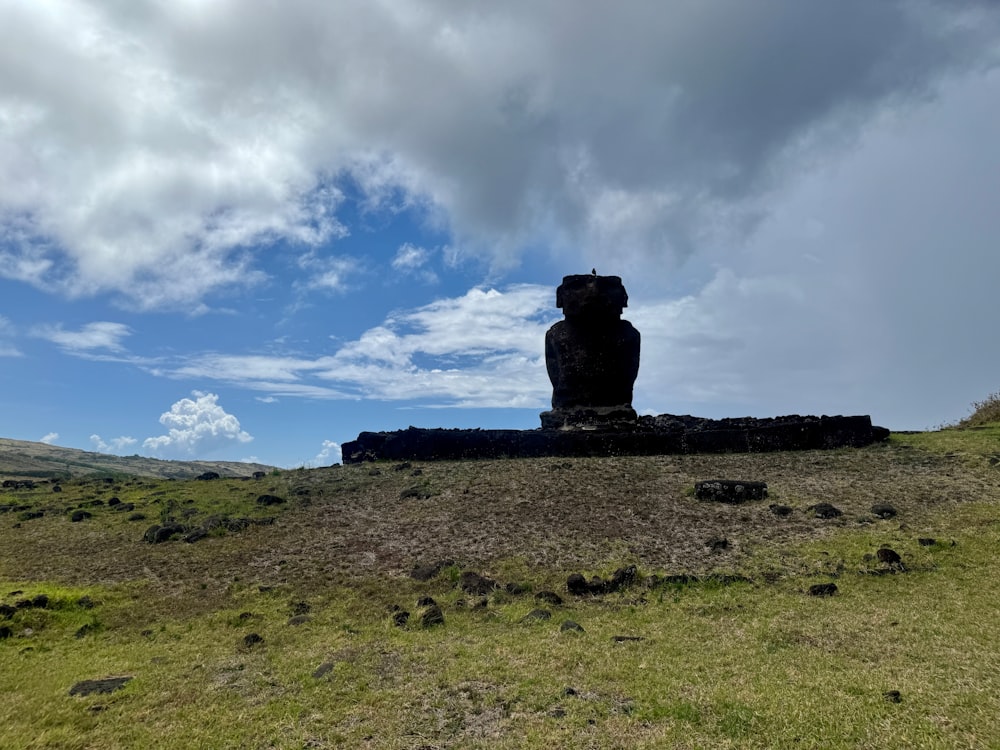
A second sunset platform a short walk from Tahai gives you somewhere to stand when the lawn there is full.
-
Ahu Akivi
Of all the platforms, this one puts moai among fields instead of beside the surf.
-
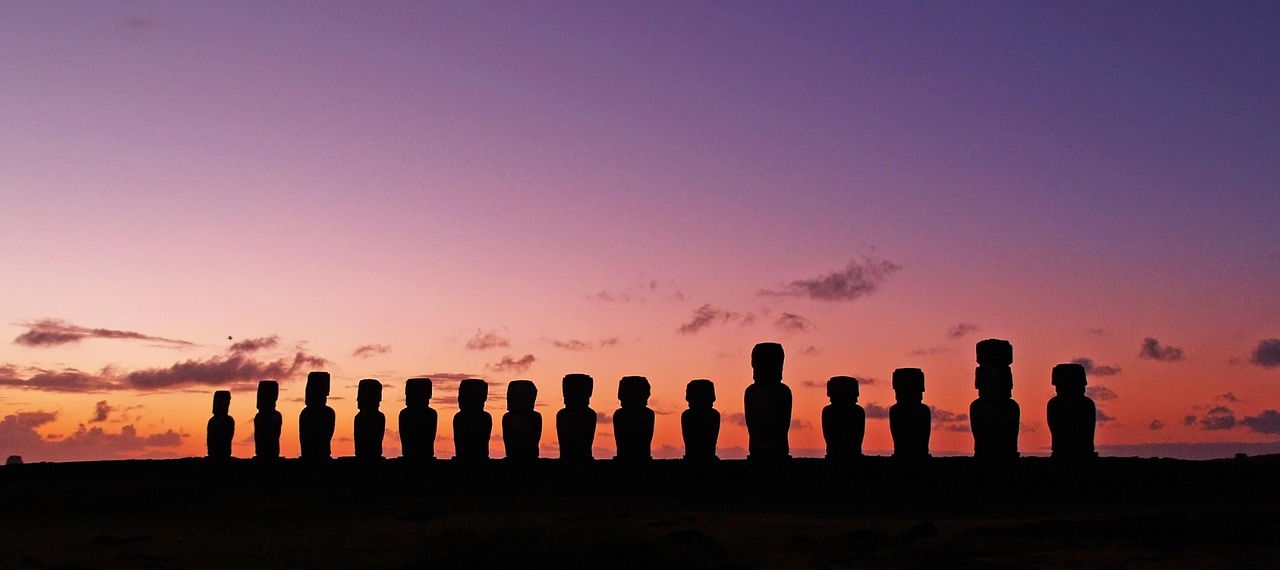
Ahu Tongariki
You watch the sun rise behind the whole row, the moai black against the sky until the light reaches their faces.
-
Ahu Vaihu
You see a platform set at the water's edge, with the road behind you and open ocean ahead.
-
Ana Kakenga
You crawl through a dark lava tube, and the tunnel ends at openings in the sea cliff, high above the ocean.
-
Ana Te Pahu
You walk into a lava tube by the light you carry, the only way to see inside.
-
Explora Rapa Nui
Book it if you want meals and daily guided outings arranged, outside Hanga Roa.
-
Hangaroa Eco Village & Spa
A large hotel inside Hanga Roa suits you if a cabin or guesthouse does not.
-
Museo Antropológico Padre Sebastián Englert
Go before your first day at the sites, and every platform you see afterwards makes more sense.
-
Orongo
Come for the birdman story told on the ground where it happened, with Motu Nui in plain view below.
-
Ovahe
After Anakena's wide bay, this small cove under the cliff is the north coast's quieter sand.
-
Poike
Once you have seen the moai, a guided crossing here gives you a long day over open headland.
-
Puna Pau
Every red topknot you see on the platforms around the coast was cut from this crater.
-
Tahai
Sunset here turns the moai into silhouettes against a sky going orange over the sea.
-
Te Pito Kura
You see a fallen moai at full length here, face down beside its platform.
-
Terevaka
Climb it and you see the whole island at once, coast to coast and out to open sea.
-
Vinapú
Stop here on the south coast road and compare its walls with any other platform you have seen.