St John's Co-Cathedral
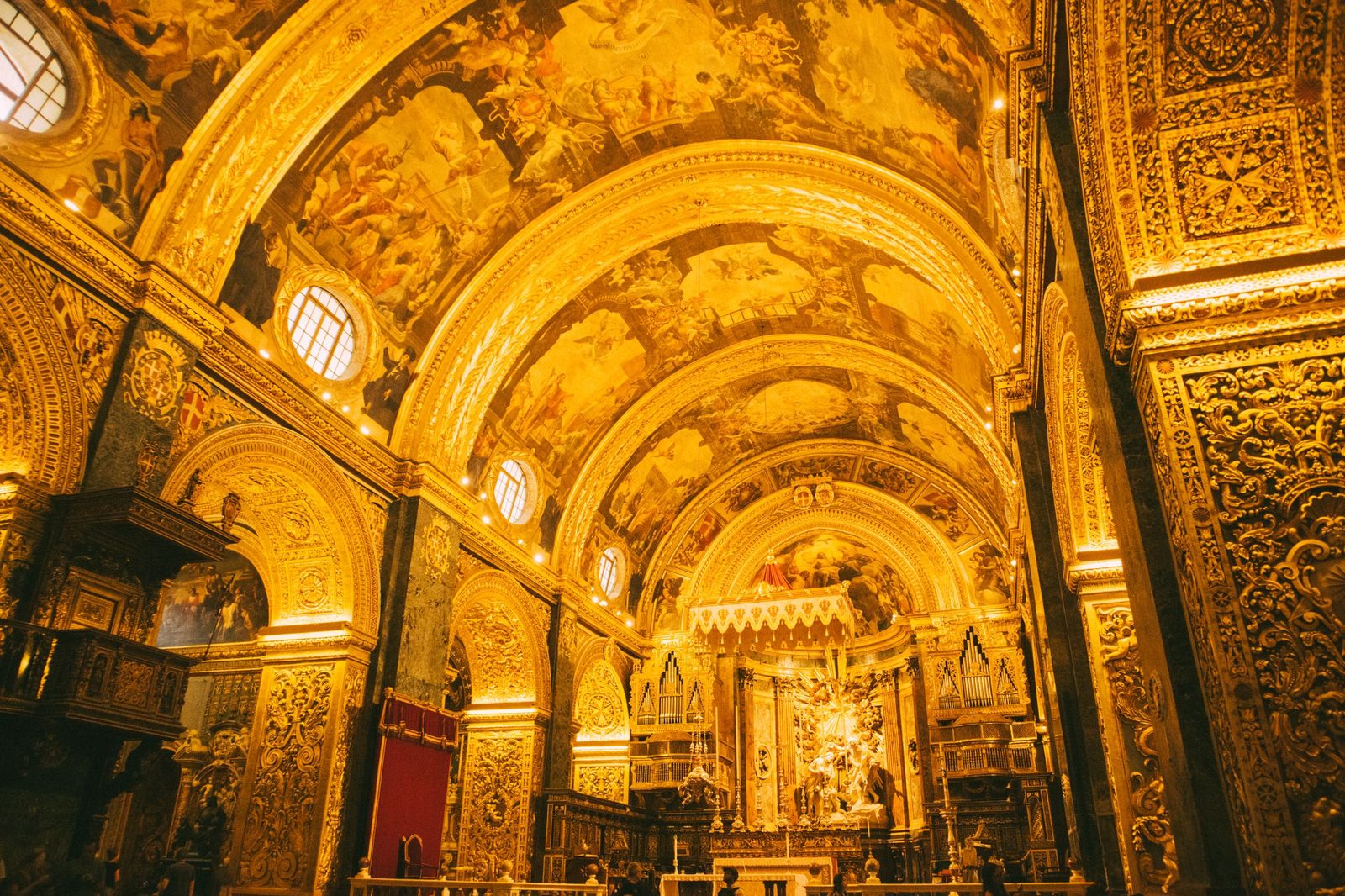
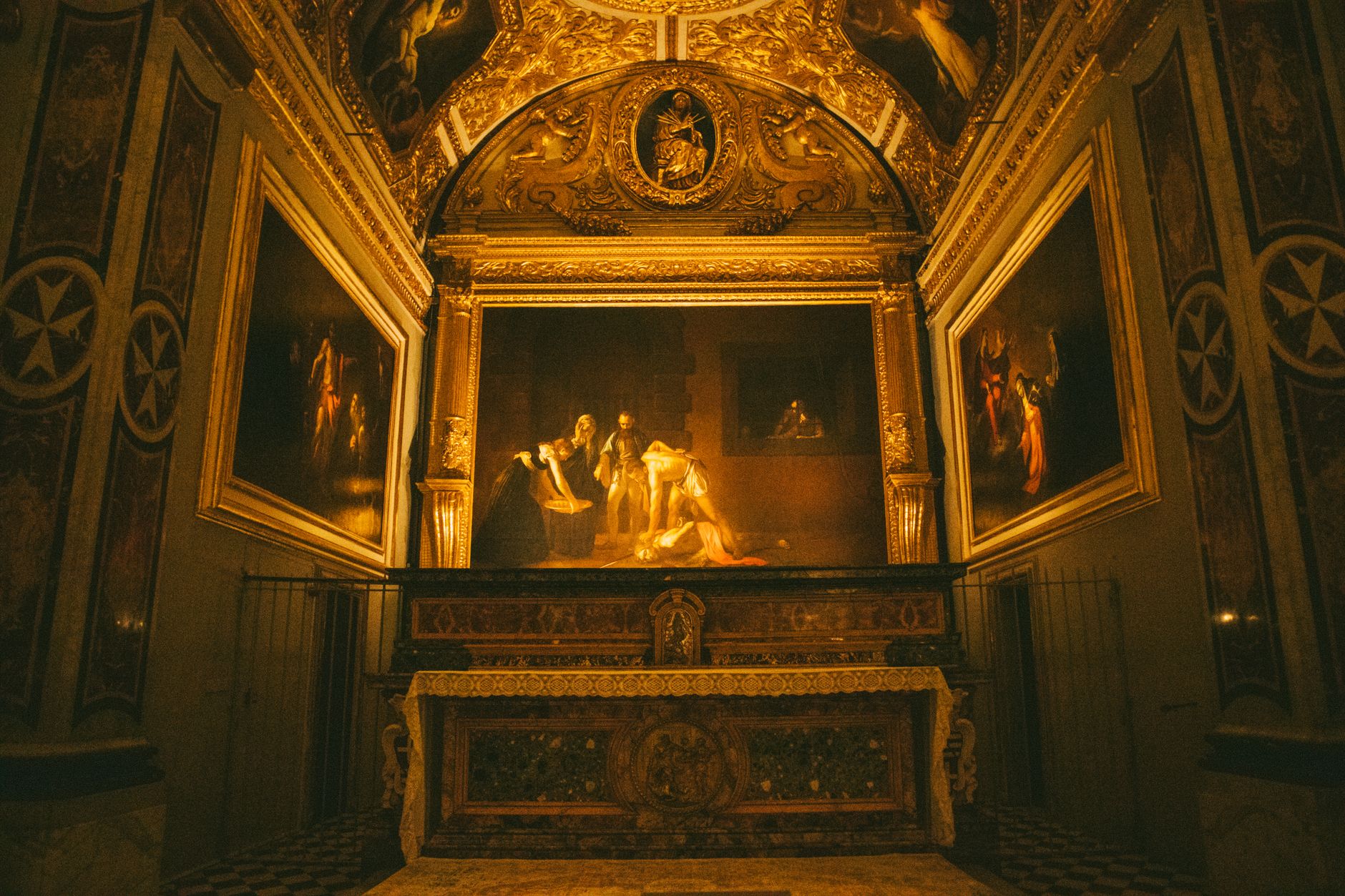
Stand in front of Caravaggio's Beheading of Saint John the Baptist in the Oratory, then look down at a floor of around 400 marble tombstones and up at Mattia Preti's painted vault.
Read the guide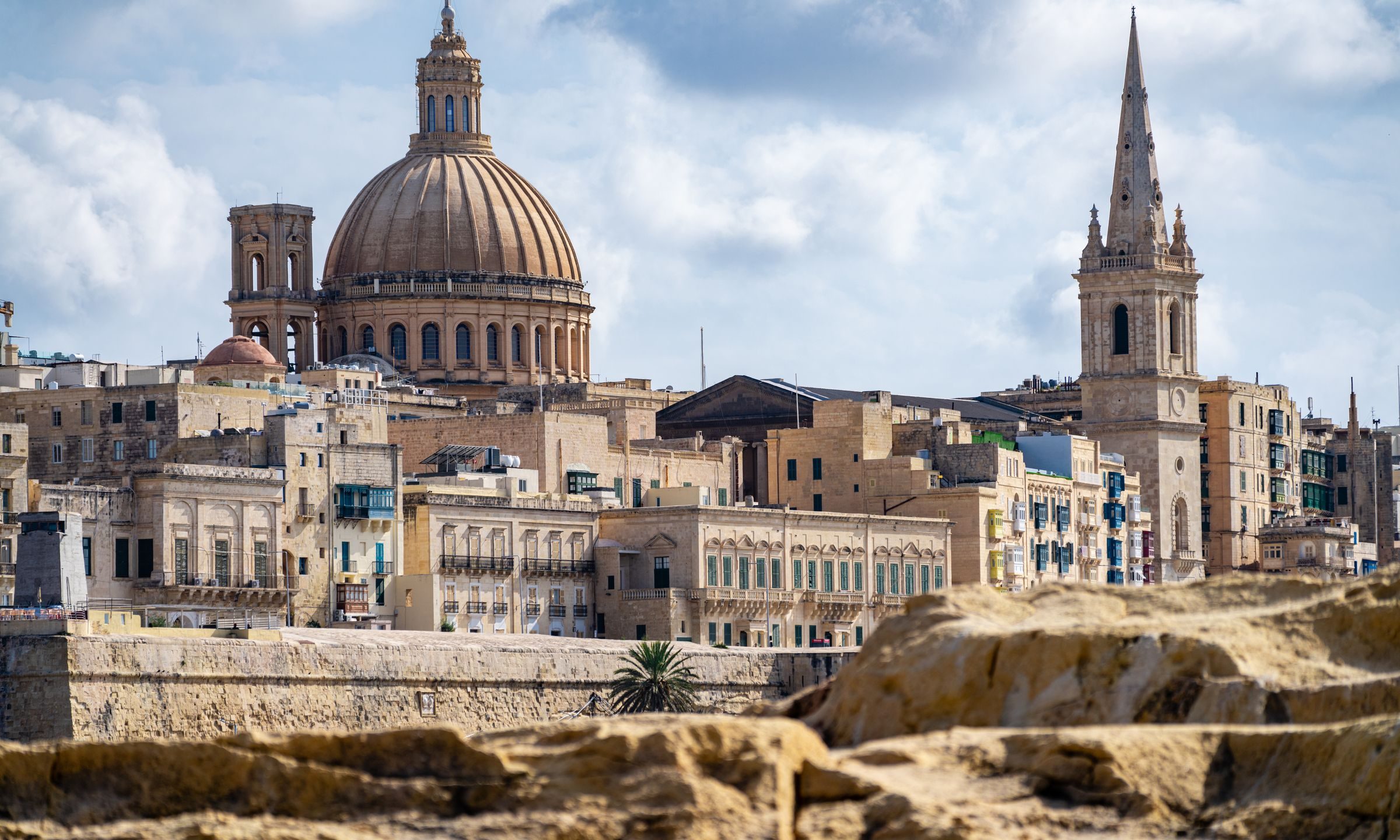
Stay in Valletta and two harbours are a short walk from your bed: the Barrakka Lift takes you down to the Grand Harbour for the ferry to the Three Cities, and on the other side of the city the Sliema ferry crosses Marsamxett.
Town guide, Malta. Meridian Dispatch.
Ninety seconds on Valletta
Valletta puts the sights on the doorstep, but its streets climb steeply from both harbours. It has fewer hotels, most of them small palazzo conversions. Sliema, across Marsamxett Harbour, is much flatter and has far more rooms, in larger hotels along the seafront. The Sliema ferry crosses to Valletta with no stops, and a short taxi ride covers the return at night.
Yes. The whole city covers 0.61 square kilometres, so every sight is within walking distance, though many streets turn into flights of steps. Harbour ferries run from Valletta to Sliema and to Cospicua in the Three Cities.
February and October bring its two biggest events. Carnival week in February has its centre in Valletta, and Notte Bianca, one night in October, fills the streets inside the walls. The climate is Mediterranean, with mild winters and warm summers.
St John's Co-Cathedral closes to visitors every Sunday and on public holidays, and the Lascaris War Rooms, the Saluting Battery and Casa Rocca Piccola open Monday to Saturday only. Most shops close too.
Maltese and English, the two official languages of Malta.
Malta International Airport, MLA, is at Luqa, about 7 km by road southwest of the city. The Airport Direct TD4 bus leaves the airport bus terminal for Valletta every 30 minutes and also serves the Gozo fast ferry. Other Airport Direct routes run to Sliema and San Pawl il-Bahar.
Two full days see the city at an easy pace. The Lascaris War Rooms and St John's Co-Cathedral each fill about two hours, and Fort St Elmo, MUŻA and Casa Rocca Piccola need around ninety minutes apiece. A third day leaves time for the harbour crossing to Cospicua or the bus out to Mdina.
Cruise ships tie up at the Valletta Waterfront, in Floriana, beneath the southern walls. Along the quay at Lascaris Wharf, the Barrakka Lift rises to the Upper Barrakka Gardens in about 23 seconds and runs until at least 22:00 every day. Walking up the stepped streets to City Gate takes 10 to 15 minutes.
Driving in is allowed, but street spaces inside the walls are scarce and fall under the CVA (Controlled Vehicular Access) charging system. The simplest place to leave a car is the MCP Car Park in Floriana, about ten minutes on foot from the centre. Once parked, the city is crossed on foot.
No: the city's shore is bastion and quay, with no sand. The nearest swimming is over the water on the Sliema front, where flat limestone shelves and rock-cut pools at Fond Għadir lead into the open sea. For sand, the nearest beaches are in the north of the island, around Mellieħa and Golden Bay.
Yes, in bars and small music venues, not clubs. Strait Street, the old sailors' quarter known as The Gut, has cocktail and wine bars, with live music on weekends. For clubs, Paceville in St Julian's is Malta's main late-night district, a taxi ride up the coast.
By bus: routes 50, 51, 52, 53 and 56 leave the Valletta terminus for Rabat. From the Rabat stop, Mdina's Main Gate is a short walk through Howard Gardens. Only residents drive inside Mdina's walls, so drivers use the parking areas outside the Main Gate and Greeks' Gate.
Yes, if the sights are the point of your trip. After dinner you walk home, with no ferry to catch.
See all towns in MaltaCompare Malta town by town
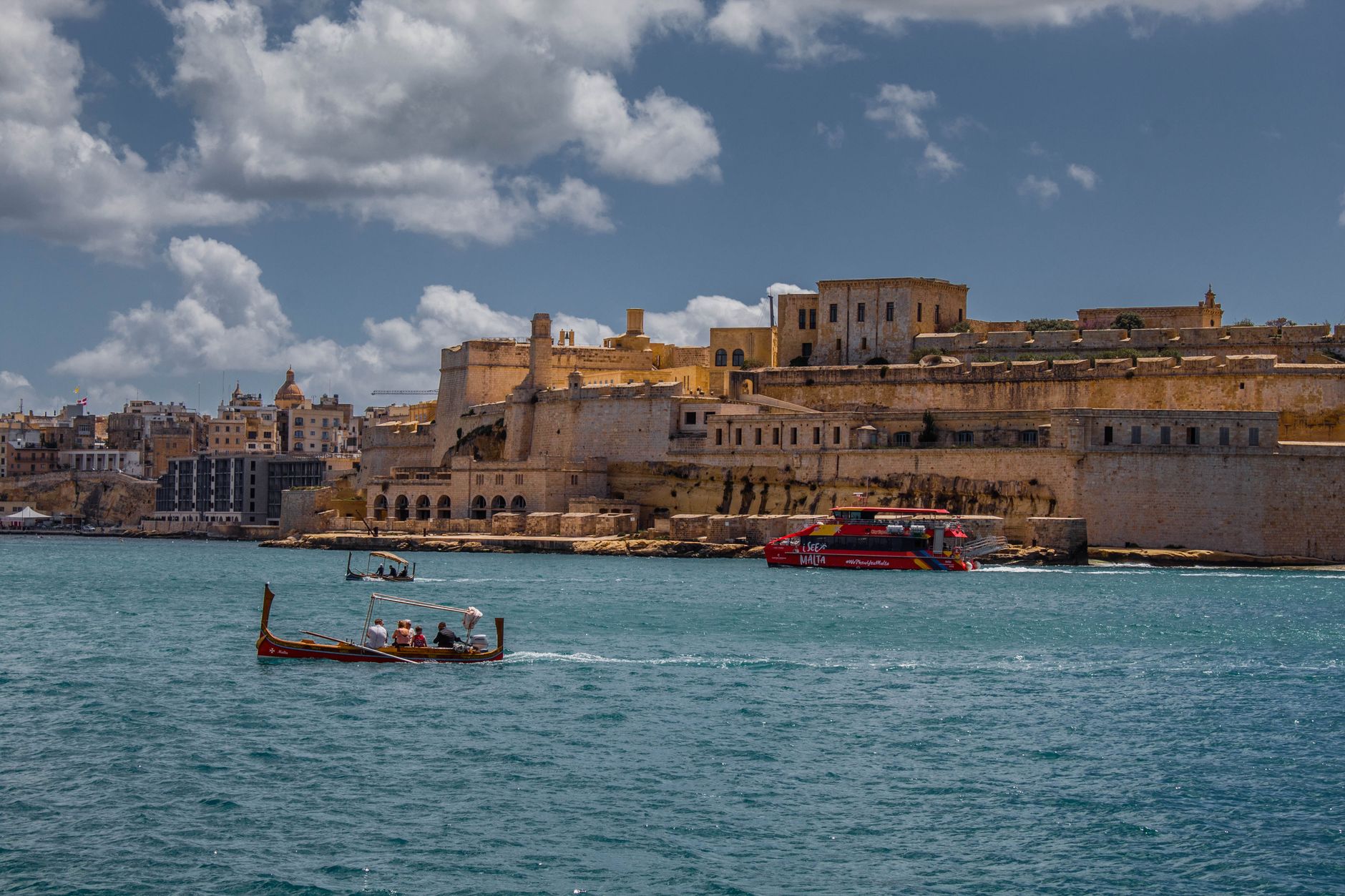
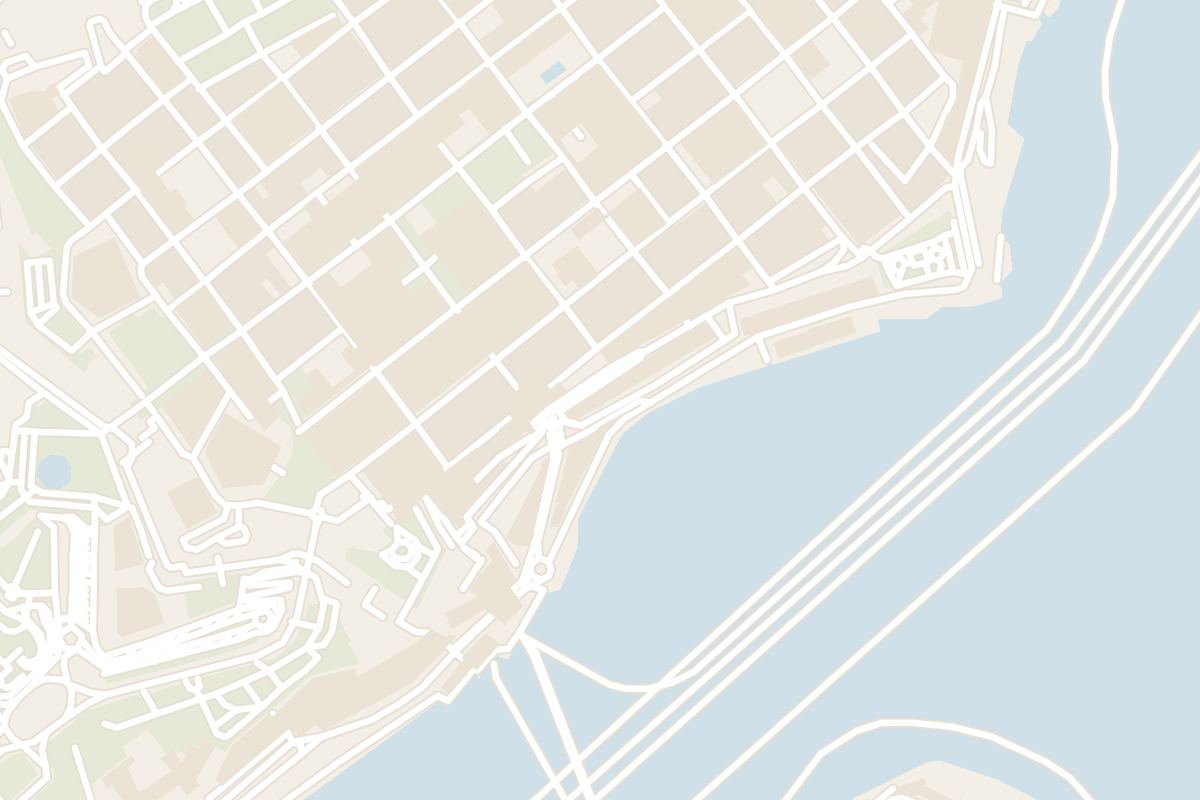
About a kilometre from end to end, Valletta is the smallest capital in the European Union, with walls on every side. Republic Street crosses it from City Gate to Fort St Elmo, and the cathedral and both Barrakka gardens lie a few streets off it.
andRead our dispatch from Valletta
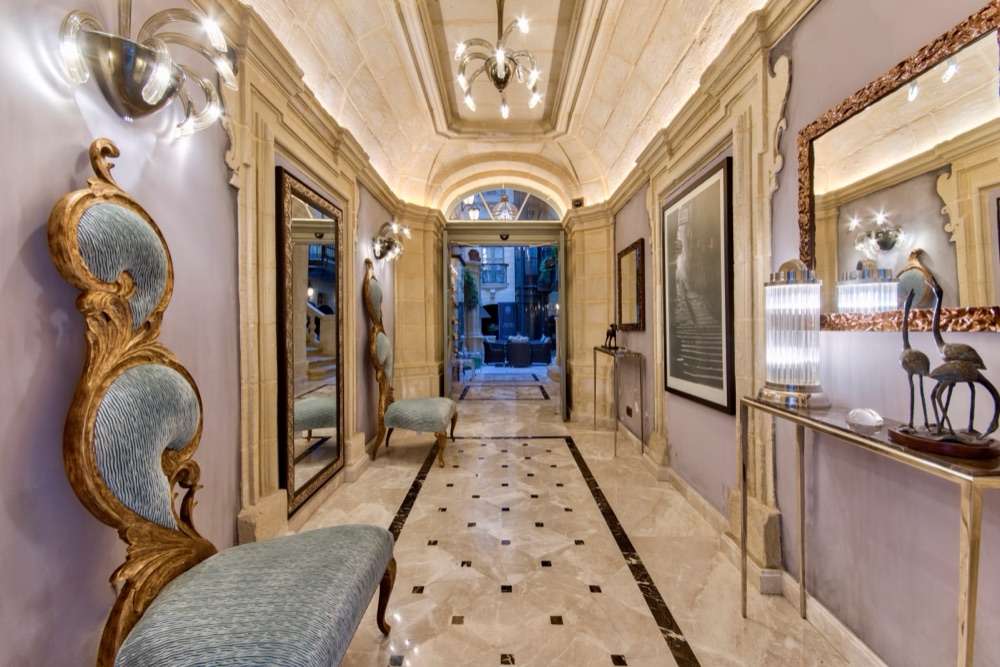
Most are palaces turned hotels inside the walls, several with a pool on the roof.
 10 min from City Gate
 4 min from City Gate
 7 min from City Gate
Each list runs from the hotel nearest City Gate.
Grouped by what each place is best for. Some appear twice, because Fort St Elmo is both a knights' fortress and the Second World War museum.
Churches, gardens, bastions and museums, all inside a walled city you can cross on foot.
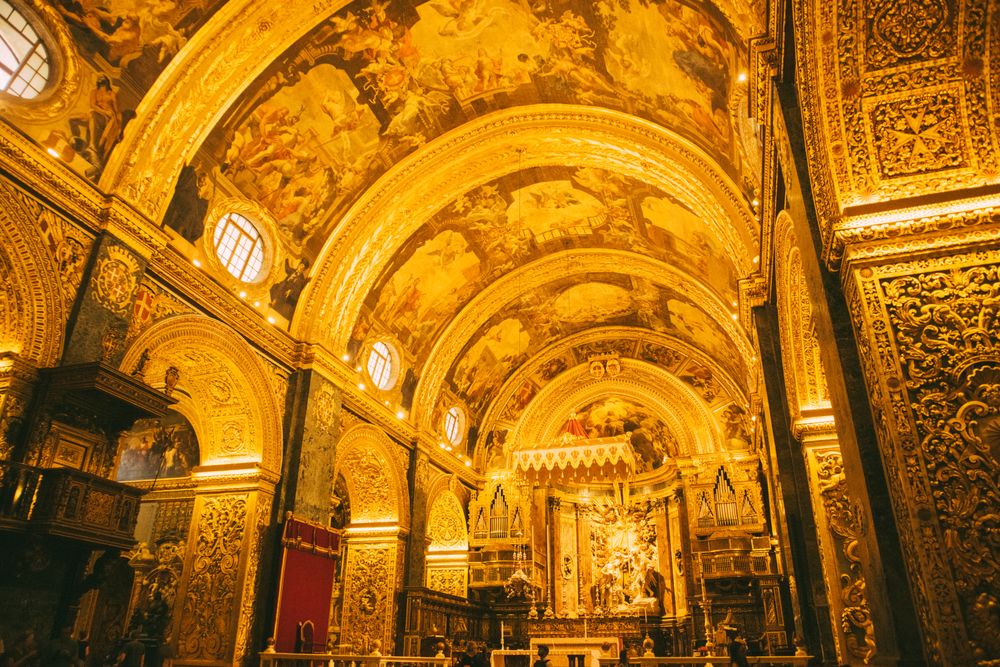

Stand in front of Caravaggio's Beheading of Saint John the Baptist in the Oratory, then look down at a floor of around 400 marble tombstones and up at Mattia Preti's painted vault.
Read the guide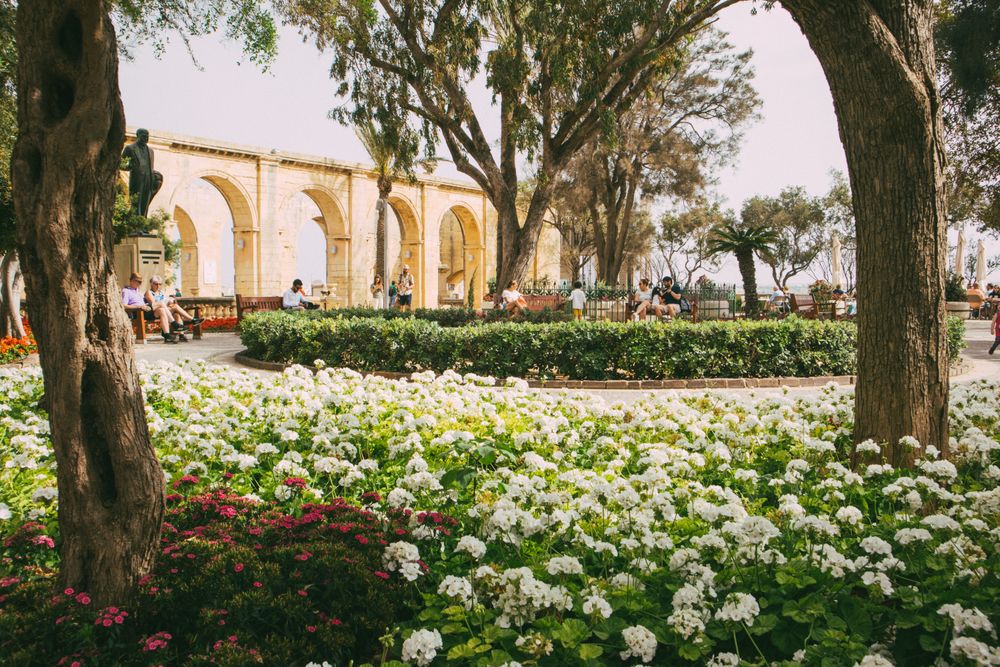
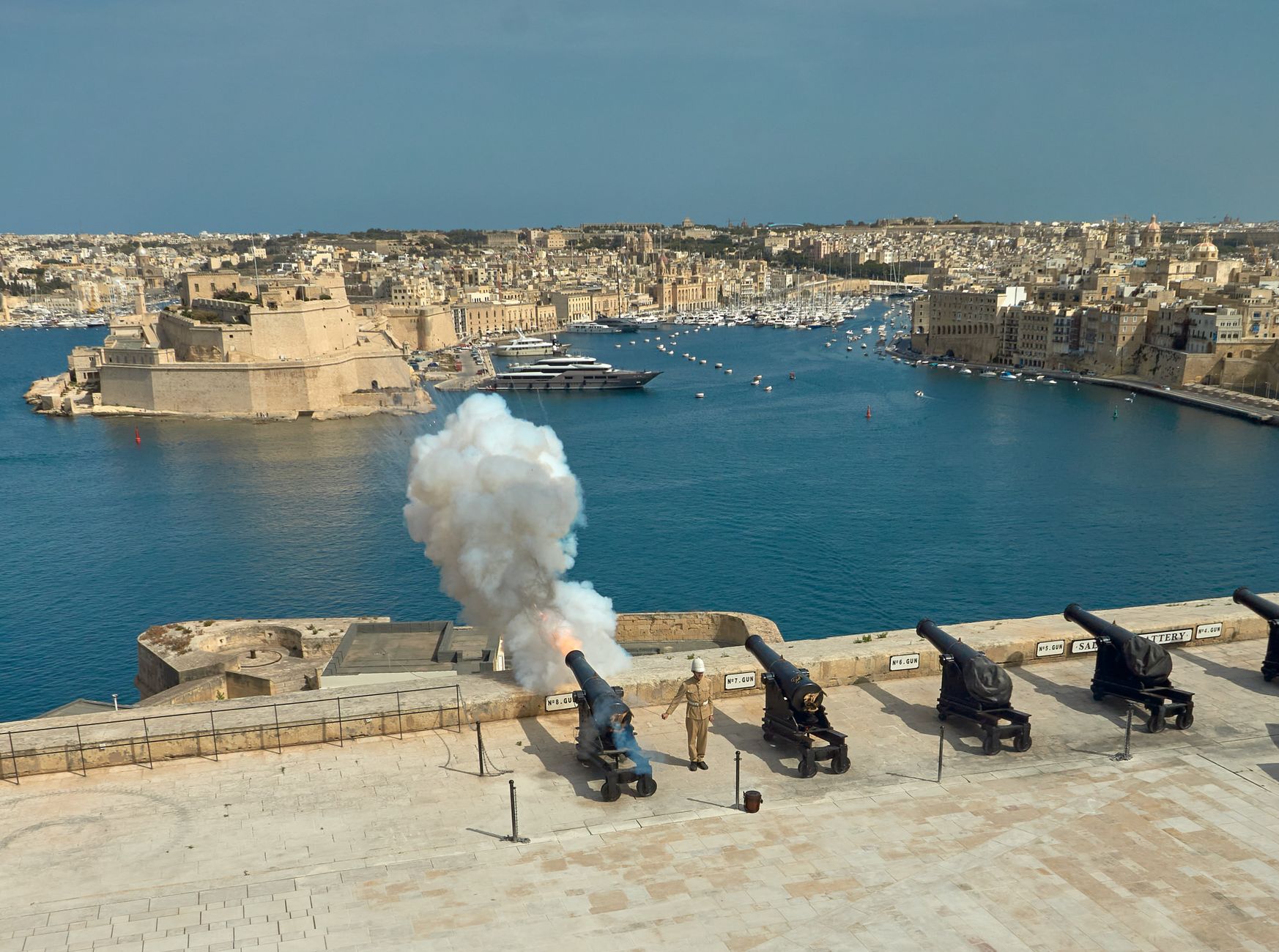
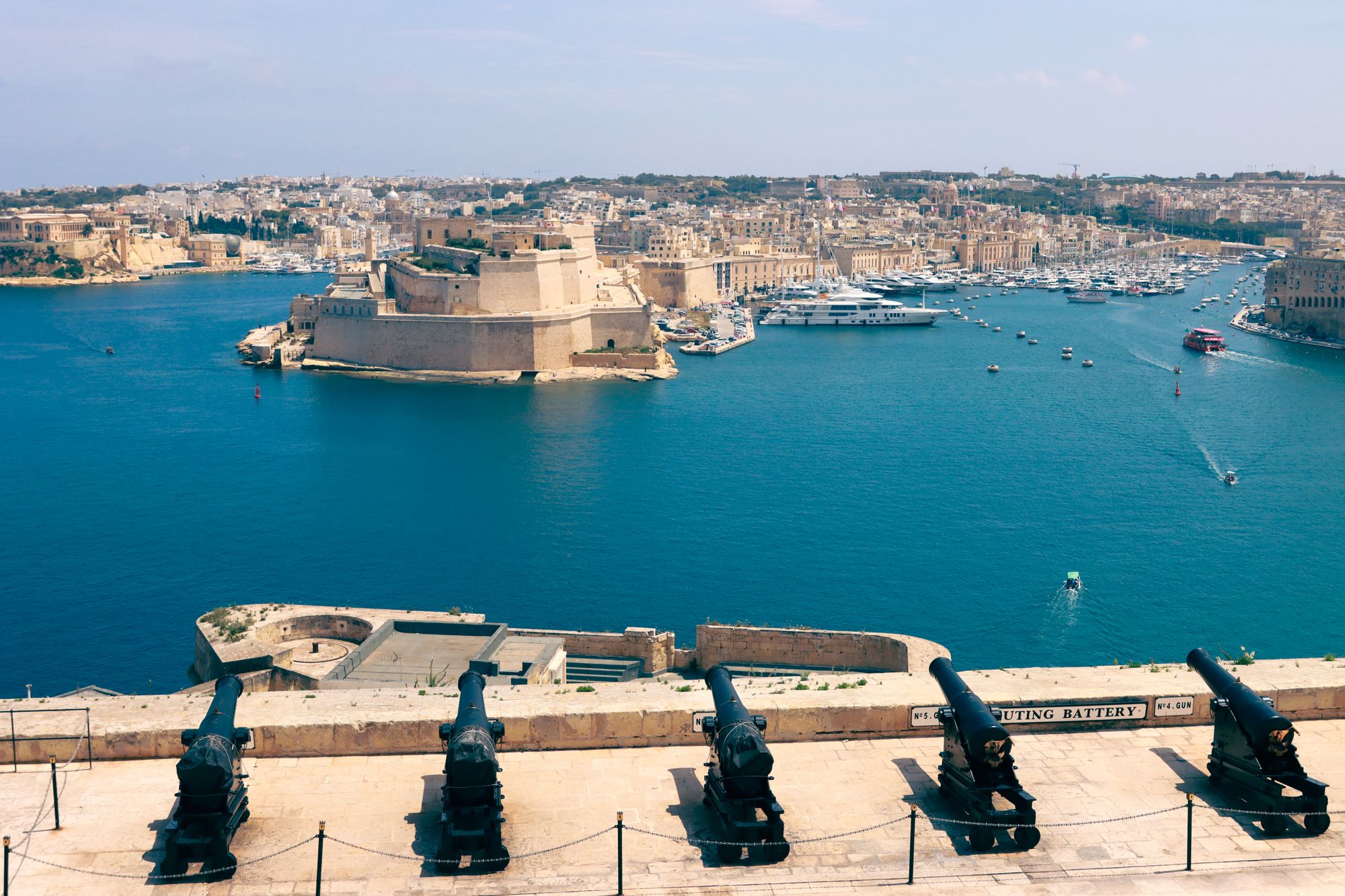
From the highest point of Valletta's city walls, you look across the Grand Harbour to the fortified Three Cities, with ferries and yachts passing far below and the Saluting Battery's cannons on the tier beneath you.
Read the guide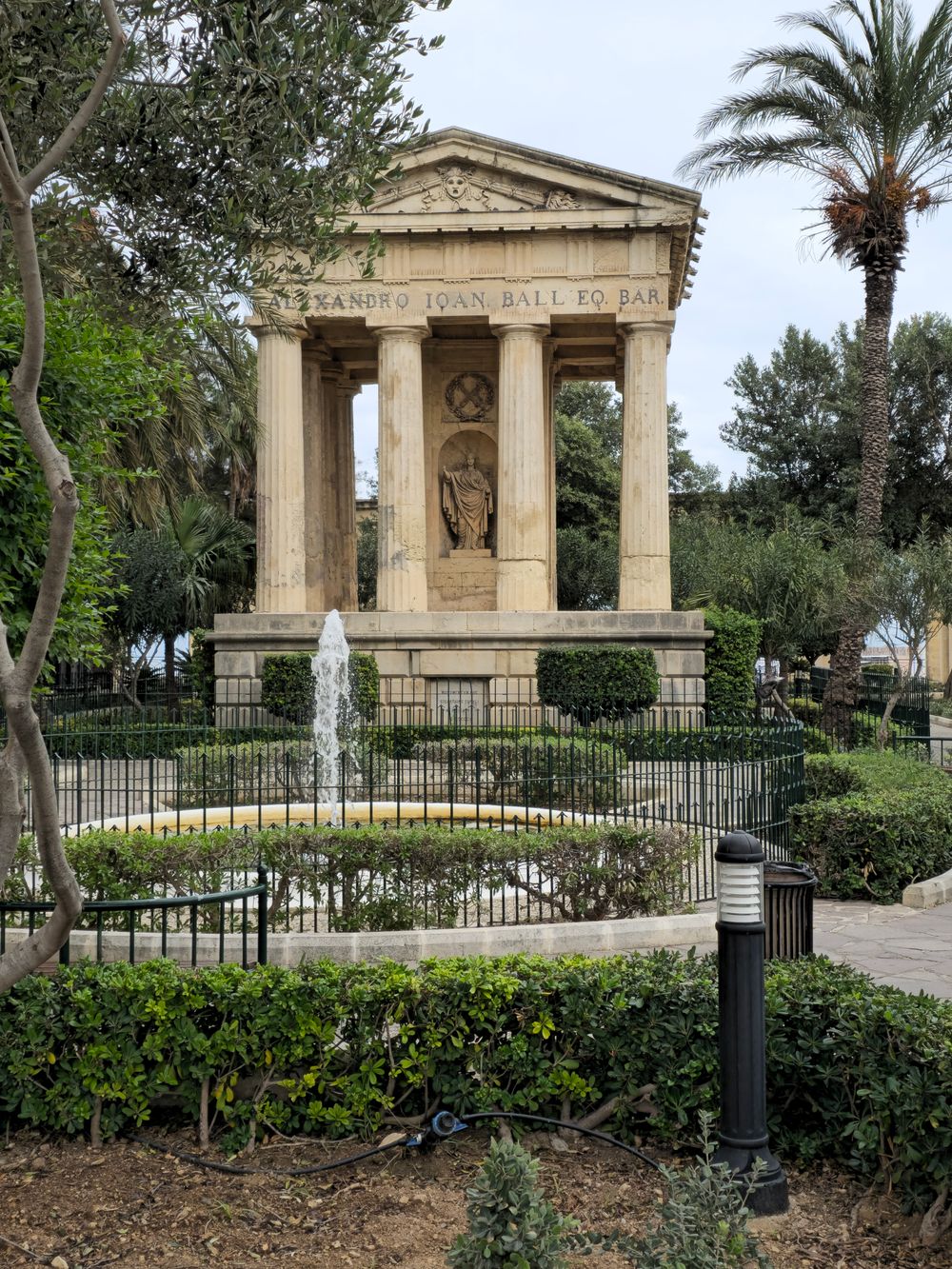
A quiet garden at the eastern end of the walls, around a small temple to Alexander Ball, with a terrace over the mouth of the Grand Harbour. Entry is free.
Read the guide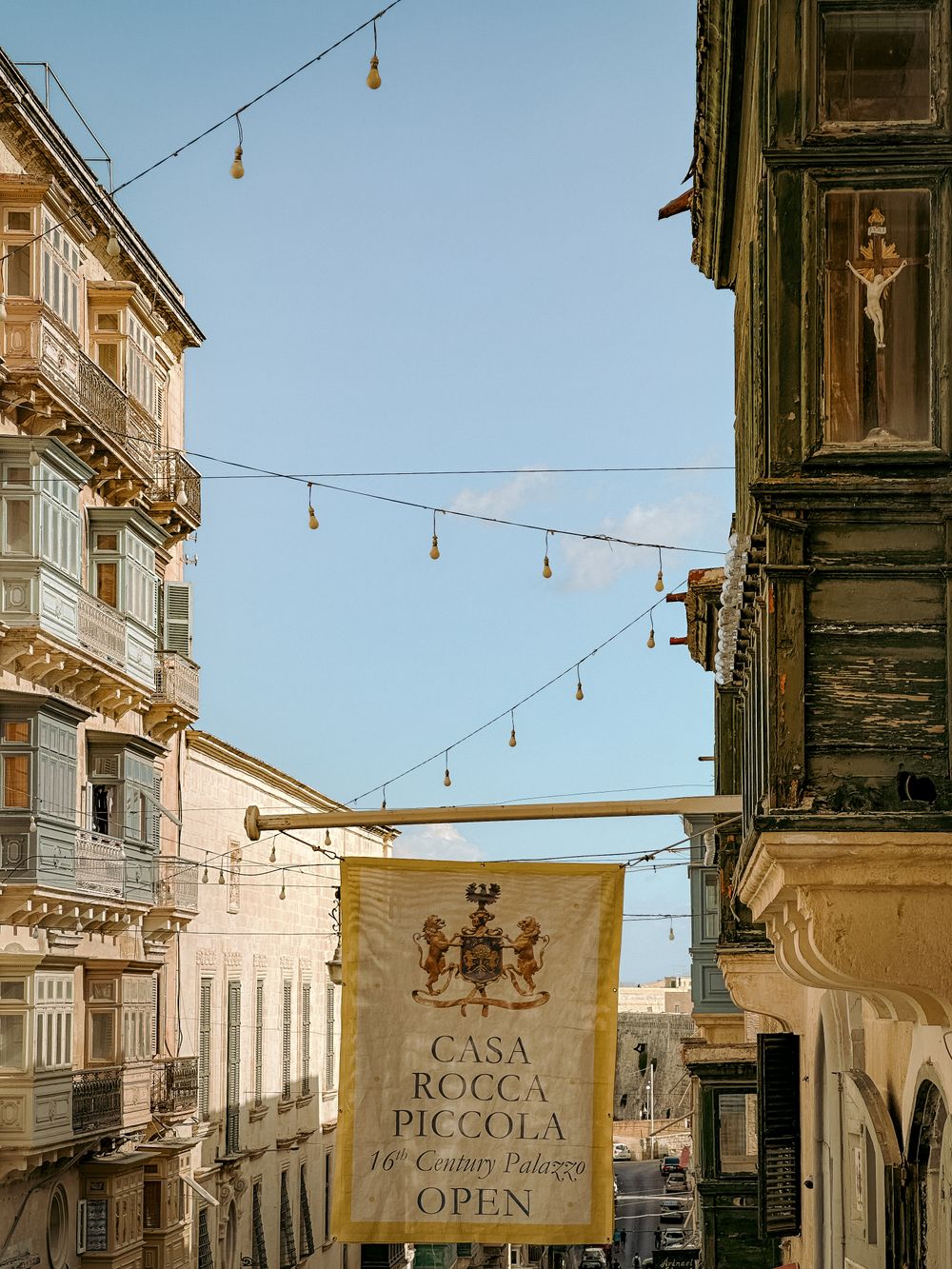
Twelve rooms of a Valletta palace where the de Piro family still lives sit above enormous World War 2 bomb shelters cut from the rock, and one visit takes you through both.
Read the guideGo for the museum, where the George Cross awarded to Malta's entire population is on show, and for the star-shaped fort around it, whose bastions you can walk.
Read the guide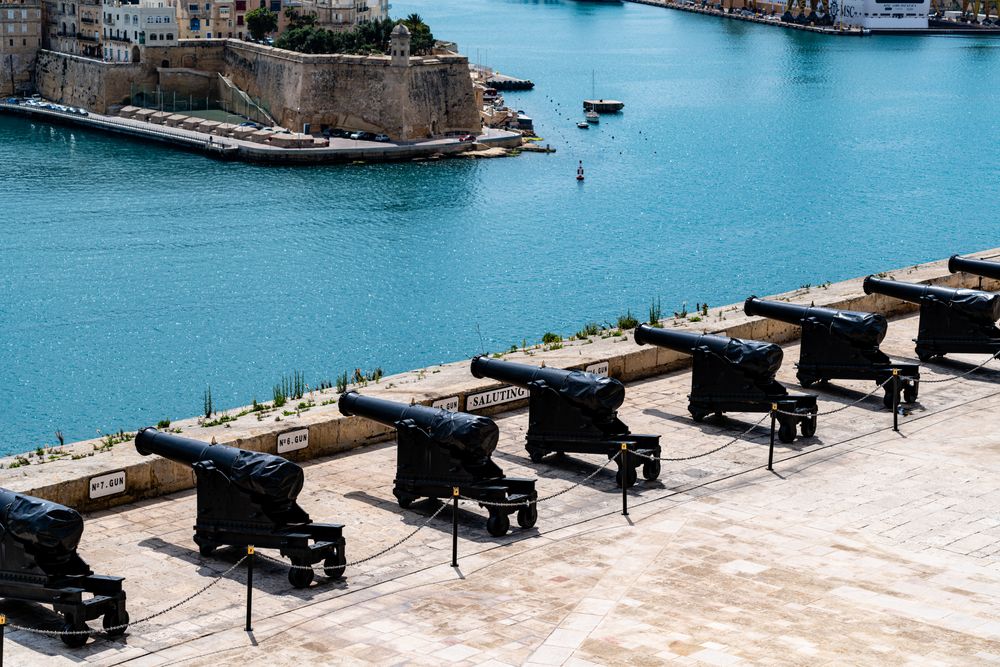
At noon and 16:00, Monday to Saturday, gunners in period uniform fire a cannon above the Grand Harbour, and your ticket puts you close to it, at the oldest saluting battery still in operation.
Read the guide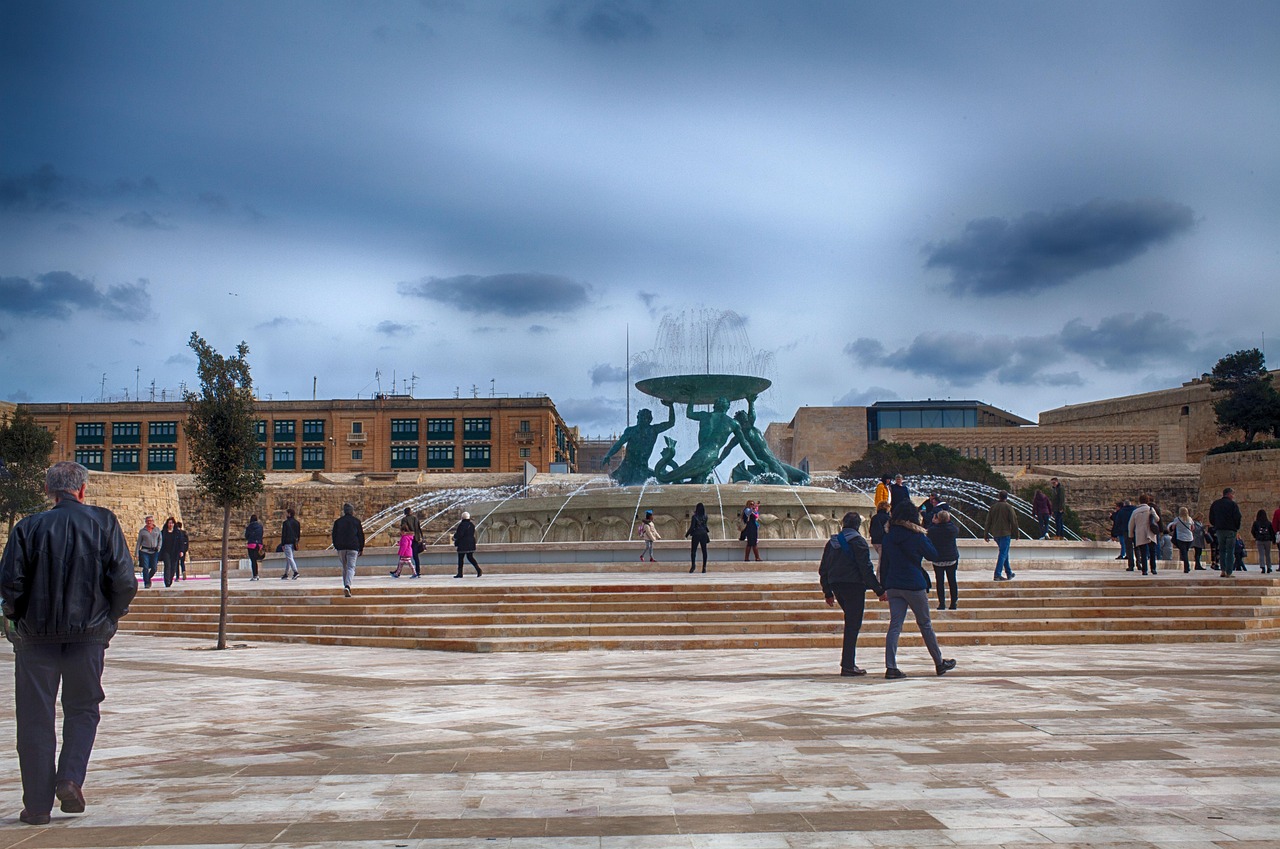
Three bronze tritons hold up a wide basin in the plaza outside City Gate. It stands at the bus terminus and is lit at night.
Read the guide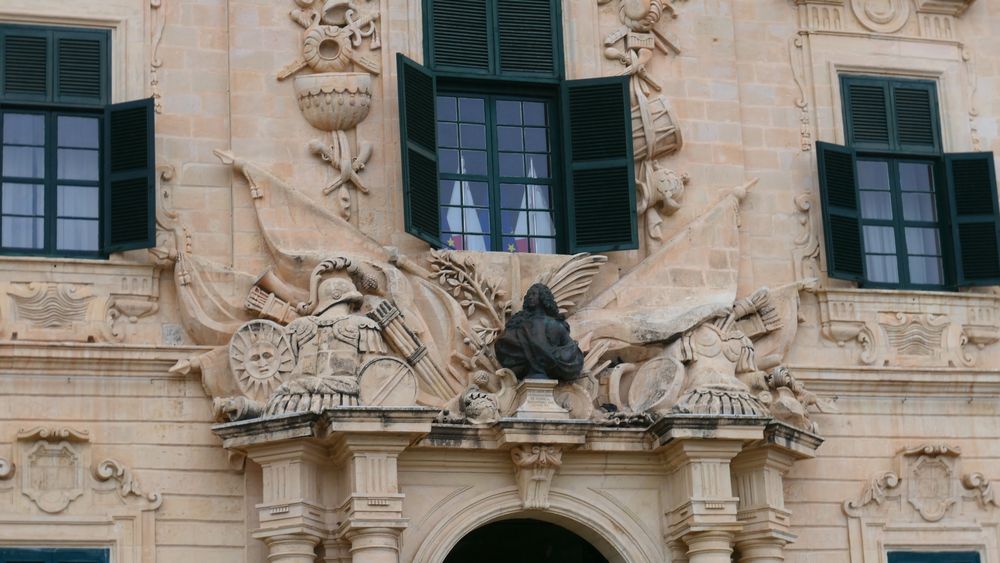
Cannons, a carved portal and a coat of arms fill the baroque front of the Prime Minister's office. It is closed inside, so see it from Castille Square.
Read the guide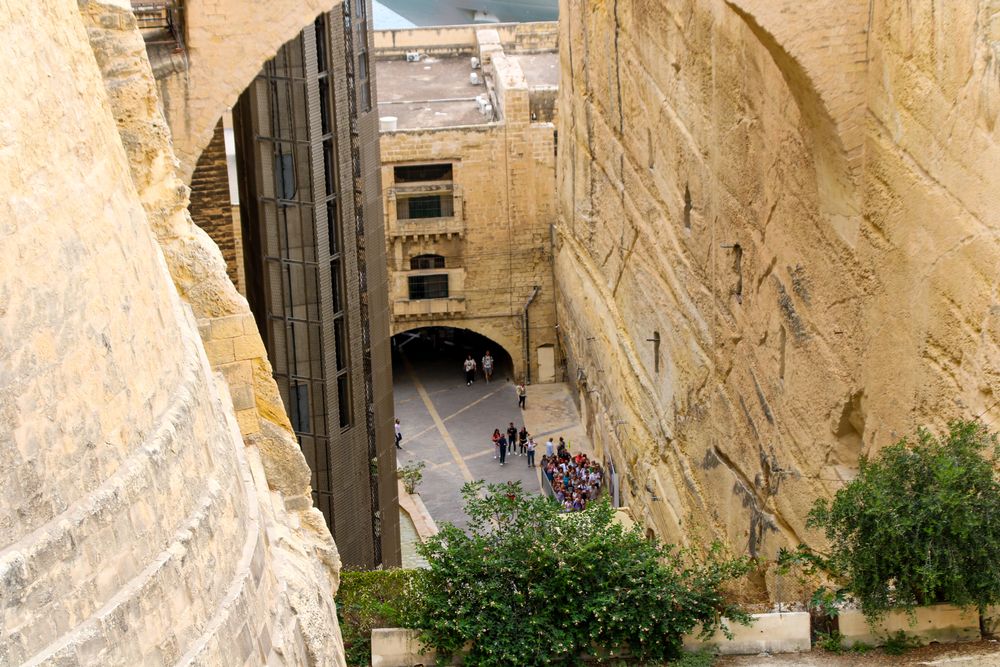
Glass cars climb the bastion from the wharf to Upper Barrakka Gardens, saving the stepped streets. The Three Cities ferry leaves a short walk along the quay below.
Read the guide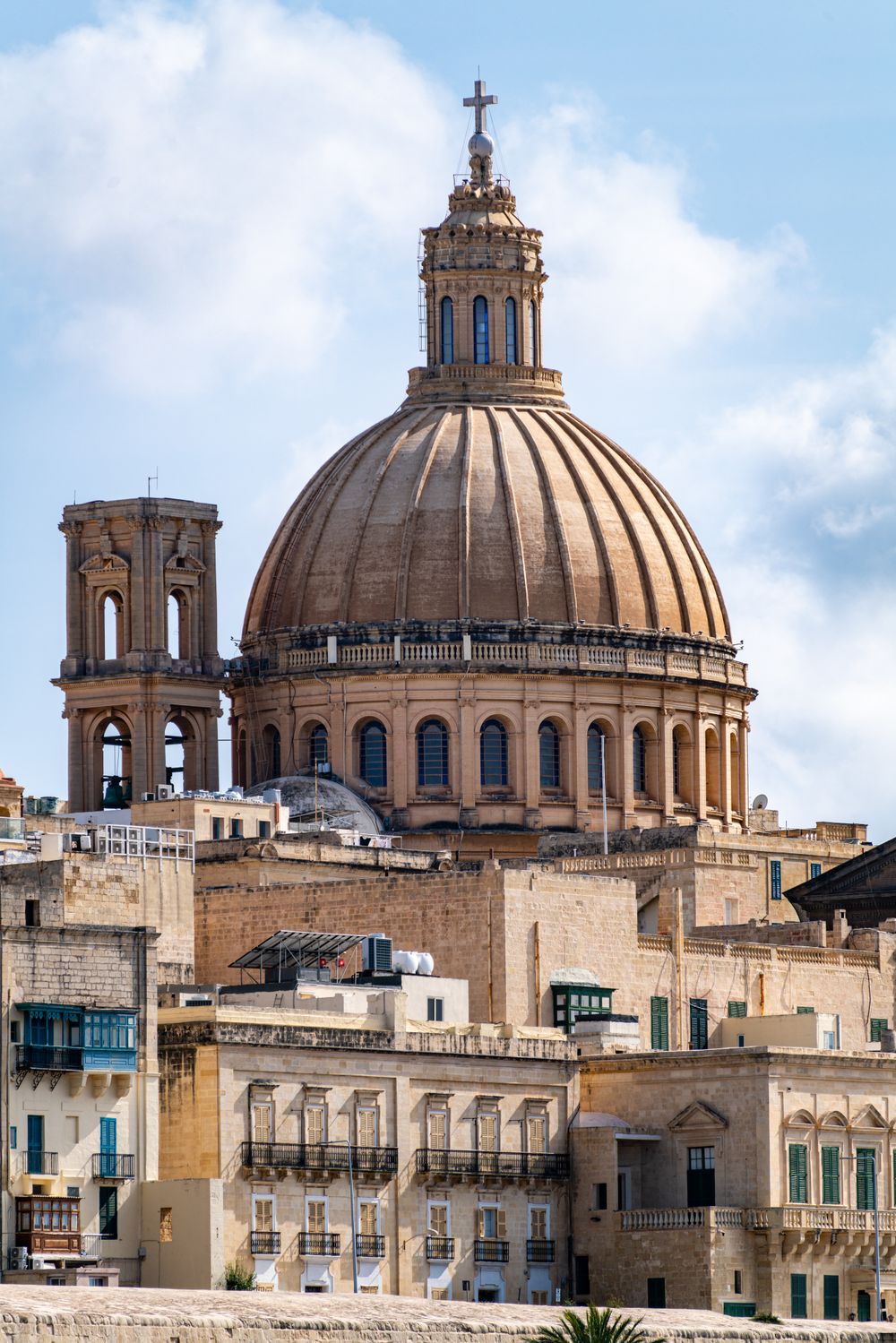
The great dome that dominates the skyline seen from Sliema, over a bright, high interior rebuilt after the war. Entry is free, and modest dress is expected.
Read the guide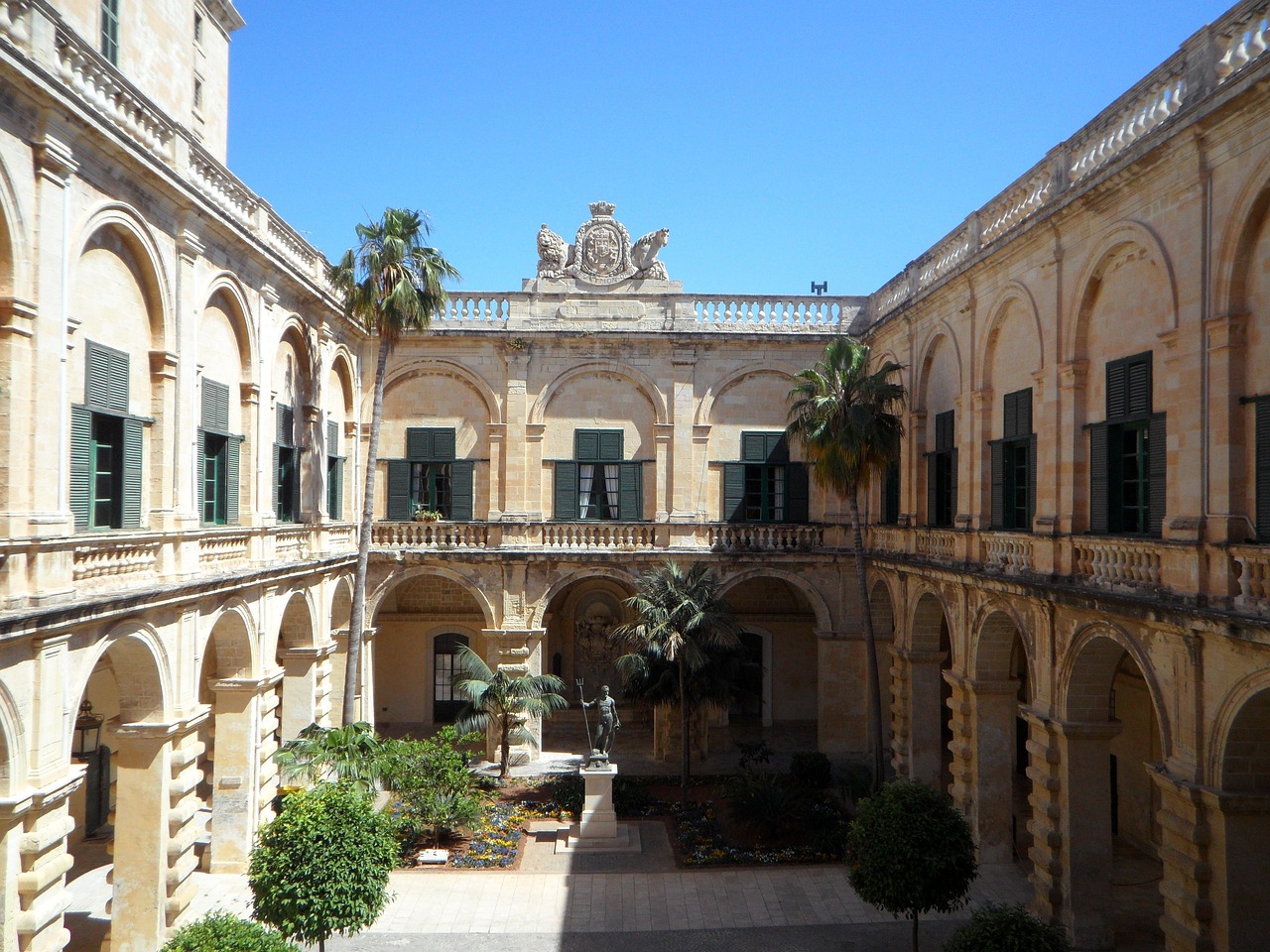
Between state functions you can walk the restored State Rooms under Baroque painted ceilings, then an Armoury that is among the world's largest still in its original building.
Read the guide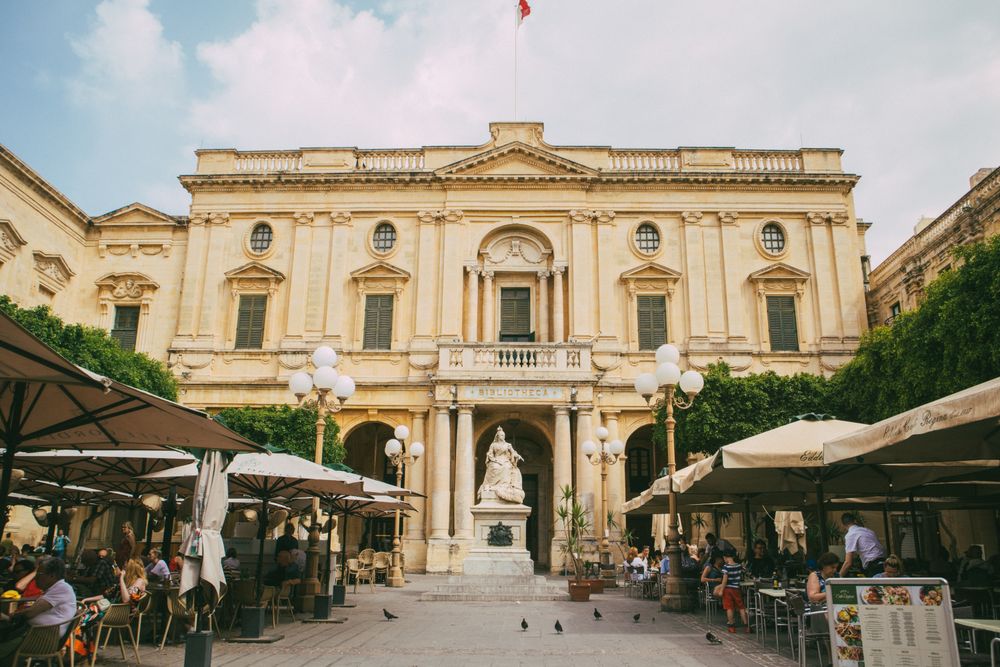
Stepping in off Republic Square, you reach the library that holds the Knights of St John's archives, from 1107 to 1798, and the order's own collection of historic books.
Read the guide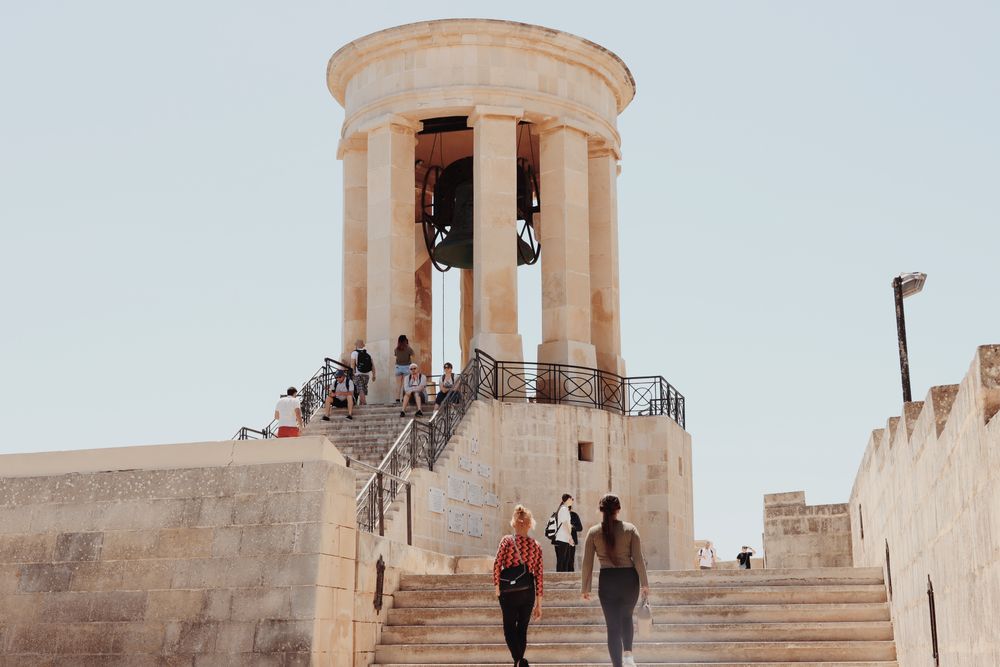
You get Malta's largest bell, hung in an open colonnade on a bastion above the Grand Harbour, and a reflective stop where the island remembers its Second World War siege.
Read the guide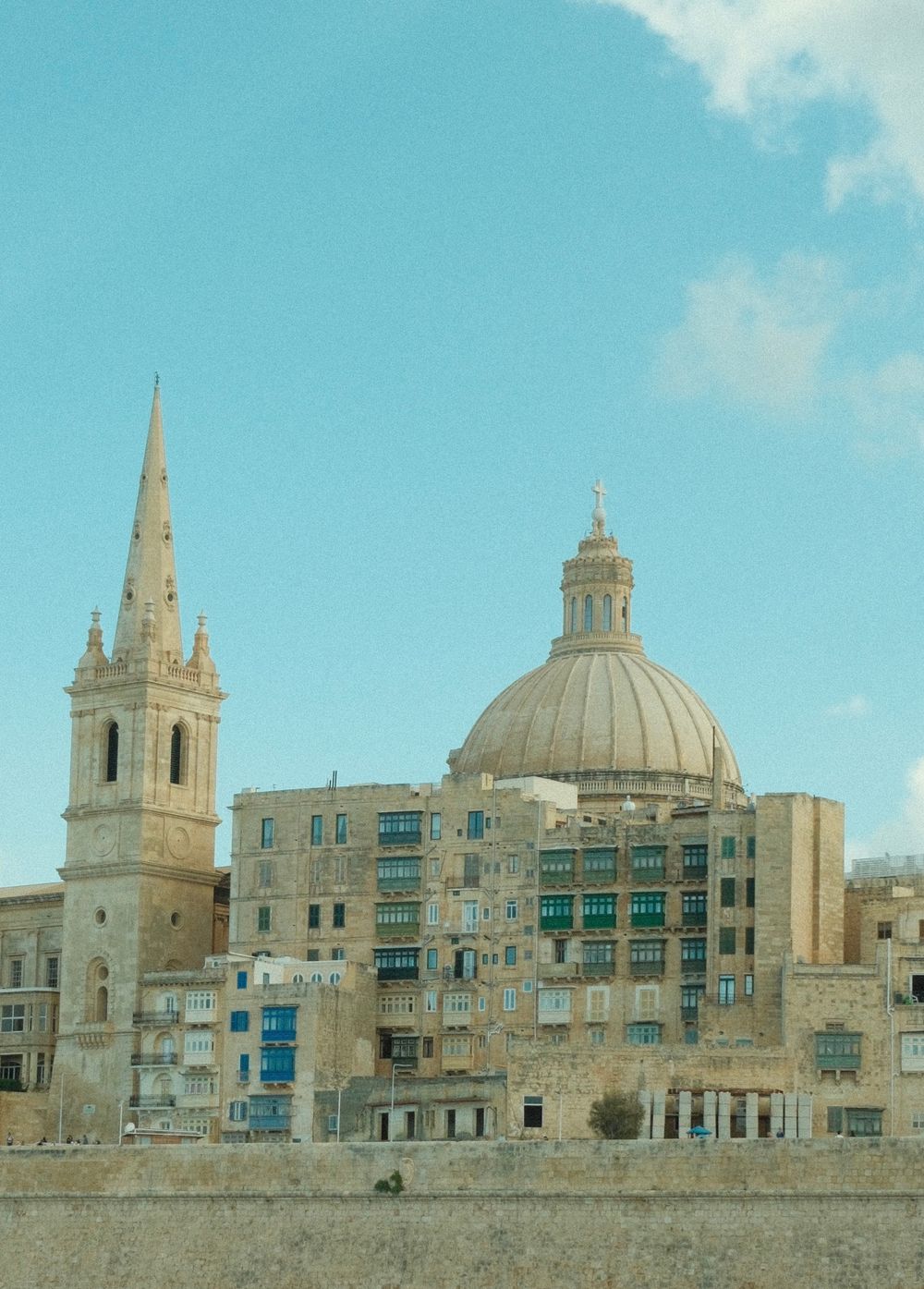
More than 60 metres of spire make this Anglican pro-cathedral of the Diocese in Europe easy to pick out from Marsamxett Harbour. You come for a limestone church on Independence Square with an English organ inside.
Read the guideCome here to see the prehistoric finds excavated from Malta's UNESCO-listed temples, among them the Venus of Malta from Ħaġar Qim and the colossal statue from Tarxien, gathered under one roof in Valletta.
Read the guideInside Malta's national art museum you meet the largest collection of Mattia Preti's paintings, in galleries that run from Neolithic finds to Maltese art of the early 21st century.
Read the guideTerraced beds of cacti, succulents and Mediterranean trees on the Floriana bastions, run by the University of Malta. The botanic section opens only at set times, so check ahead.
Read the guideThe first church in the new city, built on South Street to mark the Great Siege victory. Its painted vault is restored, and entry is free when open.
Read the guideOne of the city's largest churches, rebuilt after a gunpowder explosion in 1634, with paintings by Stefano Erardi and Mattia Preti. The Old University Building adjoins it.
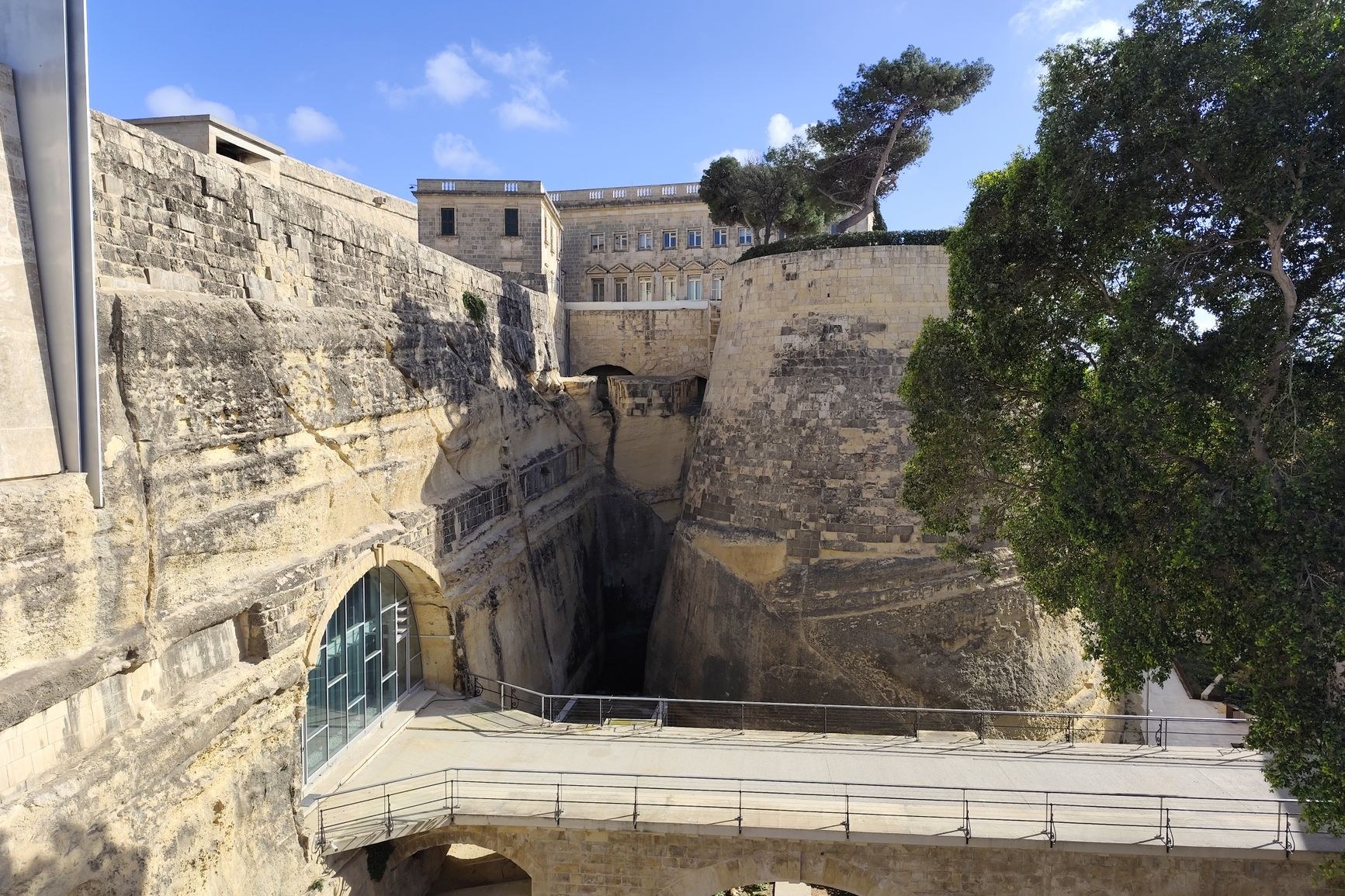
Read the guideThe cut through the bastions into the city, rebuilt to Renzo Piano's design with a bridge over the dry ditch. Republic Street runs straight ahead to Fort St Elmo.
Read the guideA small garden on the bastions beside City Gate, looking across Marsamxett Harbour to Sliema and down into the ditch. Entry is free, with little shade at midday.
Read the guideFrom 1940 to 1943, Malta's fighter control was run from these rooms 46 metres under the Upper Barrakka Gardens. They are still arranged much as they were in wartime, and you can walk through them.
Read the guideKnown as MICAS, a ticketed gallery of changing international shows in a former gunpowder factory on the Floriana Lines. It shuts between exhibitions and is fully step-free.
Read the guideStamps, letter boxes, uniforms and franking machines trace Malta's post from the knights to the British era, in a small ticketed museum on Archbishop Street.
Read the guideA converted warehouse on East Street showing contemporary art from Malta and abroad in stripped stone rooms. Entry is free, Wednesday to Saturday afternoons.
Read the guideThe knights' Baroque stores on Pinto Wharf, now restaurants and bars along the harbour beside the cruise terminal. City Gate is a steep 10 to 15 minute walk up.
Read the guideOne of Valletta's oldest churches, built in the 1570s on St Paul Street, keeps relics of the saint whose shipwreck turned Malta Christian. Entry is free, and his feast on 10 February fills the streets.
Read the guideA 16th-century cavalier by City Gate, built by the Order of St John, now holds Spazju Kreattiv, Malta's centre for creativity. See an exhibition, then stay for a film or a play.
Read the guideValletta's baroque playhouse, reputed to be Europe's third-oldest working theatre. Visits and tours take you inside Monday to Saturday without a show ticket, or book a seat at a performance.
Read the guideRenzo Piano's open-air theatre inside the surviving walls of the Royal Opera House, destroyed in 1942. Concerts under the open sky are ticketed event by event.
Read the guideThe narrowest street in Valletta, once The Gut, the sailors' nightlife strip. Walk it by day to read the old bar signs, then come back after dark for wine bars and live music.
Read the guideValletta's Victorian covered market on Merchants Street, now a food hall. Sit down to lunch at the food counters between museums; the food court opens daily from 11:00.
Read the guideThe water tunnels and cisterns the Knights cut under the city, and the shelters dug out in the Second World War. You go down only on a timed Heritage Malta tour, so book a slot first.
Read the guideGoing underground beneath a working Valletta convent takes you into the old stone quarry where its cloistered nuns lived and worked, now a run of rooms open to visitors.
Read the guide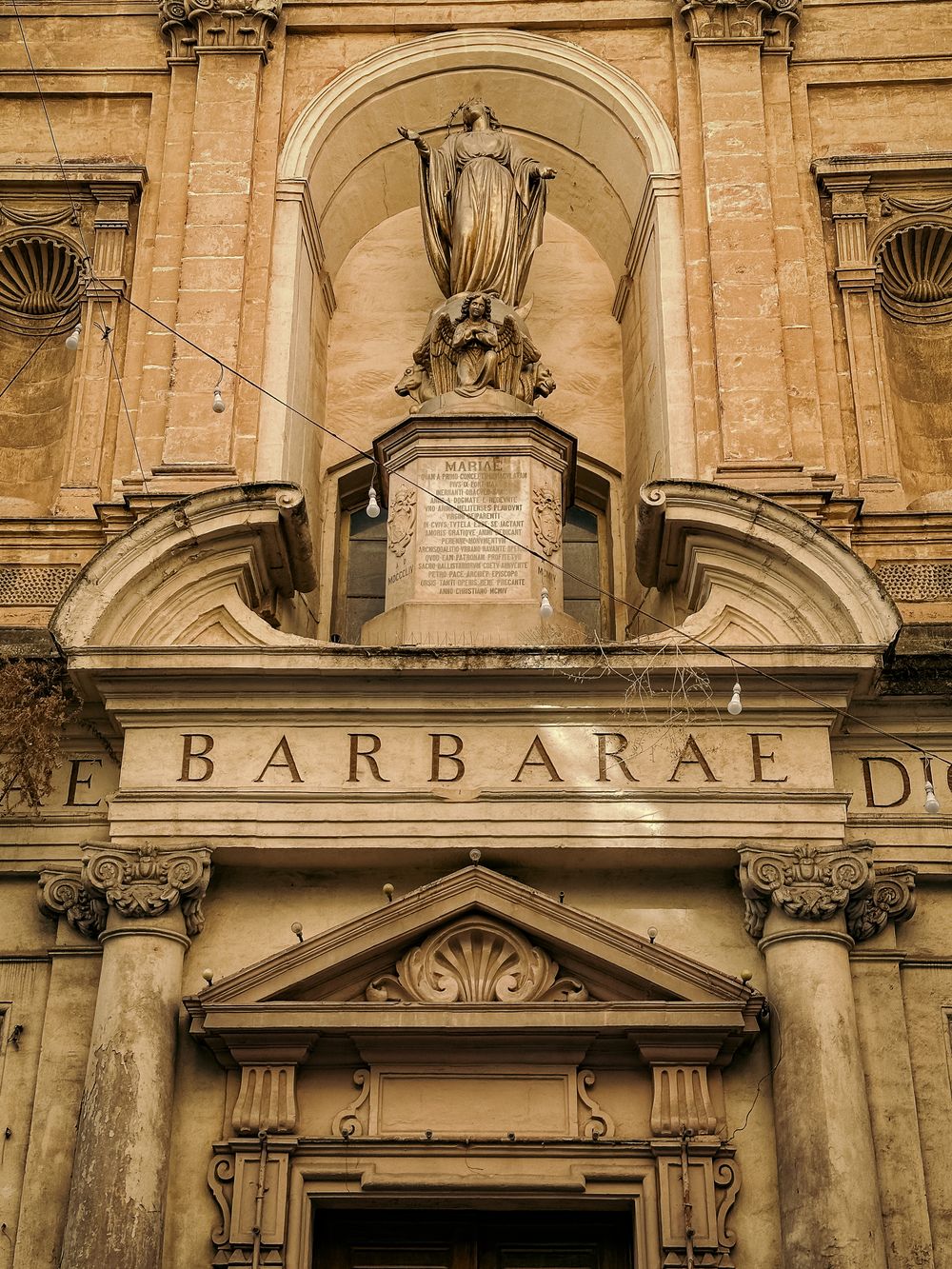
An oval dome, rare in Malta, crowns Romano Carapecchia's Baroque interior of 1740. Look for the gilded statue of the Immaculate Conception above the door.
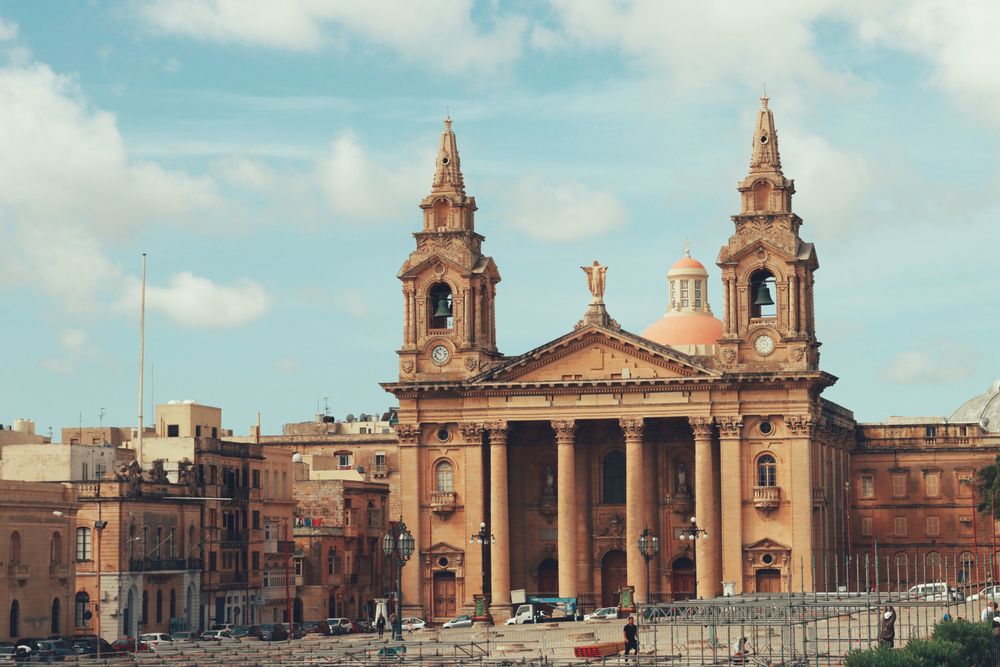
Round stone lids dot St Publius Square, each one capping a rock-cut pit that once stored the islands' wheat. There are 76 of them, in front of the church of St Publius.
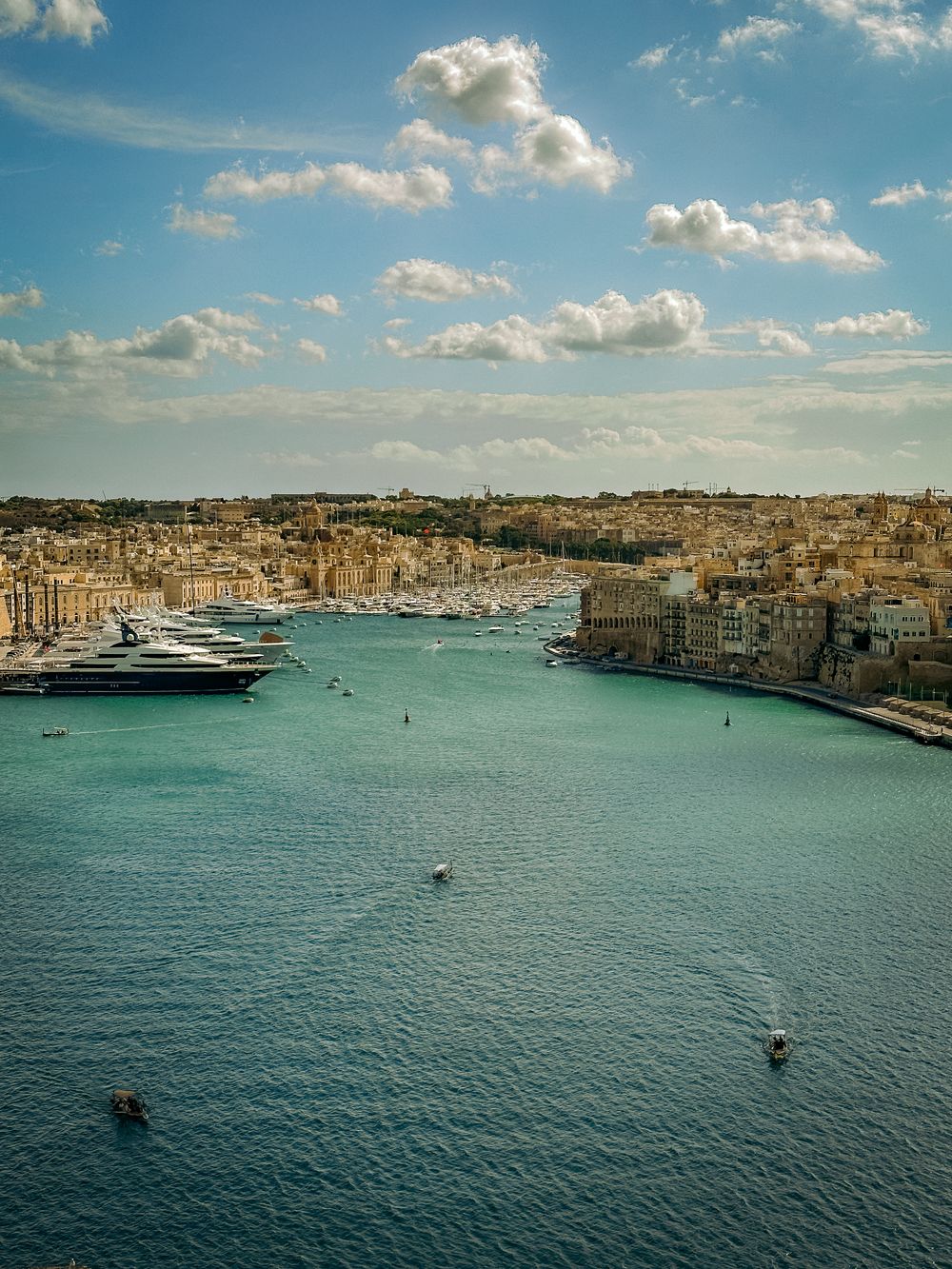
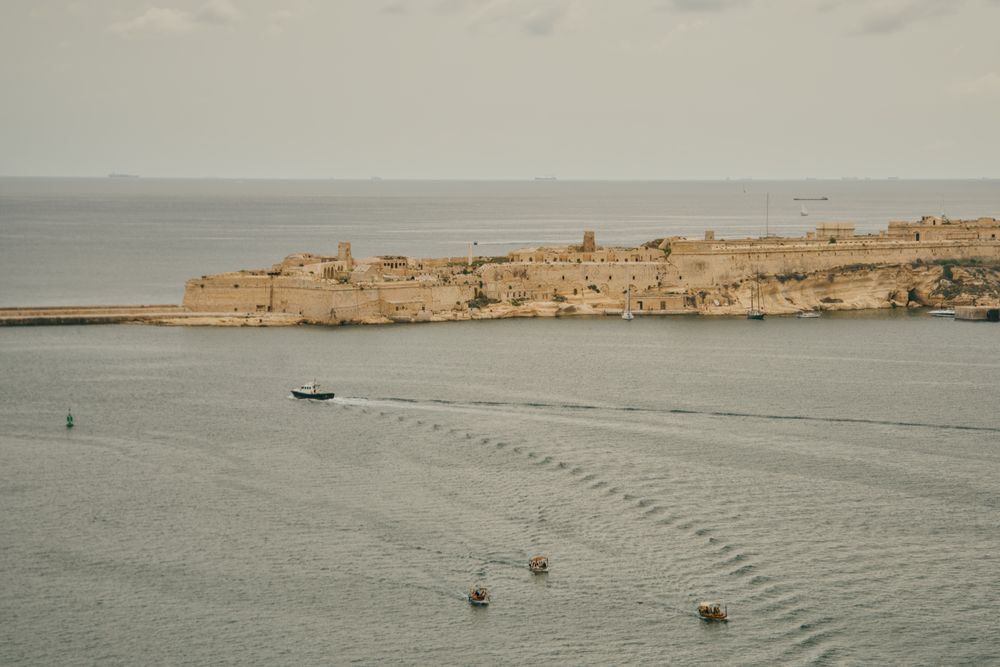
Bastions line the harbour, with Valletta on one shore and Birgu and Senglea on the other. See it from the water: a dgħajsa crosses from Lascaris Wharf in minutes.
The one auberge that keeps Girolamo Cassar's original Mannerist design, home to the knights of Aragon from 1571. A ministry occupies it, so you see it from the street.
A Greek Catholic church built for the icon the Knights carried from Rhodes. Its services follow the Byzantine rite, and locally it is called Id-Damaxxena.
The Aragonese knights' small church from the 1670s, with Stefano Erardi's altarpiece inside. Heritage Malta opens it by appointment, so book through its website.
The Italian knights' church from 1576, with an octagonal nave. Mattia Preti painted both the altar canvas and the cupola in grey and gold.
An outer ring of bastions and ditches begun in 1636 around Valletta's land front, on UNESCO's tentative list. Start at Portes des Bombes and walk the streets beside them.
Known as Ta' Ġieżu and visited for its Miraculous Crucifix, carved around 1630 by Innocenzo da Petralia. Friars Minor still care for the church.
Antonio Sciortino's three bronze figures of 1927, for the fallen of the 1565 siege, stand in Great Siege Square on Republic Street. A short stop on the way to Fort St Elmo.
A former Protestant cemetery inside a bastion, where the Maltese scholar Mikiel Anton Vassalli is buried. Din l-Art Ħelwa opens it on weekday and Saturday mornings.
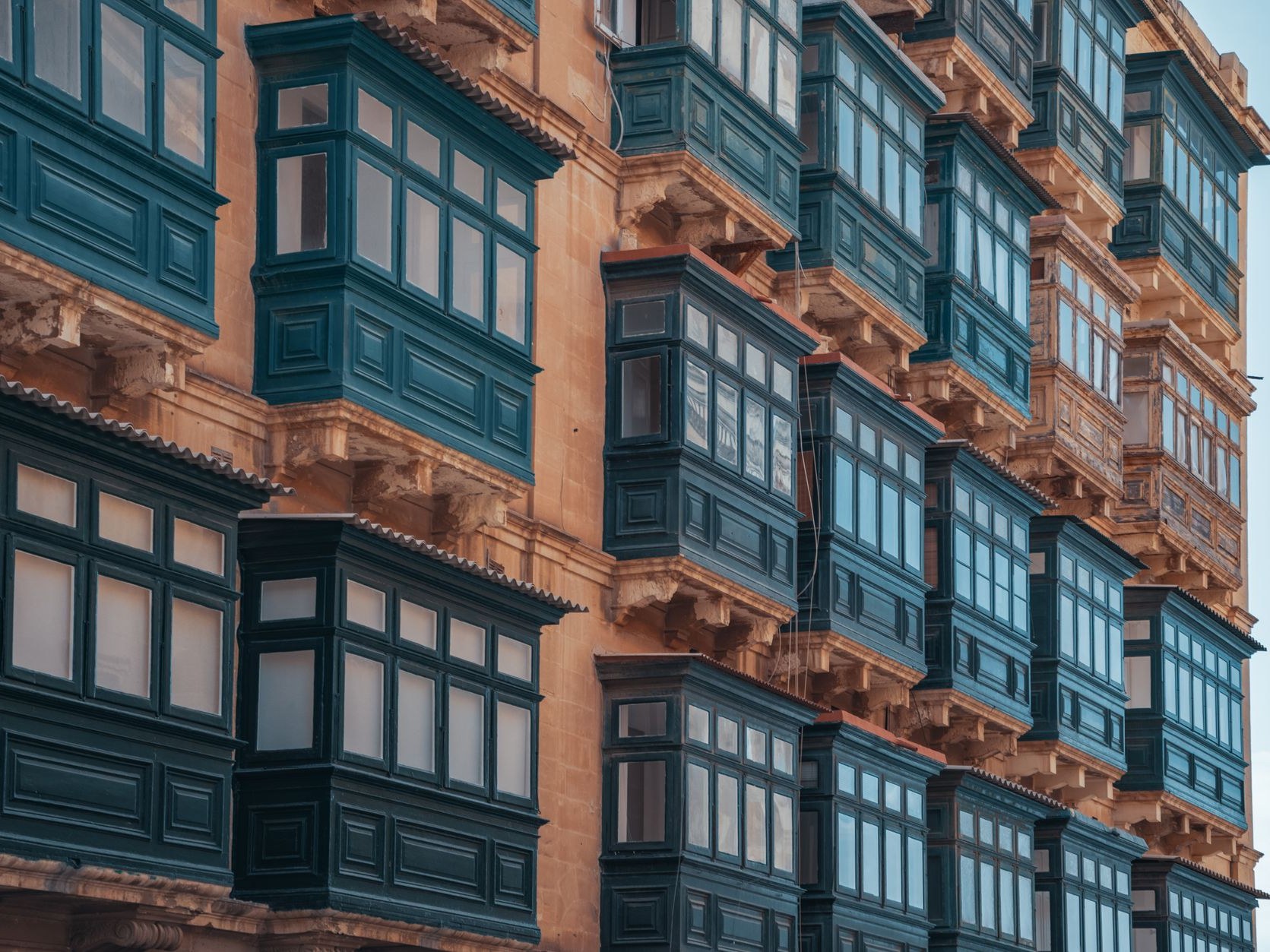
A street of townhouses with closed timber balconies along the top of the walls, with an unbroken view of the Three Cities. It is free, open at all hours, with benches.
A public roof garden on the Old Abattoir at the foot of Old Mint Street, with a pavilion, a small pond and mostly local trees. A lift goes up from reception.
The gilded nave of St John's, and nine more churches a few streets away.
Stand in front of Caravaggio's Beheading of Saint John the Baptist in the Oratory, then look down at a floor of around 400 marble tombstones and up at Mattia Preti's painted vault.
Read the guideThe great dome that dominates the skyline seen from Sliema, over a bright, high interior rebuilt after the war. Entry is free, and modest dress is expected.
Read the guideMore than 60 metres of spire make this Anglican pro-cathedral of the Diocese in Europe easy to pick out from Marsamxett Harbour. You come for a limestone church on Independence Square with an English organ inside.
Read the guideThe first church in the new city, built on South Street to mark the Great Siege victory. Its painted vault is restored, and entry is free when open.
Read the guideOne of the city's largest churches, rebuilt after a gunpowder explosion in 1634, with paintings by Stefano Erardi and Mattia Preti. The Old University Building adjoins it.
Read the guideOne of Valletta's oldest churches, built in the 1570s on St Paul Street, keeps relics of the saint whose shipwreck turned Malta Christian. Entry is free, and his feast on 10 February fills the streets.
Read the guideGoing underground beneath a working Valletta convent takes you into the old stone quarry where its cloistered nuns lived and worked, now a run of rooms open to visitors.
Read the guideAn oval dome, rare in Malta, crowns Romano Carapecchia's Baroque interior of 1740. Look for the gilded statue of the Immaculate Conception above the door.
A Greek Catholic church built for the icon the Knights carried from Rhodes. Its services follow the Byzantine rite, and locally it is called Id-Damaxxena.
The Aragonese knights' small church from the 1670s, with Stefano Erardi's altarpiece inside. Heritage Malta opens it by appointment, so book through its website.
The Italian knights' church from 1576, with an octagonal nave. Mattia Preti painted both the altar canvas and the cupola in grey and gold.
Known as Ta' Ġieżu and visited for its Miraculous Crucifix, carved around 1630 by Innocenzo da Petralia. Friars Minor still care for the church.
Gardens on the bastions look straight down on the Grand Harbour.
From the highest point of Valletta's city walls, you look across the Grand Harbour to the fortified Three Cities, with ferries and yachts passing far below and the Saluting Battery's cannons on the tier beneath you.
Read the guideA quiet garden at the eastern end of the walls, around a small temple to Alexander Ball, with a terrace over the mouth of the Grand Harbour. Entry is free.
Read the guideAt noon and 16:00, Monday to Saturday, gunners in period uniform fire a cannon above the Grand Harbour, and your ticket puts you close to it, at the oldest saluting battery still in operation.
Read the guideThree bronze tritons hold up a wide basin in the plaza outside City Gate. It stands at the bus terminus and is lit at night.
Read the guideGlass cars climb the bastion from the wharf to Upper Barrakka Gardens, saving the stepped streets. The Three Cities ferry leaves a short walk along the quay below.
Read the guideTerraced beds of cacti, succulents and Mediterranean trees on the Floriana bastions, run by the University of Malta. The botanic section opens only at set times, so check ahead.
Read the guideA small garden on the bastions beside City Gate, looking across Marsamxett Harbour to Sliema and down into the ditch. Entry is free, with little shade at midday.
Read the guideThe knights' Baroque stores on Pinto Wharf, now restaurants and bars along the harbour beside the cruise terminal. City Gate is a steep 10 to 15 minute walk up.
Read the guideBastions line the harbour, with Valletta on one shore and Birgu and Senglea on the other. See it from the water: a dgħajsa crosses from Lascaris Wharf in minutes.
A former Protestant cemetery inside a bastion, where the Maltese scholar Mikiel Anton Vassalli is buried. Din l-Art Ħelwa opens it on weekday and Saturday mornings.
A street of townhouses with closed timber balconies along the top of the walls, with an unbroken view of the Three Cities. It is free, open at all hours, with benches.
A public roof garden on the Old Abattoir at the foot of Old Mint Street, with a pavilion, a small pond and mostly local trees. A lift goes up from reception.
The Order of St John built the city as a fortress, and you can walk its walls.
Go for the museum, where the George Cross awarded to Malta's entire population is on show, and for the star-shaped fort around it, whose bastions you can walk.
Read the guideAt noon and 16:00, Monday to Saturday, gunners in period uniform fire a cannon above the Grand Harbour, and your ticket puts you close to it, at the oldest saluting battery still in operation.
Read the guideCannons, a carved portal and a coat of arms fill the baroque front of the Prime Minister's office. It is closed inside, so see it from Castille Square.
Read the guideBetween state functions you can walk the restored State Rooms under Baroque painted ceilings, then an Armoury that is among the world's largest still in its original building.
Read the guideThe cut through the bastions into the city, rebuilt to Renzo Piano's design with a bridge over the dry ditch. Republic Street runs straight ahead to Fort St Elmo.
Read the guideA 16th-century cavalier by City Gate, built by the Order of St John, now holds Spazju Kreattiv, Malta's centre for creativity. See an exhibition, then stay for a film or a play.
Read the guideThe water tunnels and cisterns the Knights cut under the city, and the shelters dug out in the Second World War. You go down only on a timed Heritage Malta tour, so book a slot first.
Read the guideRound stone lids dot St Publius Square, each one capping a rock-cut pit that once stored the islands' wheat. There are 76 of them, in front of the church of St Publius.
The one auberge that keeps Girolamo Cassar's original Mannerist design, home to the knights of Aragon from 1571. A ministry occupies it, so you see it from the street.
An outer ring of bastions and ditches begun in 1636 around Valletta's land front, on UNESCO's tentative list. Start at Portes des Bombes and walk the streets beside them.
Antonio Sciortino's three bronze figures of 1927, for the fallen of the 1565 siege, stand in Great Siege Square on Republic Street. A short stop on the way to Fort St Elmo.
Fighter control ran from rooms under the gardens.
A quiet garden at the eastern end of the walls, around a small temple to Alexander Ball, with a terrace over the mouth of the Grand Harbour. Entry is free.
Read the guideTwelve rooms of a Valletta palace where the de Piro family still lives sit above enormous World War 2 bomb shelters cut from the rock, and one visit takes you through both.
Read the guideGo for the museum, where the George Cross awarded to Malta's entire population is on show, and for the star-shaped fort around it, whose bastions you can walk.
Read the guideYou get Malta's largest bell, hung in an open colonnade on a bastion above the Grand Harbour, and a reflective stop where the island remembers its Second World War siege.
Read the guideFrom 1940 to 1943, Malta's fighter control was run from these rooms 46 metres under the Upper Barrakka Gardens. They are still arranged much as they were in wartime, and you can walk through them.
Read the guideRenzo Piano's open-air theatre inside the surviving walls of the Royal Opera House, destroyed in 1942. Concerts under the open sky are ticketed event by event.
Read the guideCaravaggio in St John's Oratory, Mattia Preti at MUŻA, and a palace a family still lives in.
Stand in front of Caravaggio's Beheading of Saint John the Baptist in the Oratory, then look down at a floor of around 400 marble tombstones and up at Mattia Preti's painted vault.
Read the guideTwelve rooms of a Valletta palace where the de Piro family still lives sit above enormous World War 2 bomb shelters cut from the rock, and one visit takes you through both.
Read the guideStepping in off Republic Square, you reach the library that holds the Knights of St John's archives, from 1107 to 1798, and the order's own collection of historic books.
Read the guideCome here to see the prehistoric finds excavated from Malta's UNESCO-listed temples, among them the Venus of Malta from Ħaġar Qim and the colossal statue from Tarxien, gathered under one roof in Valletta.
Read the guideInside Malta's national art museum you meet the largest collection of Mattia Preti's paintings, in galleries that run from Neolithic finds to Maltese art of the early 21st century.
Read the guideFrom 1940 to 1943, Malta's fighter control was run from these rooms 46 metres under the Upper Barrakka Gardens. They are still arranged much as they were in wartime, and you can walk through them.
Read the guideKnown as MICAS, a ticketed gallery of changing international shows in a former gunpowder factory on the Floriana Lines. It shuts between exhibitions and is fully step-free.
Read the guideStamps, letter boxes, uniforms and franking machines trace Malta's post from the knights to the British era, in a small ticketed museum on Archbishop Street.
Read the guideA converted warehouse on East Street showing contemporary art from Malta and abroad in stripped stone rooms. Entry is free, Wednesday to Saturday afternoons.
Read the guidePlan one midday around the Upper Barrakka Gardens, timed to the gun from the Saluting Battery on the tier below. Watching from the gardens is free, and the arcades are shaded and breezy, a break from the midday heat.
St John's Co-Cathedral hangs Caravaggio's Beheading of St John the Baptist, his largest painting and his only signed one, in the Oratory it was painted for. Leave stilettos and narrow heels at the hotel, because they are not allowed on the inlaid marble floor, and shawls or wraps are available at the entrance. Carry a backpack on your front and keep the flash off.
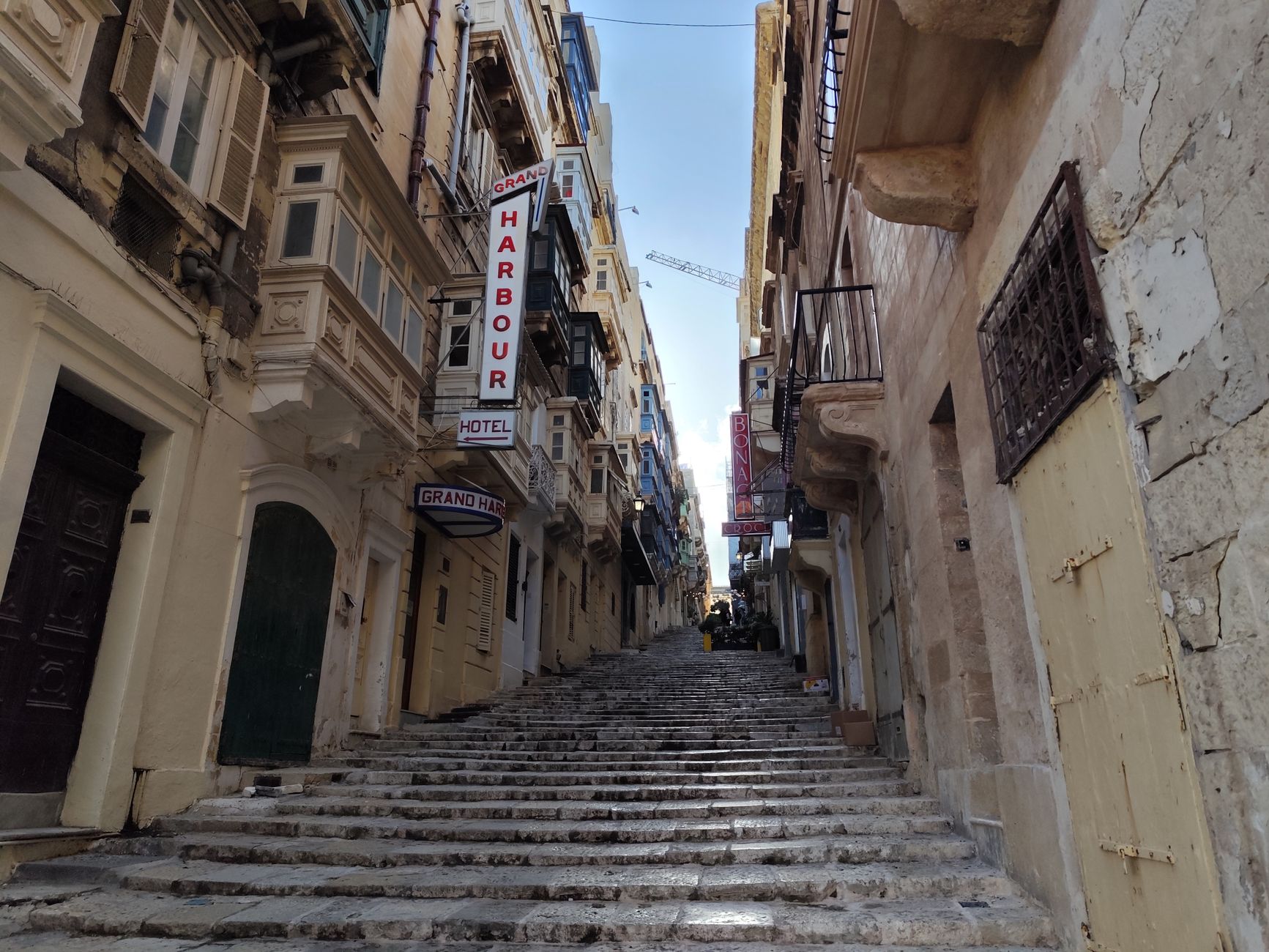
The city sits on a ridge, with streets falling steeply to the water on both sides, and many of them turn into flights of limestone steps. Whichever harbour you walk down to, you climb back up, so pack a bag you can carry up stairs.
On Sundays and public holidays from November to May, the Three Cities and Sliema ferries both stop by half past six in the evening, so a later dinner across the water means a taxi back. From June to October the Sliema ferry runs until midnight on those days.
Valletta is quieter in the evening than by day. Sit in the Lower Barrakka Gardens, a terrace over the Grand Harbour, then walk to Strait Street, where the wine bars open after dark.
The dates that fill the city. Book your room when you book the flight.
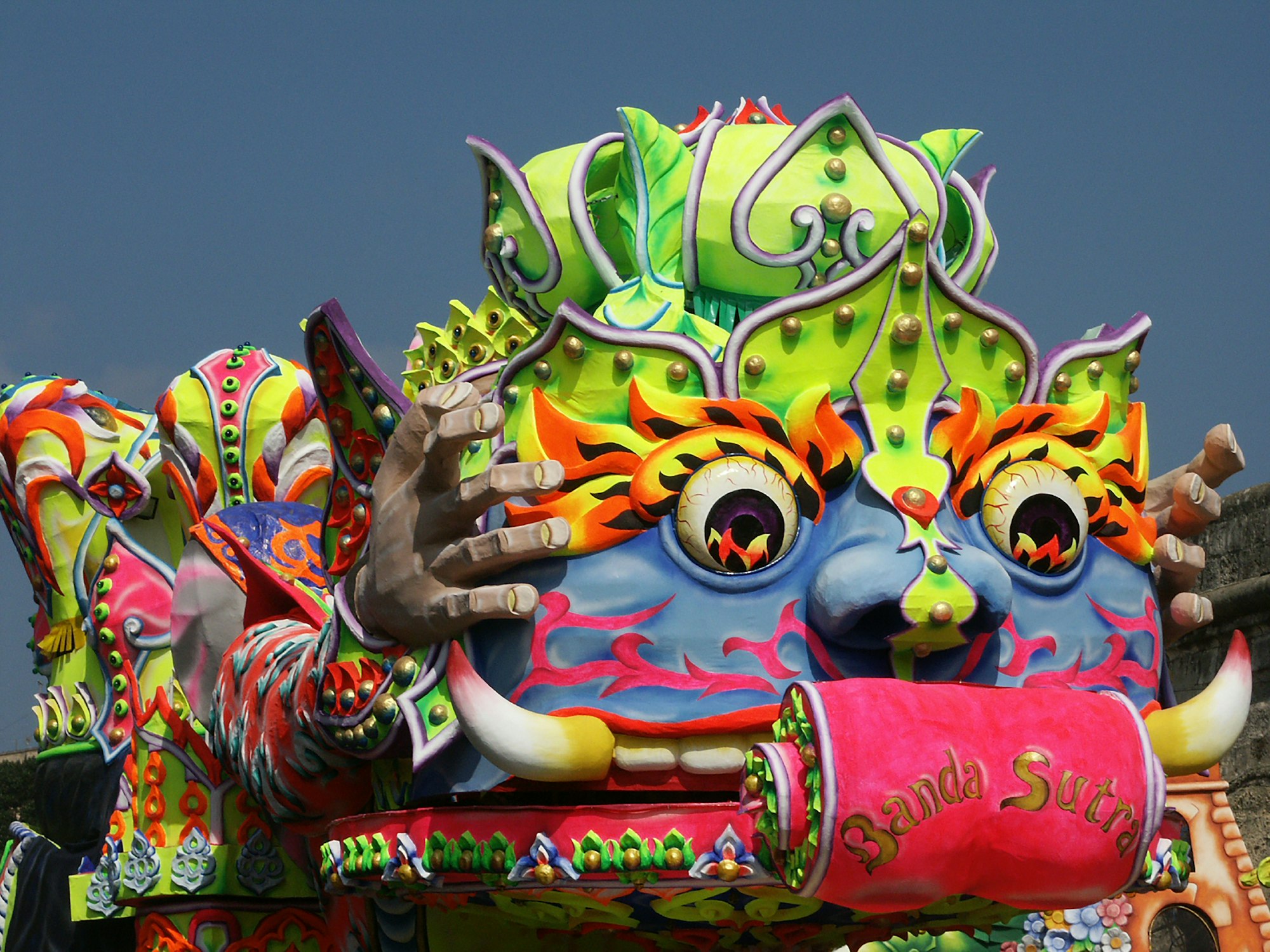
Five days of dance companies and floats, centred on Valletta. Stay several days, because wind can stop a session.
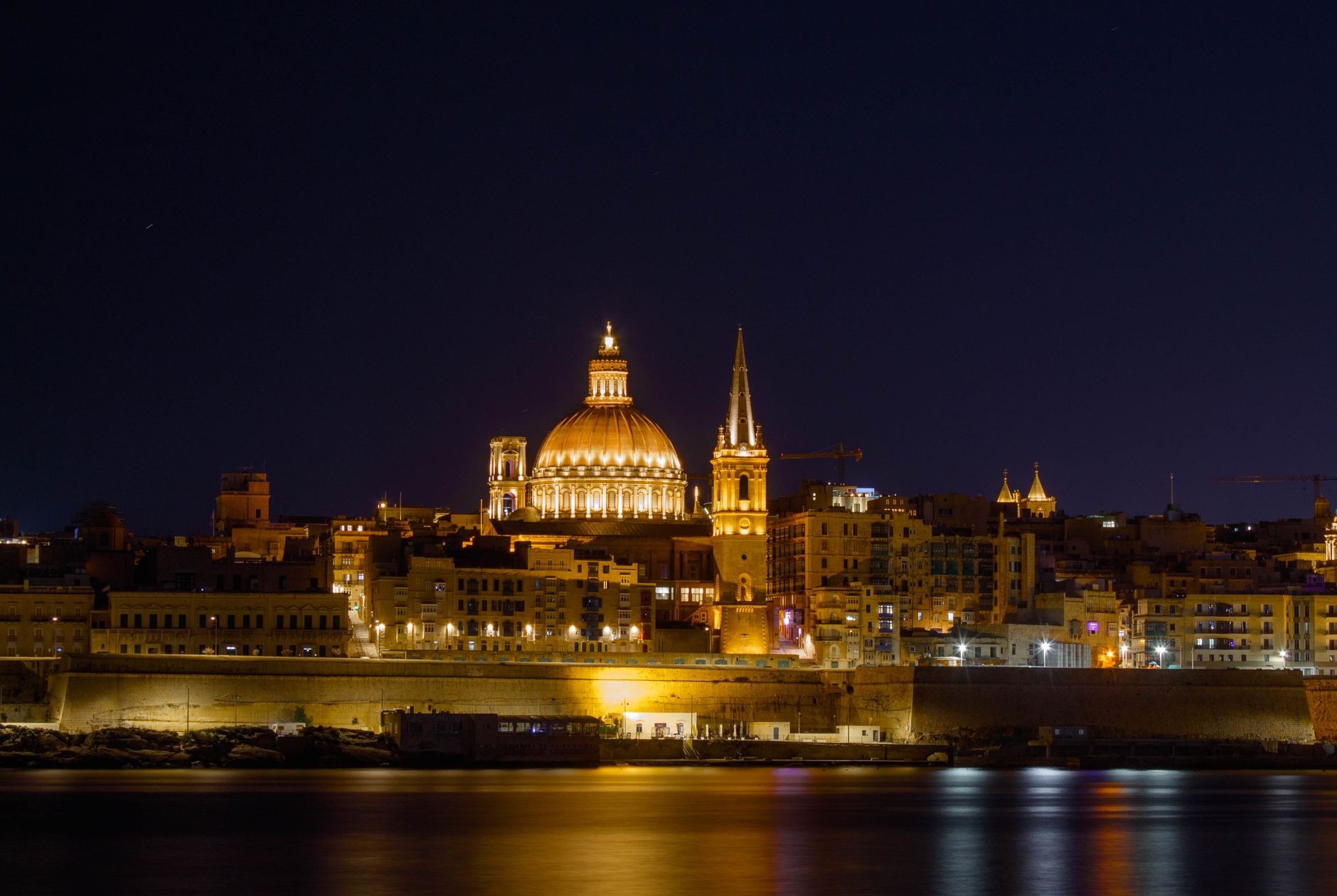
One night when the city fills from City Gate to Fort St Elmo.
The whole fleet is in view from the bastions for the opening hour, one group every ten minutes.
Malta has one airport, at Luqa, southwest of the city. Every hotel above is a short ride from the arrivals hall.
Airport Direct runs from stop Airport 1, in front of the terminal, to the terminus outside City Gate, from 05:20 until 00:50. Pay on board by cash or contactless card.
Buy a fixed-fare ticket at the booth in the Welcomers' Hall. Republic Street is pedestrianised, so a taxi to a hotel on it stops at Castille Square.
Request the car once you land, then walk to the pickup point the app shows outside arrivals. Bolt sometimes moves that point, so check the app again as you leave the terminal.
Going straight on to Gozo? The same TD4 stops for the Gozo Fast Ferry.
The official pages this guide was checked against.
Last updated