Things to do
6-
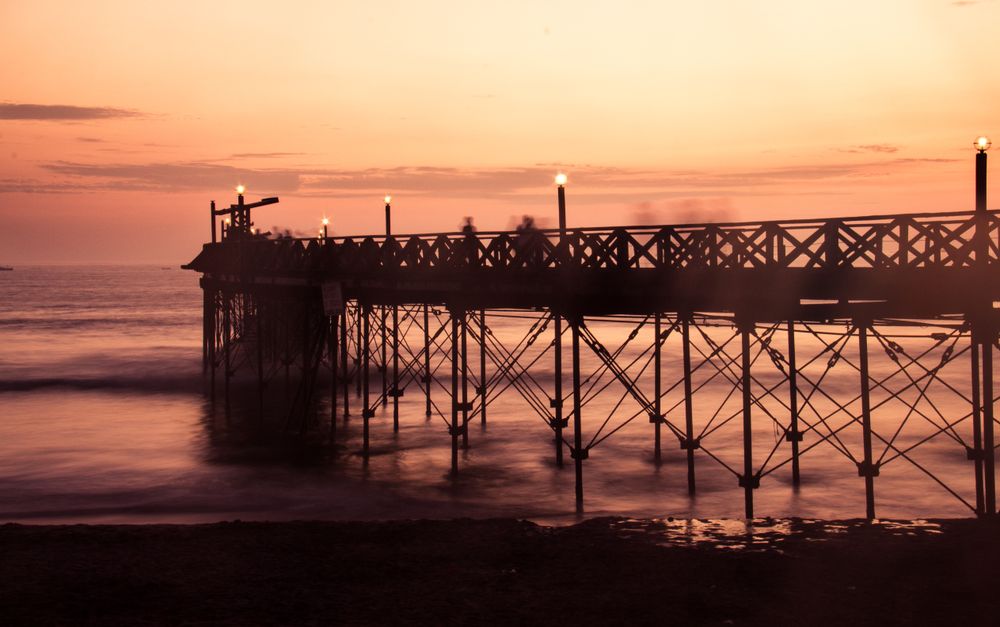
Pimentel
Chiclayo's beach resort, with a long wooden pier from the guano days and reed caballitos still launched through the surf by the fishermen in the morning. The pier is walkable and the seafront has restaurants along it, and colectivos run out from the city in about twenty minutes. Swimming is cold, since the Humboldt current reaches this far north.
-
Huaca Rajada
The eroded adobe platform where the Sipán tombs were found, half an hour from the city, with the burials reconstructed in place and a small site museum of the later finds. The excavation ran for years after 1987 and turned up more than a dozen graves, so the platform reads best after a visit to the Sipán museum in Lambayeque.
-
Mercado Modelo
The city's covered market, best known for its witches' section of herbs, dried animals and San Pedro cactus sold to the curanderos of the northern healing tradition. The food aisles run alongside, with ceviche counters working from first light and stalls selling the sweet king kong biscuit of Lambayeque. Go in the morning and keep bags closed.
-
Museo Nacional Sicán
A museum in Ferreñafe devoted to the Sicán culture that came between the Moche and the Chimú, with the gold from the Batán Grande tombs and a reconstruction of an elite burial laid head down. The building is a pyramid in outline, the labels run in Spanish and English, and Ferreñafe is twenty minutes out of Chiclayo by colectivo.
-
Museo Tumbas Reales de Sipán
A pyramid-shaped museum in Lambayeque built to hold the treasure of the Lord of Sipán, the richest unlooted tomb ever found in the Americas, discovered in 1987. The gold, the turquoise and the reconstructed burial are the reason to come north.
-
Túcume
Twenty six adobe pyramids around a rocky hill in the desert north of Chiclayo, a Lambayeque and Chimú capital the Spanish knew as the Valley of the Pyramids. Climb the hill for the plan of it, and come early, because there is no shade on the site and the afternoon wind lifts the sand.