Globe Countries Cities Itineraries World's Best Hotels Events Login
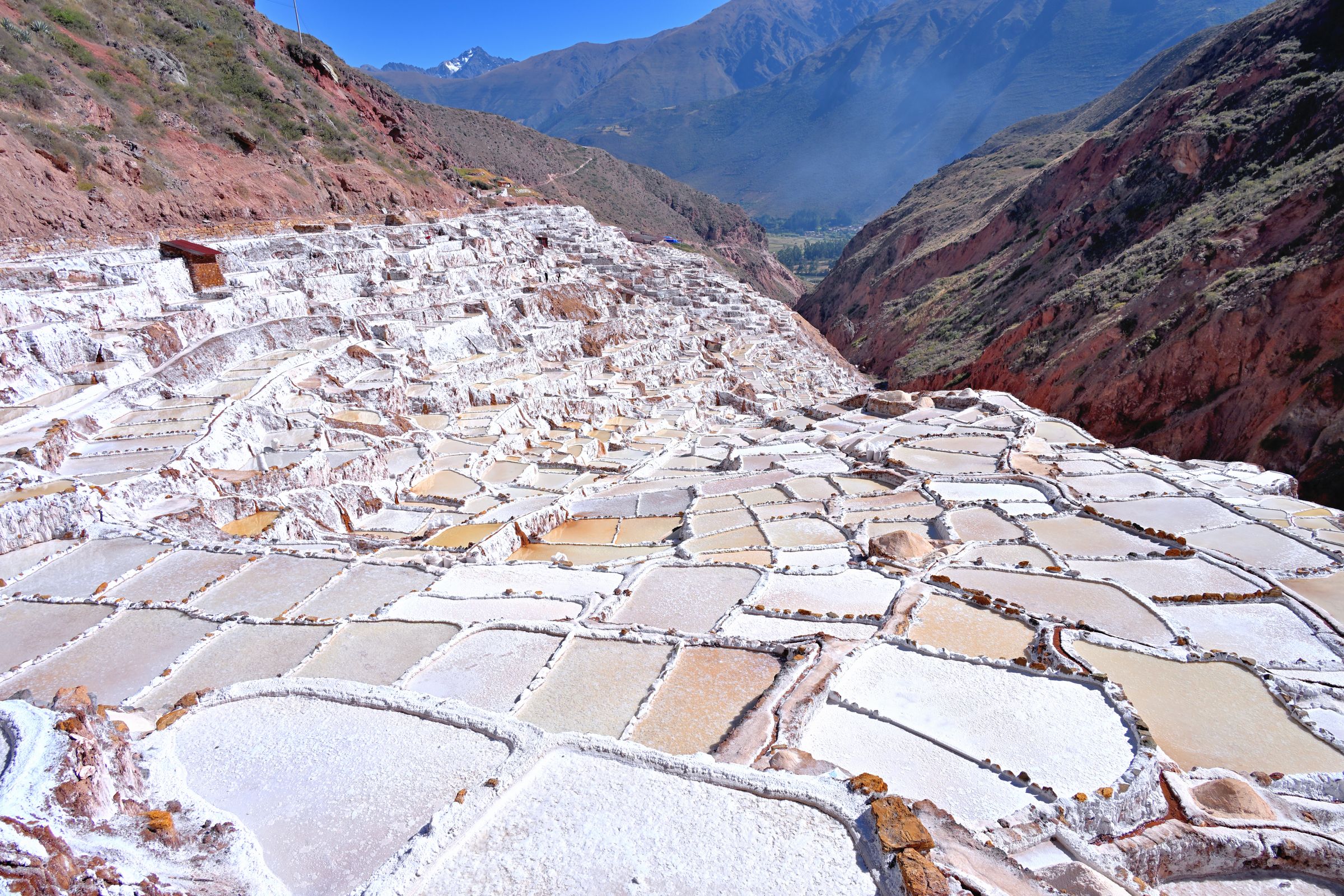
Terraced salt pools stepping down a red-earth ravine, with the green Urubamba valley and a snow peak beyond
The salt pans in the ravine below Maras · the Urubamba valley beyond
Town brief · 13.3328°S 72.1564°W

Maras

Walk it rather than ride it: from Moray's terraces the path runs through Maras village and past the salt pans, then drops more than 500 m to the Urubamba river at Pichingoto, so one day on foot takes you from the high plain to the valley floor.

View on globe

Why you should go

Ninety seconds on Maras

When
May to Octoberthe dry months: sunny, mild days and the best-quality salt
Altitude
About 3,300 m in the villageMoray about 3,385 m, the salt pans about 3,200 m
Tickets
Two, bought separatelythe Boleto Turístico covers Moray; the salt pans take their entry at the gate
Money
Cash, in small notescards are unreliable at both sites and in taxis, with no reliable ATM
Getting around
Taxi from the Maras turn-offnothing runs between Moray and the salt pans
Airports
Cusco CUZCusco to Maras and Moray is about 1 h 30 min by road
When

When is the best time to visit Maras?

The dry season, May to October, brings sunny, mild days and the best-quality salt. It is also the busiest season. Rain starts sporadically in October and lasts until March, when the pools can look muddy or partly flooded.

Altitude

How high is Maras?

The village stands at about 3,300 m, Moray at about 3,385 m and the salt pans lower, at about 3,200 m.

Tickets

Does the Boleto Turístico cover the Maras salt pans?

The Boleto Turístico del Cusco admits to Moray, which is listed as open from 7:00 to 18:00. The salt pans take their own entry at the gate, in cash, so a day covering both sites needs both.

Money

Can cards be used at Maras and Moray?

Not reliably. Card payment is unreliable or unavailable at both sites, in the taxis at the Maras junction and in colectivos, and neither site has a reliable ATM. Cash in small notes covers the salt pans' gate, the driver and the shops.

Getting around

How do you get between Moray and the Maras salt pans?

By taxi or on foot. No public transport runs between the two sites, so taxis from the Maras turn-off are usually hired for both. On foot, Moray to Maras village is about 4.9 km, and the village to the salt pans about 4 km, roughly an hour's walk.

Airports

Which airport serves Maras?

Cusco, CUZ. The paved road from Cusco to the Maras turn-off is 43 km, and Cusco to Maras and Moray takes about 1 h 30 min by road. From the turn-off, Moray is 12.7 km further.

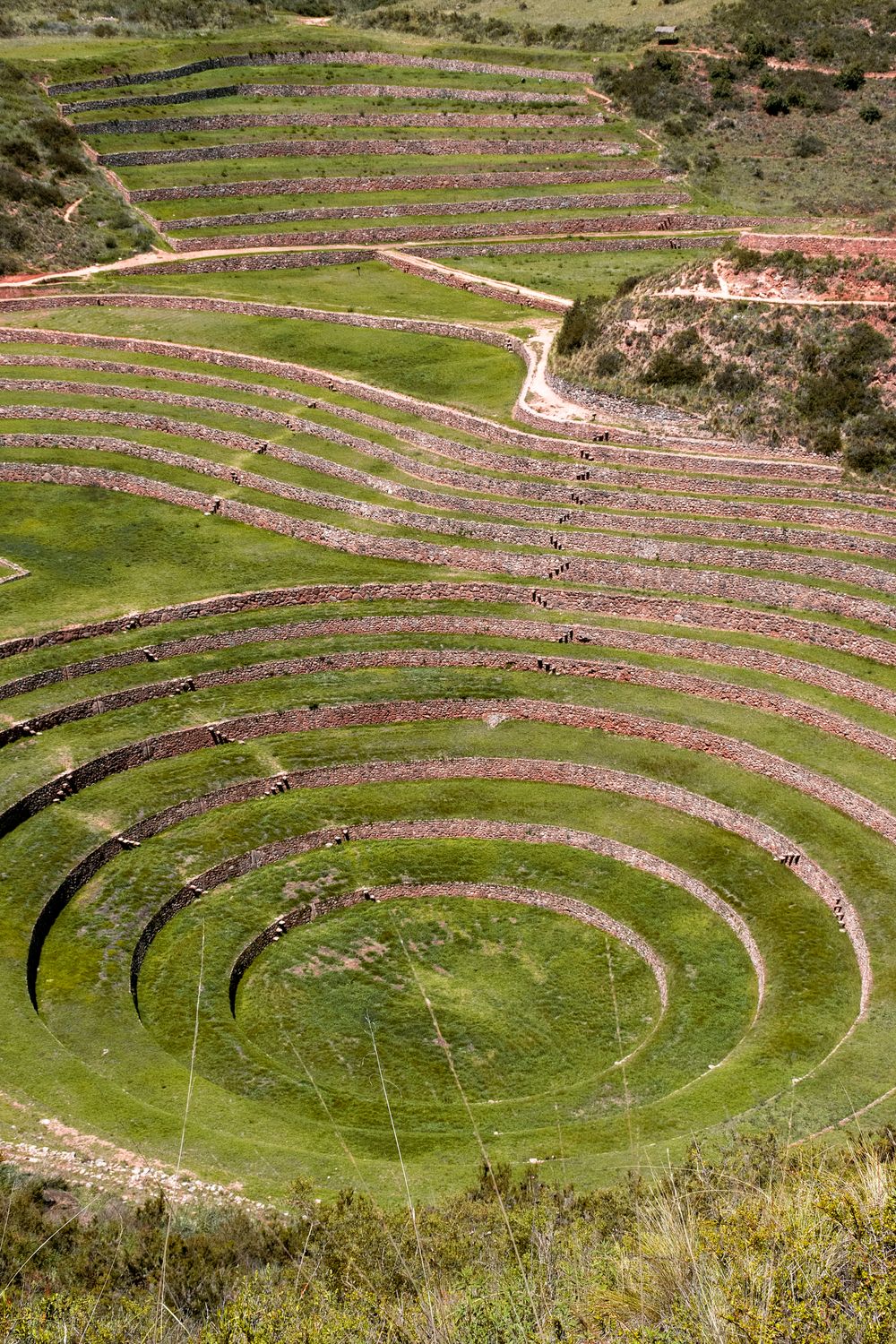
Start at Moray and finish at the salt pans, so the long downhill comes at the end of the day. Moray's main hollow steps down in twelve concentric terrace levels, and a walk around its rim takes about half an hour. The paved road from Maras village to Moray is 8 km.

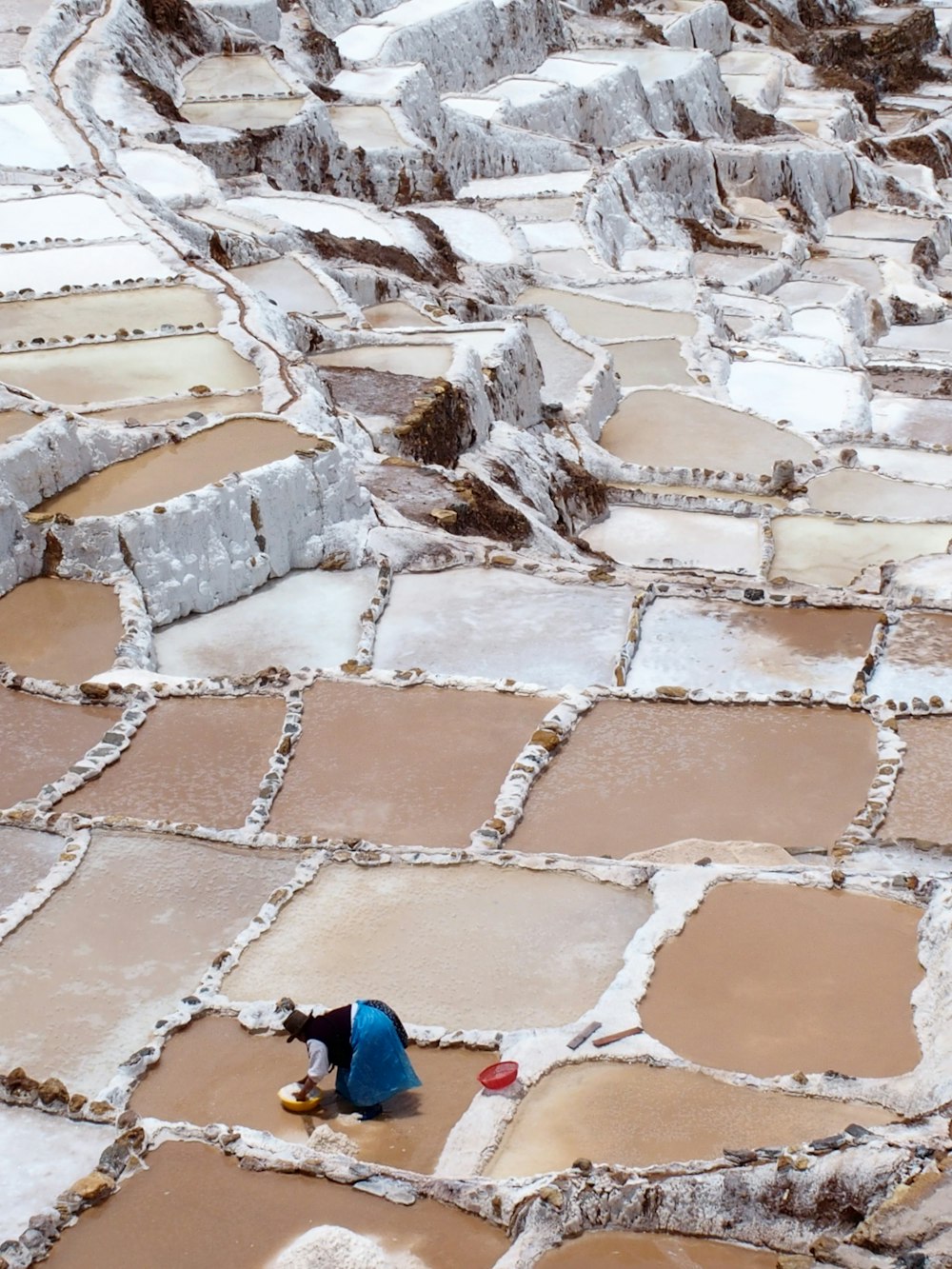
At the salt pans, the pools are seen from viewpoints and marked paths; walking on the pools themselves is banned. Local families own the wells, and the salt is harvested about once a month. The shops by the entrance sell the salt, flavoured salts and salt-based skincare.

From Cusco, colectivos leave through the morning from the colectivo stops on Calle Pavitos: ask for the desvío a Maras, the Maras turn-off. Taxis wait at the junction, so agree before setting off which sites the driver covers and how long the driver waits at each. Return transport from the junction thins out after about 14:00.

From the bottom of the salt pans a trail drops to the valley road near Pichingoto in about an hour, then crosses the bridge over the Urubamba. It is steep, uneven and dusty: wear proper shoes, and skip it in heavy rain. Book a taxi in advance to meet you beyond the bridge; the whole walk from Moray is about 11.8 km and takes about six hours.

This is no day for acclimatising, because the plateau stands as high as Cusco. While you adjust, sleep in the Sacred Valley, near 2,800 m, and come up for the day. Both sites are exposed: bring sunscreen, a hat and a warm layer.

Things to do

2
  1. Moray

    Moray

    Ruins · 1.5 hr

    Three roughly circular hollows sunk into the plateau at about 3,385 m, the largest stepped with twelve rings of Inca terraces. A path follows the rim, and a full circuit takes about 30 minutes on foot. Entry is on the Boleto Turístico del Cusco, and the site is listed as open from 7:00 to 18:00.

  2. Maras Salt Pans

    Maras Salt Pans

    Landmark · 1 hr

    Pre-Columbian salt ponds fed by a saline spring, with approximately 3,000 evaporation pools terraced into a hillside near Maras village. The ponds have been in continuous use since Incan times and remain operated by local communities.

Basemap Meridian · data © OpenStreetMap
Explore

More of Peru

Peru
Country

Peru

Every Peru town, place and dispatch, on one map.

Urubamba
Town

Urubamba

The largest town in the Sacred Valley lies on the Urubamba river, 48 km from Cusco and about an hour away by road.

Chinchero Church and Convent
Monastery · Chinchero

Chinchero Church and Convent

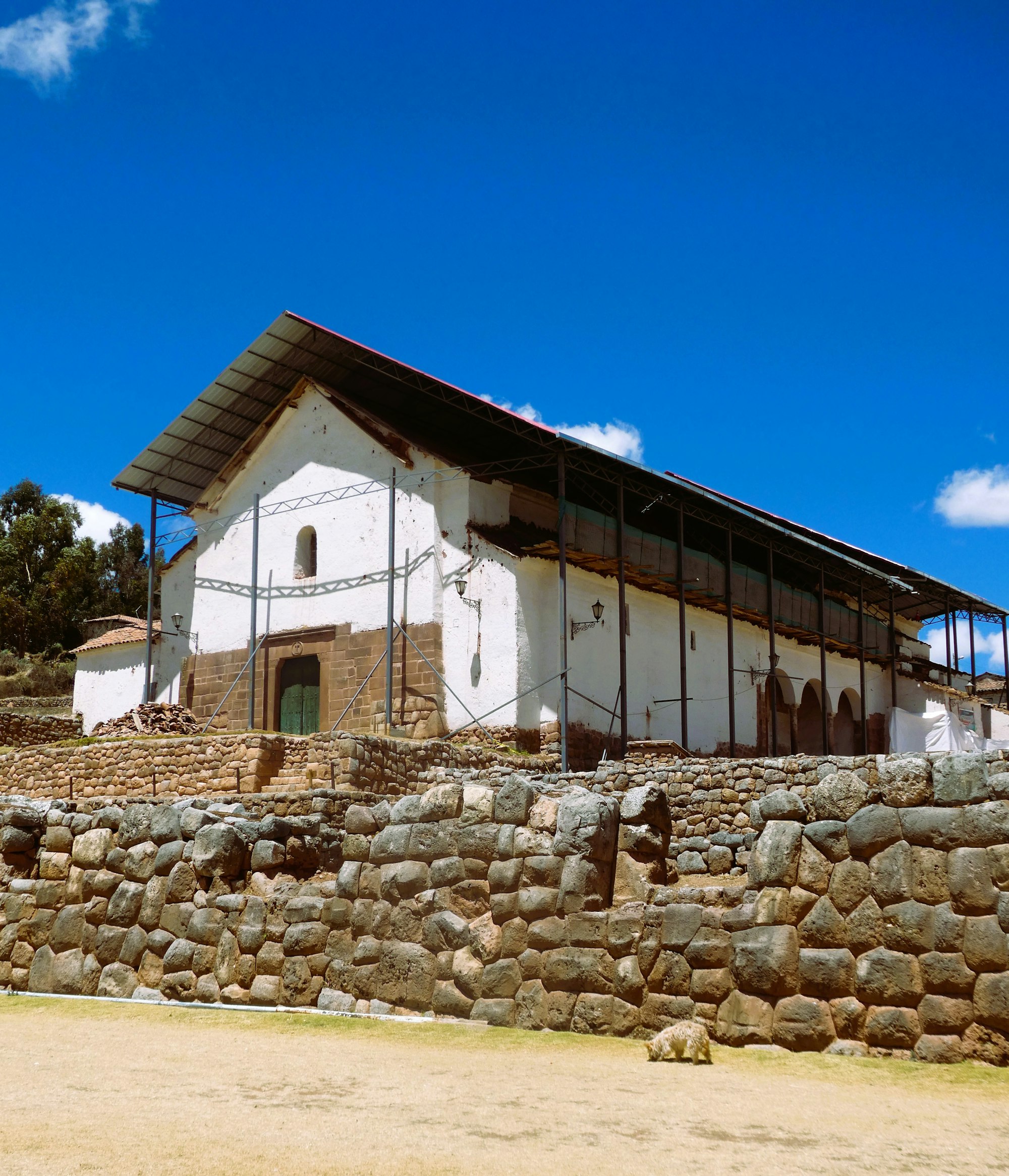
Easy to pass by from the plaza, Chinchero's parish church stands on the foundations of an Inca royal palace.

Chinchero
Town

Chinchero

A weaving town on the high plain between Cusco and Urubamba, built over Inca foundations.

Inti Raymi
Event · Cusco

Inti Raymi

Give the whole of 24 June to it and save your strength for the afternoon at Sacsayhuamán, where the full ceremony plays out.

Sources 4

The official pages this guide was checked against.

Last updated