Things to do
8-
Hotel Paracas, a Luxury Collection Resort
The big resort on the bay, on the site of the 1940s original that hosted Peru's presidents, with pools to the water's edge, its own pier for the Ballestas boats and a spa. It is the base for the reserve and the Ica dunes.
-
Islas Ballestas
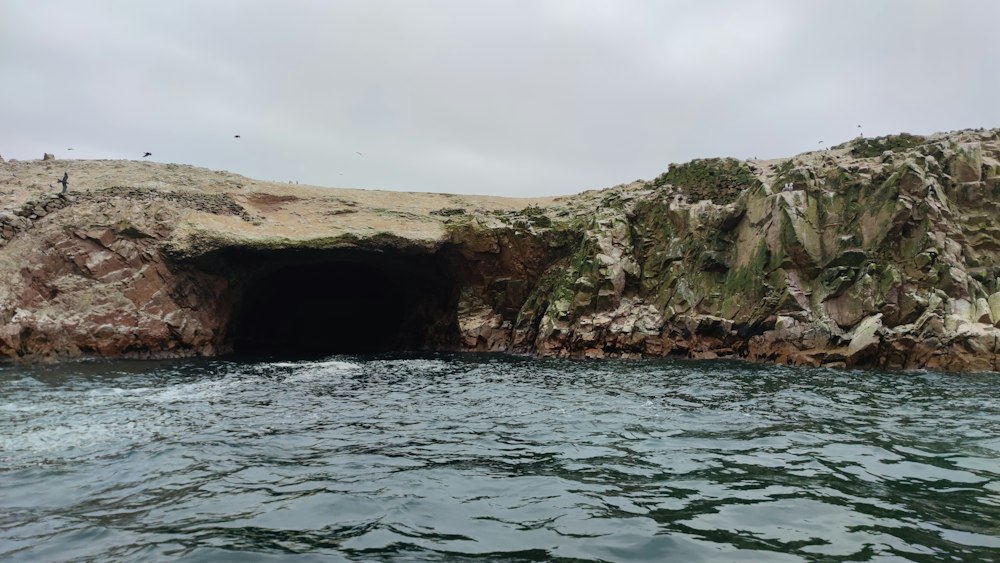
Guano islands an hour's boat ride out, stacked with boobies, cormorants, Humboldt penguins and sea lions, the cheap Peruvian answer to the Galápagos. Boats leave early from the Chaco pier and do not land. The crossing can be choppy, the guano smell is strong, and sailings run two or three times each morning.
-
Reserva Nacional
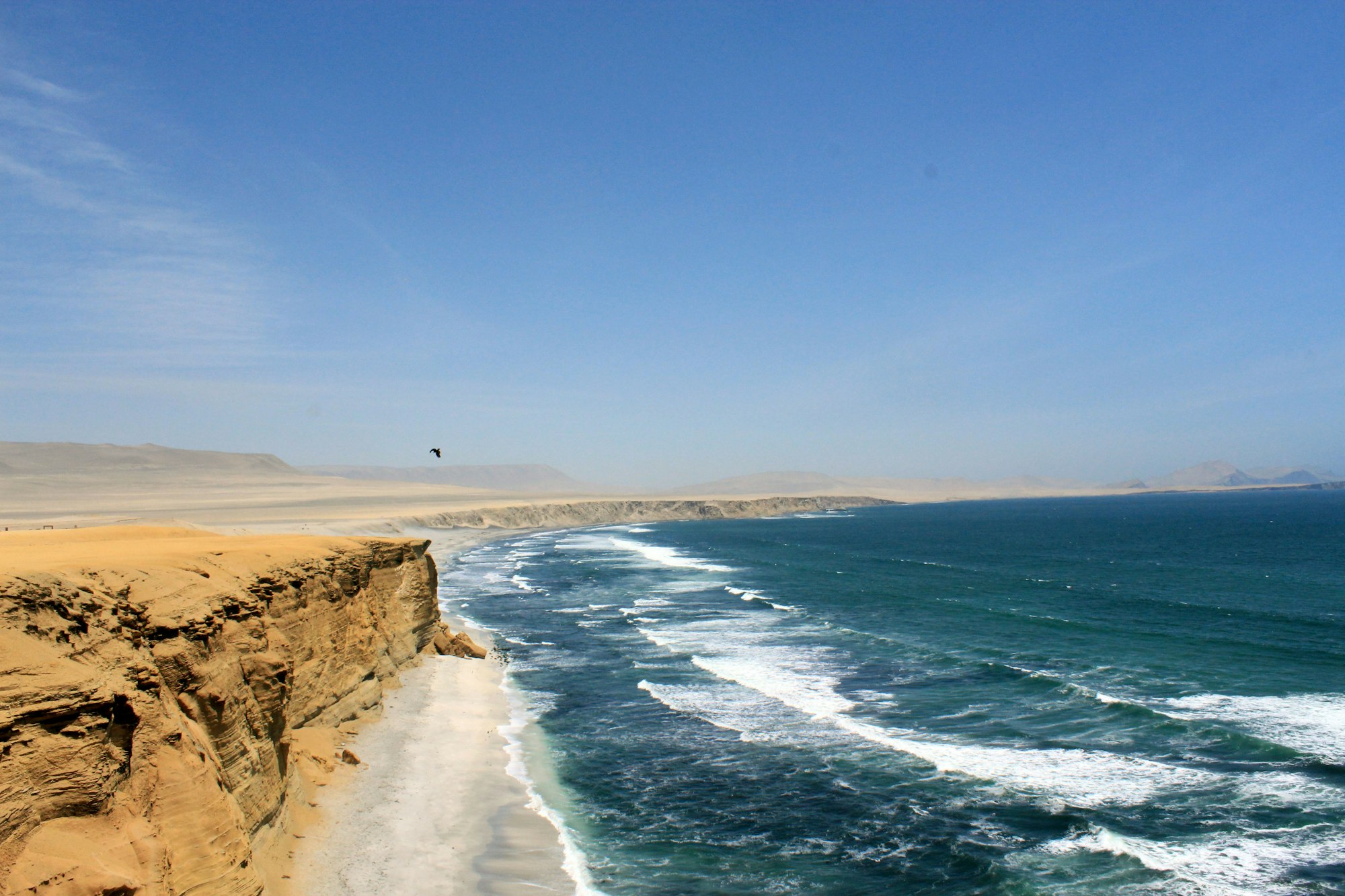
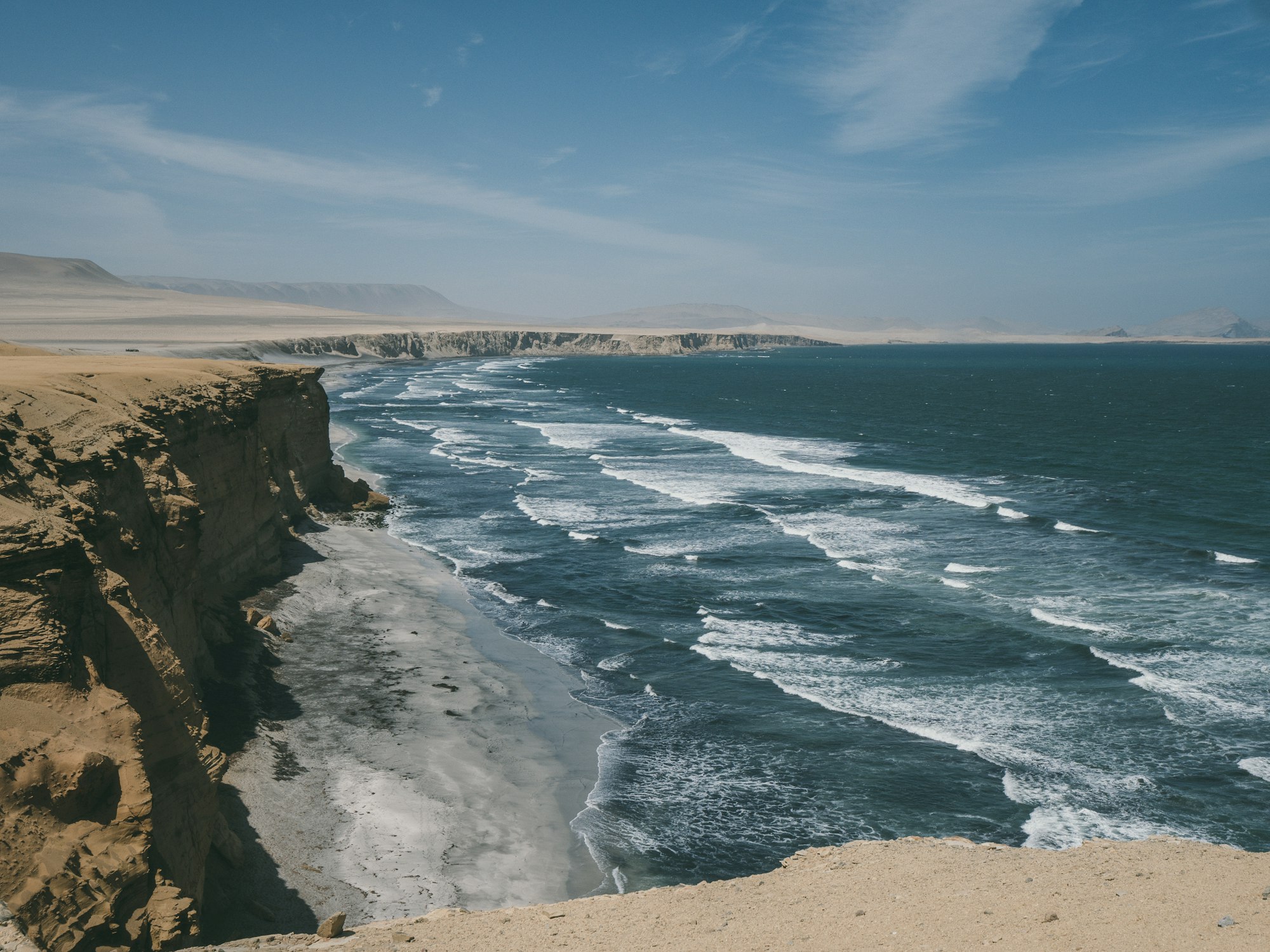
A desert peninsula of red and ochre cliffs falling into a cold, bird-thick sea, the oldest marine reserve in the country. A vehicle loop takes in the coloured beaches, the flamingos in the bay and the wind-cut rock of the coast.
-
El Candelabro
A 180-metre geoglyph cut into the sandy hillside of the peninsula, seen from the sea on the way to the Ballestas. Its makers and purpose are still argued over; it dates to around 200 BC. The morning light from the water shows it clearly, and the sand has held the shape because rain almost never falls here.
-
La Hacienda Bahía
A calmer resort on the same bay, with rooms opening onto lawns and a beach where the flamingos come in on the tide. The kitchen leans on the fish landed at Lagunillas. It stands a short walk from the Chaco pier, so the island boats are reached on foot before breakfast.
-
Lagunillas
A fishing cove inside the reserve with a row of open-sided seafood restaurants on the beach and pelicans on the boats. It is the lunch stop of the reserve circuit. Boats land their catch beside the tables, and the cove lies inside the park boundary, so entry comes with the reserve ticket.
-
Museo de Sitio Julio C. Tello
The reserve's museum, named for the archaeologist who found the Paracas necropolis in 1925, holding textiles, elongated skulls and trepanned bones of the culture that buried its dead in the sand here. Half an hour covers it, and it sits at the reserve entrance, which makes it the first stop on the circuit.
-
Playa Roja
A beach of red sand inside the reserve, the colour coming from pink granodiorite ground out of the cliffs by the swell. It is the most photographed stop on the reserve loop and is closed to bathing. The track in is unpaved, the wind can close the viewpoint, and the reserve gate is half an hour from town.