Things to do
6-
Líneas de Nazca
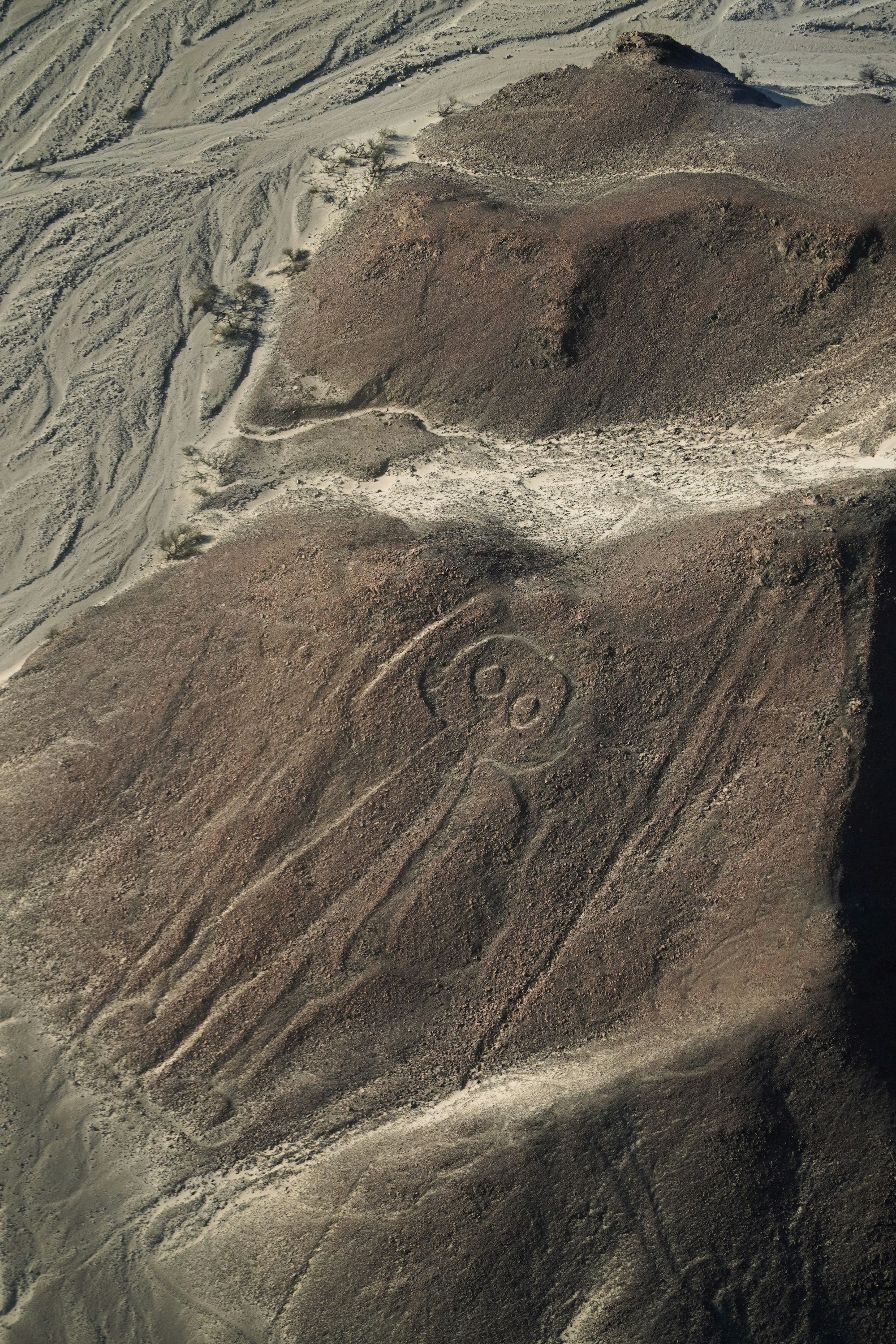
Hundreds of lines, trapezoids and animal figures scratched into the desert pavement between 500 BC and AD 500, best seen from a 30-minute light aircraft flight out of the Nazca airstrip. The flights go in the calm of the morning. A roadside tower on the highway shows three figures from the ground for anyone who would rather stay down.
-
Acueductos de Cantalloc
Spiral stone wells that step down to underground channels the Nazca cut around AD 500 to bring mountain water beneath the desert. Most of the forty-odd aqueducts still run and still water the fields around them. The spirals can be walked down to the water, and the site sits four kilometres out of town.
-
Cahuachi
The ceremonial capital of the Nazca culture, a set of adobe pyramids and plazas in the desert 25 kilometres west of town, from which the lines were almost certainly overseen. Much is unexcavated and there are few visitors. The road out is unpaved and taken with a driver, and Italian teams still dig here in the winter months.
-
Cementerio de Chauchilla
An open desert necropolis 30 kilometres south of town where looters left mummies, hair and textiles in the sand; the tombs have since been re-set and roofed. The dry heat preserved bodies for a thousand years. Tours from town take about three hours, and the ground offers no shade at all in the middle of the day.
-
Mirador de las Líneas
A metal tower beside the Pan-American Highway that gives a ground-level view of the Hands and the Tree, for anyone who would rather not fly. It is 20 kilometres north of town and the figures read best in low sun.
-
Museo Antonini
The town's archaeological museum, run by the Italian mission that has dug Cahuachi for decades, with trophy heads, panpipes and textiles, and a stretch of restored Nazca aqueduct in the garden. An hour covers it, the labels run in Spanish and Italian, and it makes more sense of the lines than the flight does.