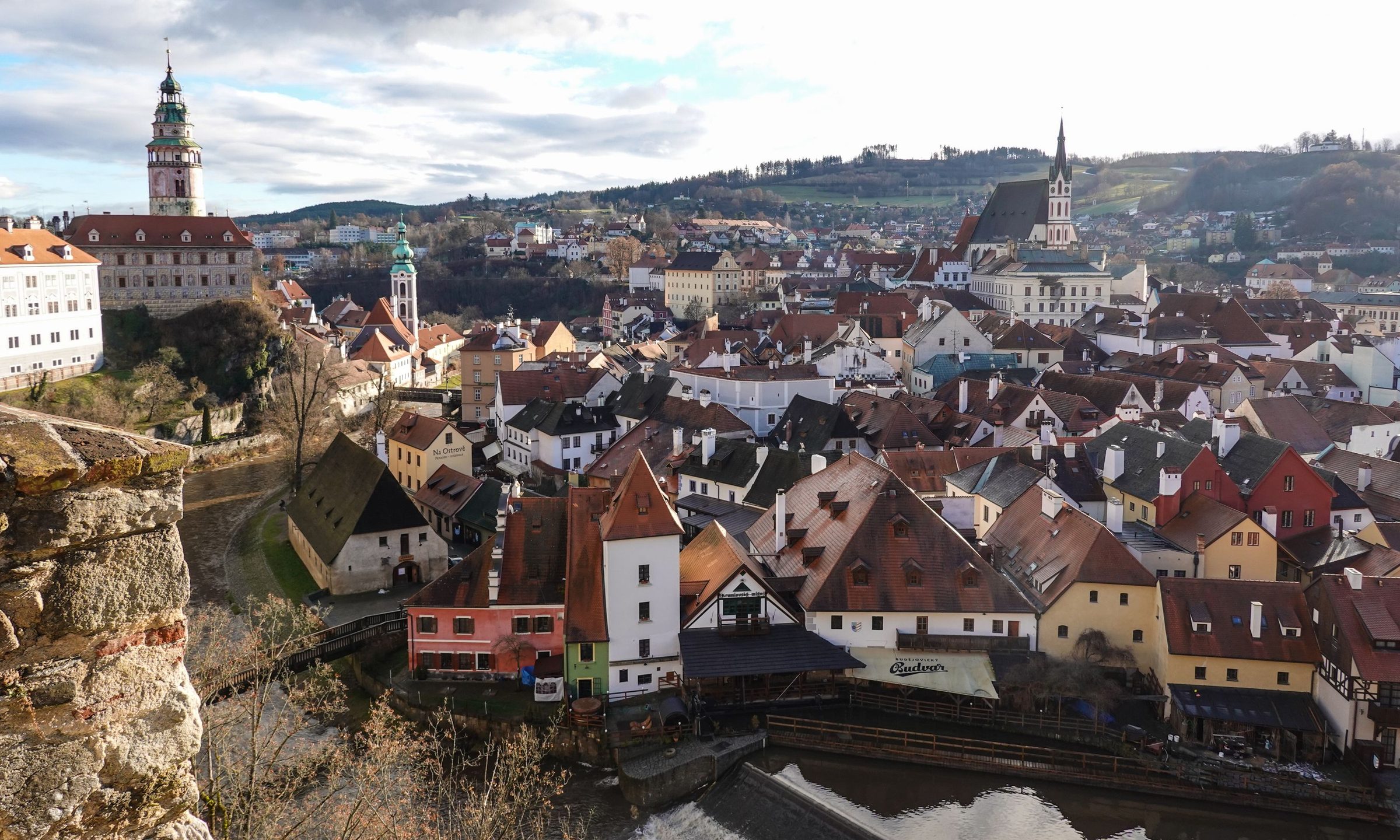
Castles, spa towns and sandstone, none of them more than a few hours from Prague.
A week covers Prague and two bases outside it: three nights in the capital with Kutná Hora or Karlštejn as a day trip, then Český Krumlov in the south and Brno or Olomouc in Moravia. Ten days adds the sandstone country of Bohemian Switzerland in the north or the spa towns of Karlovy Vary and Mariánské Lázně in the west. The distances are short, and no leg of that route takes much more than three hours.
Not for the towns. Trains and long-distance buses connect them well: RegioJet and České dráhy both run Prague to Brno in about two and a half hours, and the bus is the easier way to Český Krumlov, where the train needs a change at České Budějovice. A car helps with castle-hopping and the sandstone parks. Every car on the motorways needs an electronic vignette, sold online at edalnice.cz and at post offices and fuel stations, and tied to the number plate.
May, June and September bring long days and open castles without the July and August crowds in Prague and Český Krumlov. Most castles and châteaux run guided tours from April to October and close or shorten their hours from November to March, so a winter trip leans on the towns, the museums and the Christmas markets, which in Prague run from late November into early January. The ski season in the Krkonoše usually runs from December to early April.
In Prague, in hotels and among younger Czechs, yes. The EF English Proficiency Index for 2025 ranks the country 23rd of 123, in its high band. English thins out in villages and among older people, some of whom learned German or Russian at school. Czech is the national language, and many castle tours run in Czech with a printed English text, with tours in English held less often and worth booking ahead.
The Czech koruna. The government has set no date to adopt the euro, and a shop that takes euros does so at its own rate. Cards and contactless payment are standard in the towns. Czech law allows an exchange made at a bureau to be cancelled within three hours, receipt in hand, and at cash machines and card terminals that offer a conversion, choosing koruna avoids a poor rate.
Václav Havel Airport Prague handled about 17.8 million passengers in 2025 and is the main way in. It has no rail link: trolleybus 59 runs to the metro at Nádraží Veleslavín, and the Airport Express bus to the main station. Brno and Ostrava have small airports with mostly seasonal and low-cost routes. For South Moravia, Vienna is often the easier door, a little over a hundred kilometres from Brno.
Ninety seconds on the country
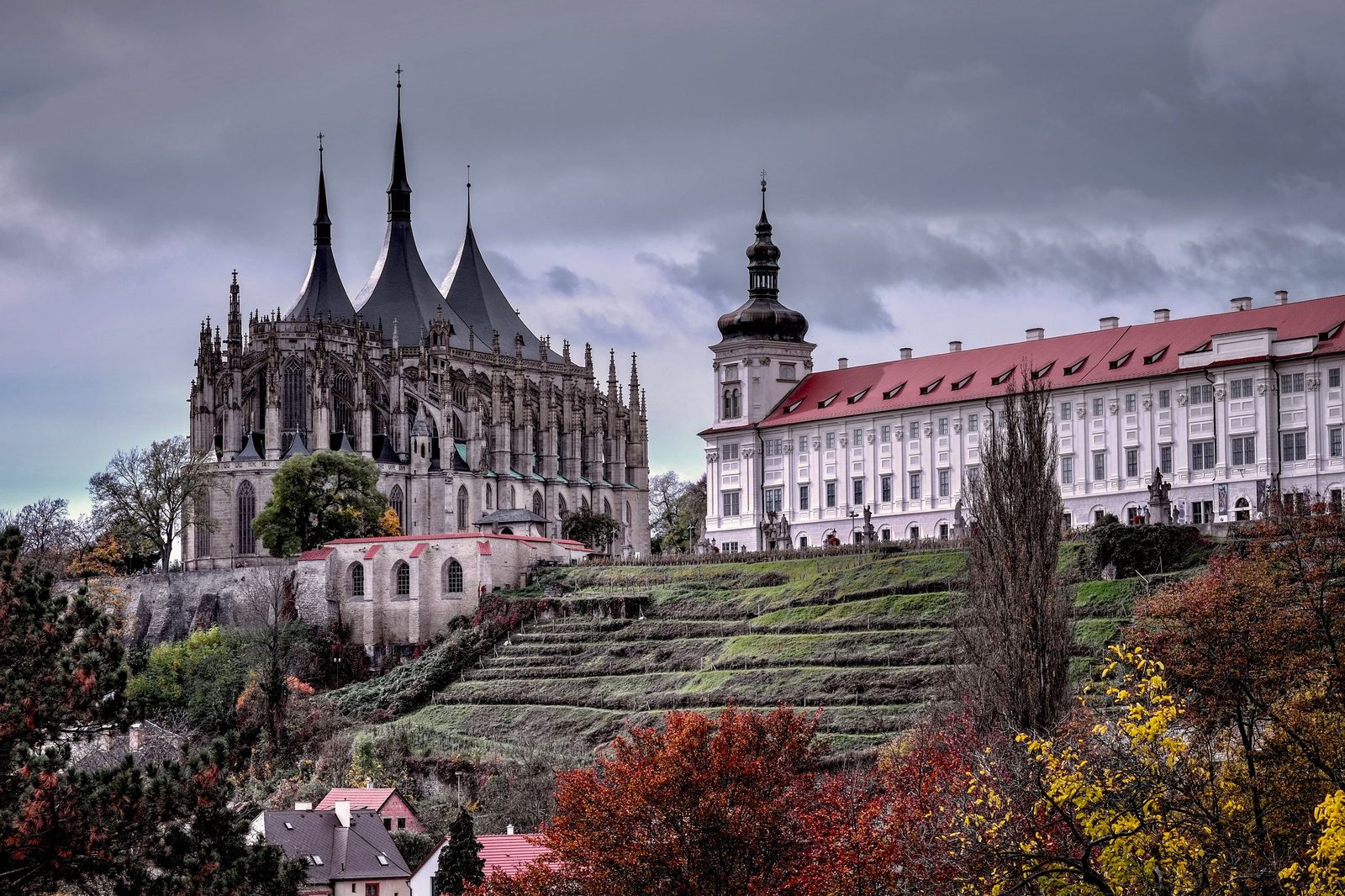
The Czech Republic keeps an unusual amount of old Central Europe standing. Prague came through the Second World War with little bomb damage, and so did most of the towns beyond it, so Gothic castles, Renaissance squares and baroque churches survive across a country slightly smaller than Austria.
UNESCO lists a run of them: the town of Český Krumlov, the square at Telč, the silver town of Kutná Hora, the Jewish quarter of Třebíč, the Lednice estate in South Moravia and Villa Tugendhat in Brno. Most are within three hours of Prague by train or bus.
Prague takes most of the visitors and repays an early start, when the bridge and the castle are quiet. The case for the rest is how little effort they cost: Olomouc has a square and a column to rival the capital with a fraction of the crowd, and Telč and Litomyšl empty out once the coaches leave.
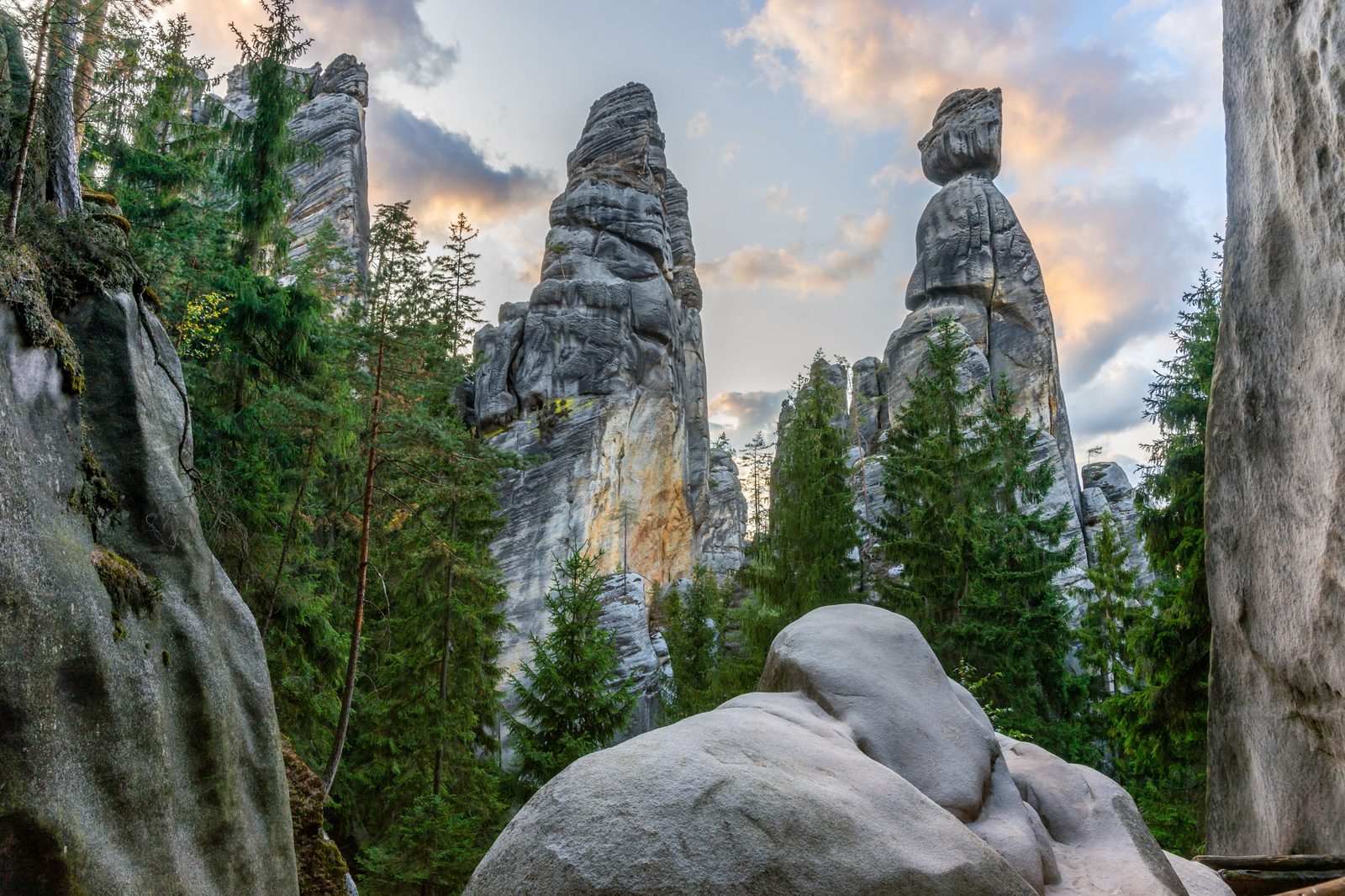
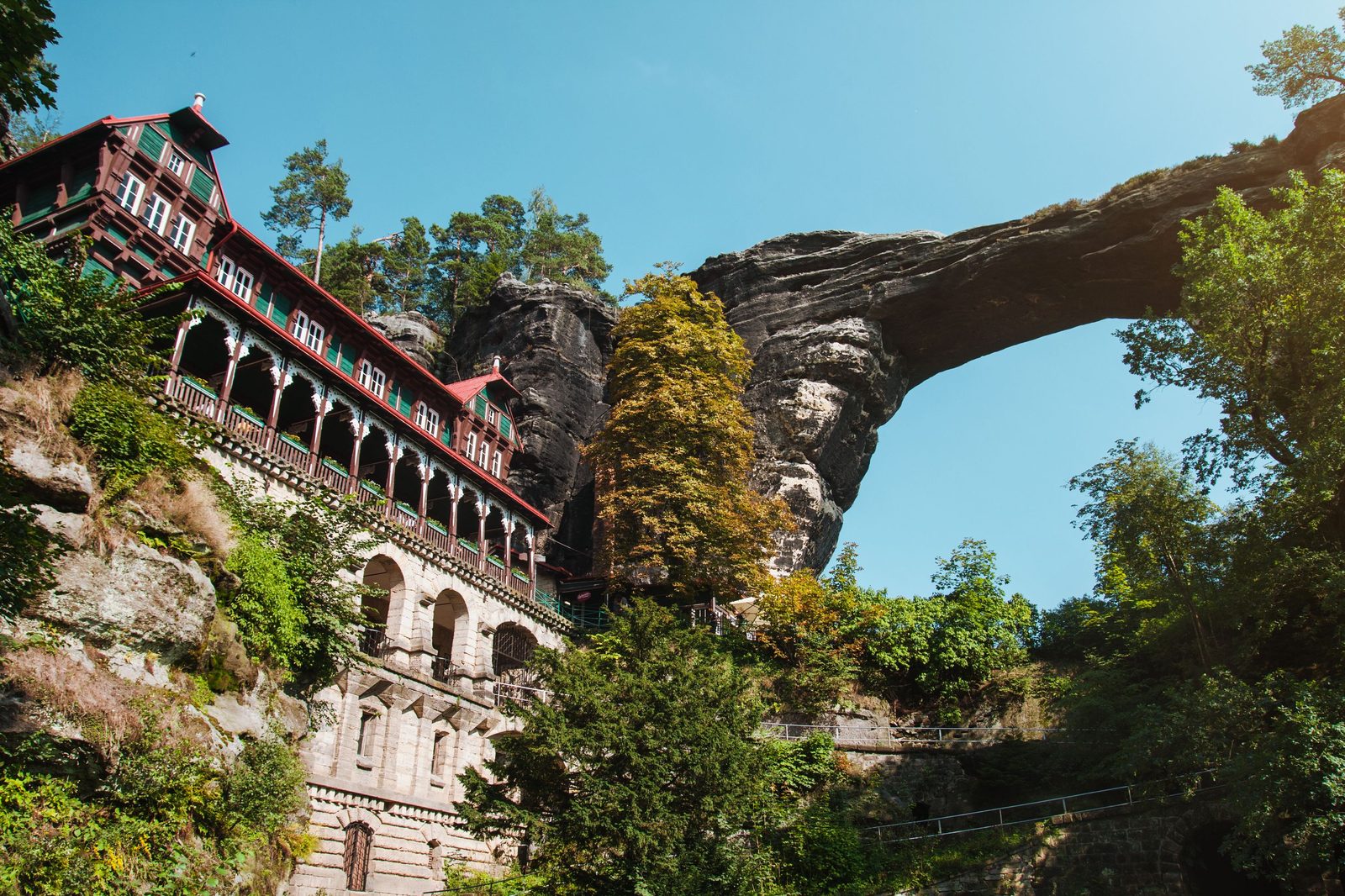
The north is the least expected part. Sandstone arches, gorges and rock towns run along the border at Hřensko and Adršpach, the Krkonoše climb to the highest peak in the country, and the Moravian Karst north of Brno carries an underground river through its caves.
Start with the best of the country, or pick how you want to travel. The towns, the things to do and the map all change with it.
Give Prague three or four nights and start early: the castle, Charles Bridge and Old Town Square are calm before nine and packed by eleven. Kutná Hora, with the bone chapel at Sedlec and St Barbara’s, is an easy day trip by train, and Karlštejn is closer still.
Then go south to Český Krumlov for two nights, and stop at Telč or Třebíč on the way to Moravia. Brno earns a night for Villa Tugendhat, whose tickets sell out early, and the Punkva Caves north of the city need booking too. Castle interiors mostly close from November to March, so plan a winter trip around the towns.
Castles carry most of it. Prague, Český Krumlov, Karlštejn and Hluboká are the famous ones, and Benešov and Křivoklát put a dozen more within a day of the capital. Most are seen on guided tours at set times, and many open from April to October only, so check the season before you plan around one.
The towns are the other half. Telč, Litomyšl and Kroměříž are small enough to see in a day and quiet once the coaches leave, Olomouc has a square to rival Prague’s with a fraction of the crowd, and Brno has the modernist Villa Tugendhat, booked weeks ahead.
Sandstone shapes the north. Hřensko is the base for Bohemian Switzerland and the Pravčická brána arch, Adršpach for a maze of rock towers on timed tickets, and Turnov for the rock towns and ruined castles of Bohemian Paradise.
Further east the stone turns to limestone. Blansko sits at the edge of the Moravian Karst, where caves run under the plateau and the Macocha Abyss drops into it, and in the south Třeboň is ringed by carp ponds dug five centuries ago. Book the cave tours ahead in summer.
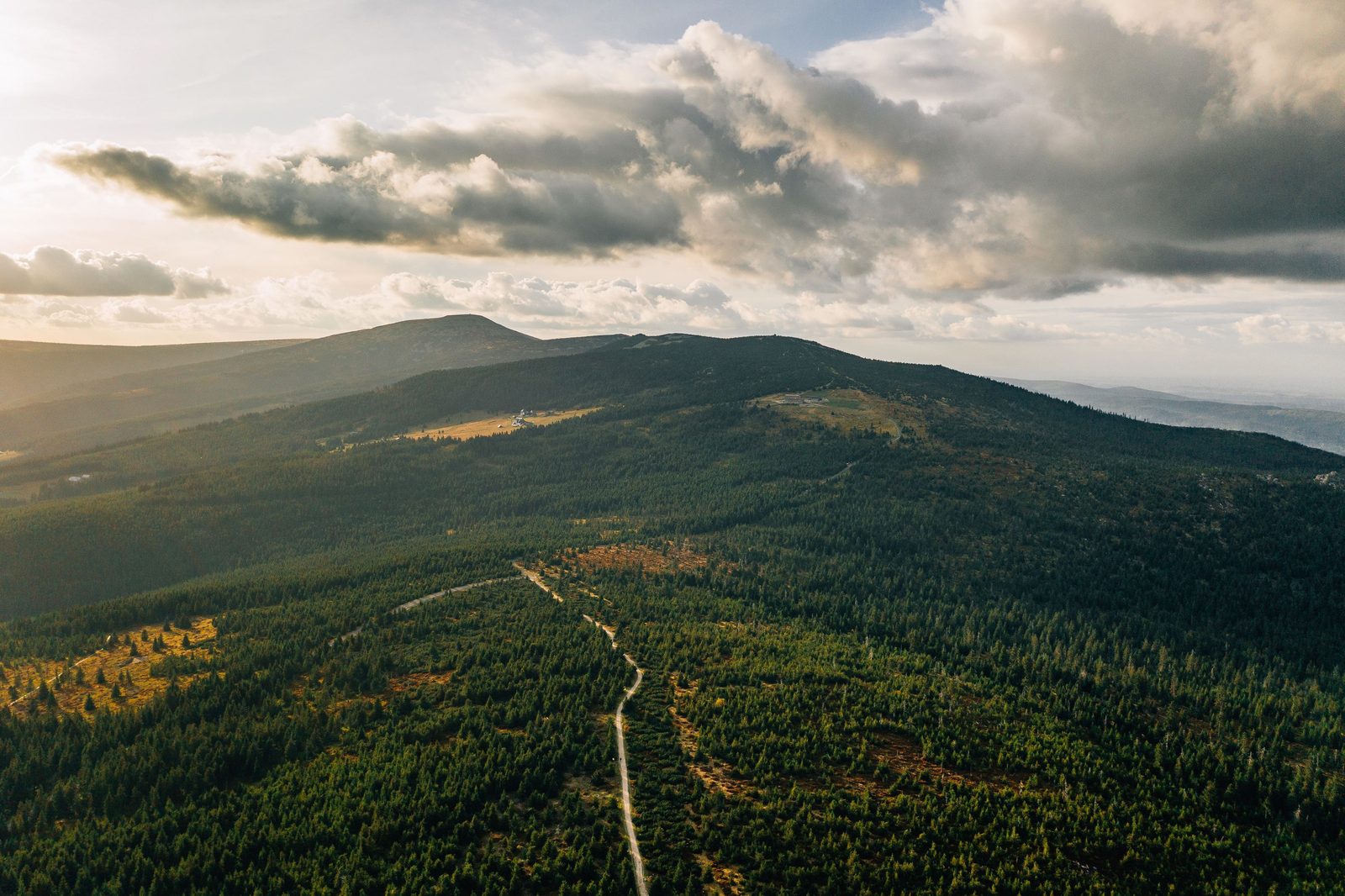
The mountains along the northern border are where to go. Pec pod Sněžkou sits under Sněžka, the highest peak in the country, with a cable car for the way down, and Karlova Studánka in the Jeseníky is the trailhead for Praděd and the Bílá Opava gorge, walked uphill only.
In Moravian Wallachia, Rožnov pod Radhoštěm is the start for the ridge to Pustevny and Radhošť. The mountains turn to skiing from December, and Lipno in the south adds a ski area above its reservoir. Check the forecast before a ridge walk: fog and wind close in quickly above the tree line.
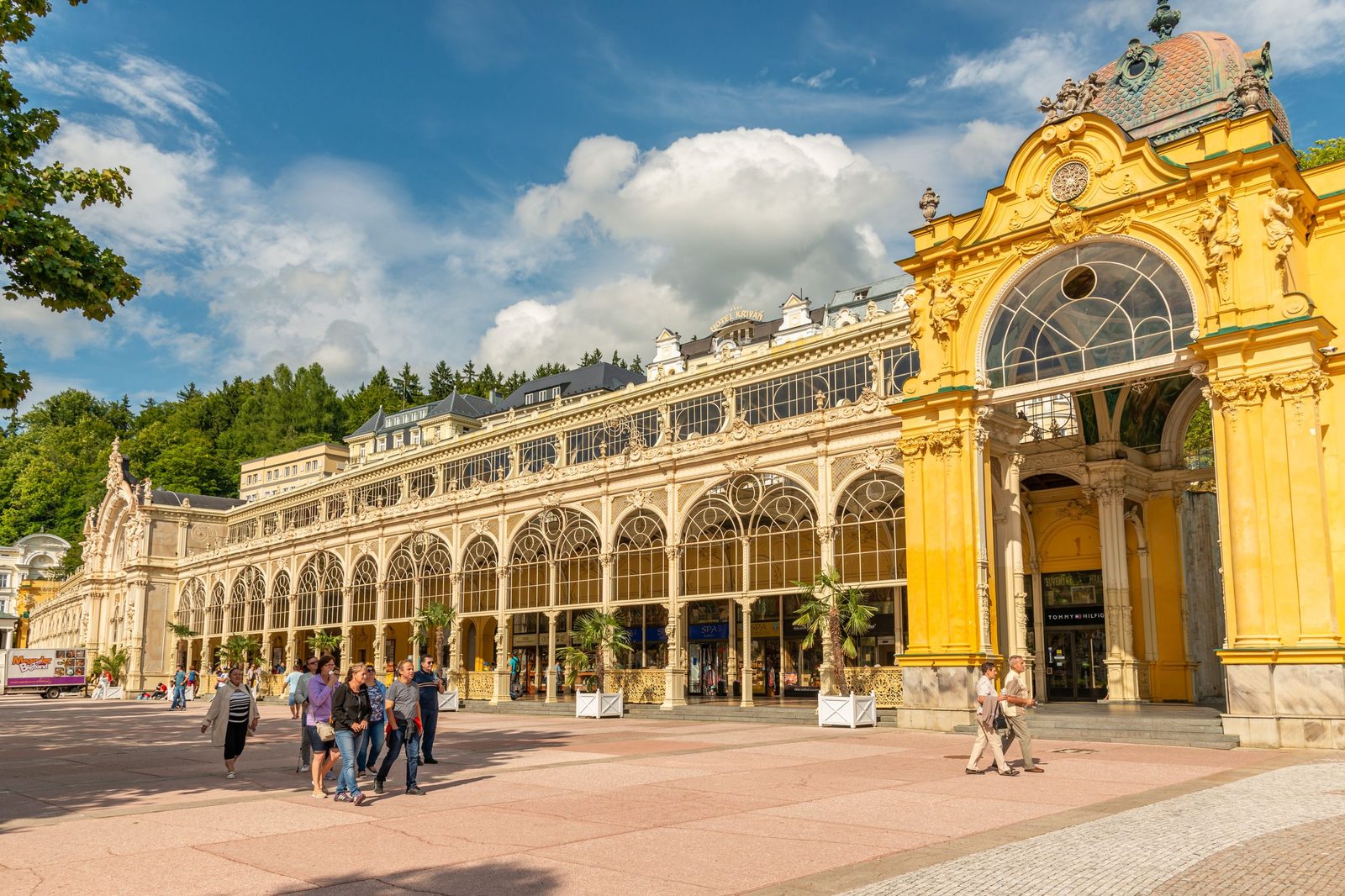
The grand hotels of the spa towns are the Czech version of luxury. Karlovy Vary has Grandhotel Pupp at the end of the colonnades and the Imperial on the hill above them, and Mariánské Lázně has the Nové Lázně, with its baths under the same roof as the rooms.
Prague holds the rest: the Four Seasons on the river by Charles Bridge, the Mandarin Oriental in Malá Strana and Hotel Paříž beside the Municipal House. Outside the cities, Hotel Růže in Český Krumlov and the chateau at Hrubá Skála make the building itself the reason for the night.
The places on this page are in the app, each with a verdict: why to go, how far from your hotel, how long to stay. Forward your confirmations and the days fill themselves in.