Things to do
12-
The Icelandic Museum of Rock 'n' Roll
The national pop and rock museum, opened in 2014 inside the Hljómahöll concert hall, tracking Icelandic music from 1920 to the present. Björk, Sigur Rós, Of Monsters and Men and Keflavík's own Hljómar all have their place in it, with listening booths and a karaoke room alongside the displays. It is the best hour in town when a flight has slipped.
-
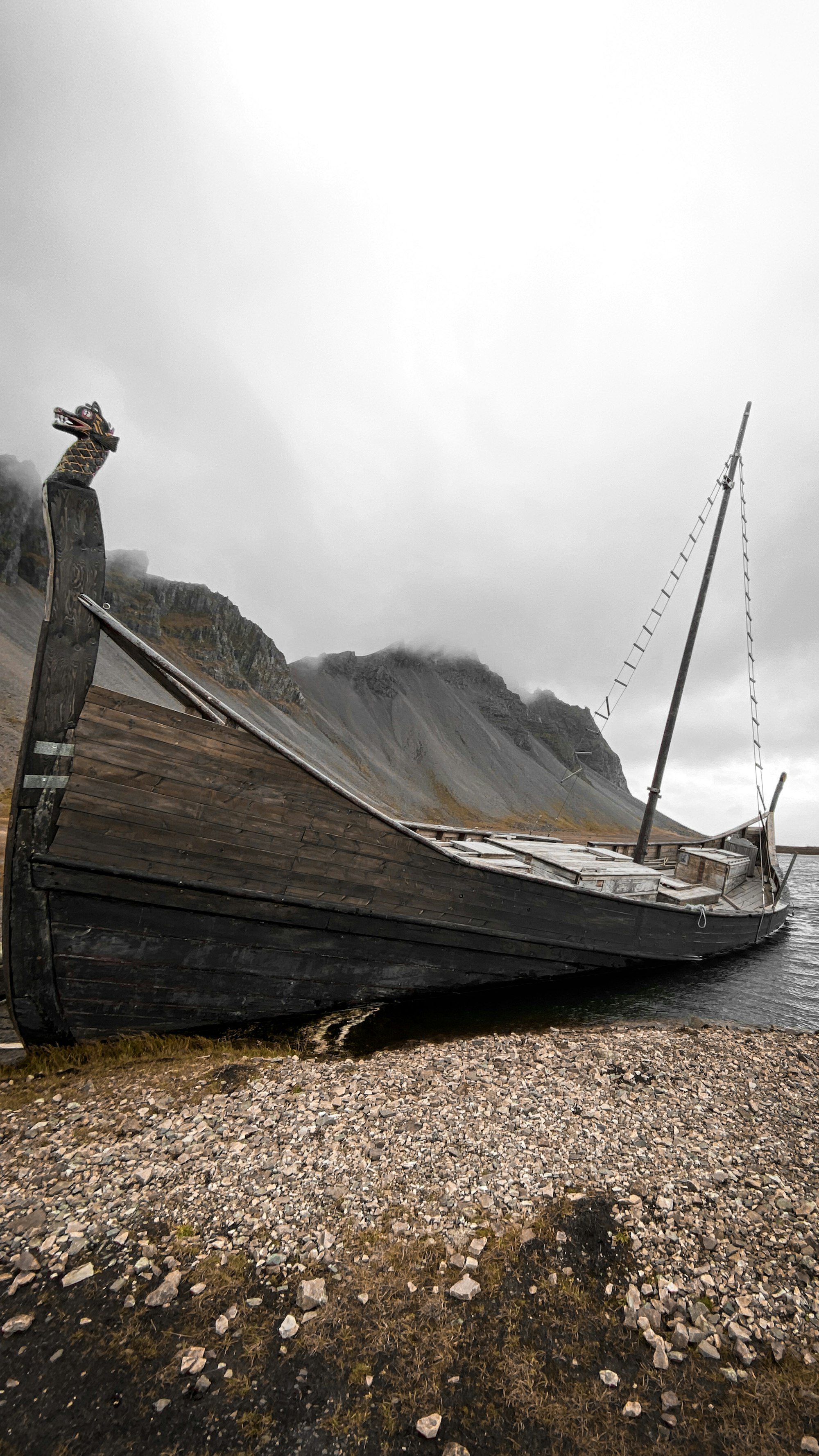
Viking World
A museum at Njarðvík built around Íslendingur, a full-size replica of the Gokstad ship that was sailed across the Atlantic to L'Anse aux Meadows in 2000 for the millennium of Leif Eiriksson's voyage, and on to New York. The hull hangs a metre and a half above the floor, so visitors walk beneath it and then climb aboard. It is five minutes from the airport.
-
Blue Lagoon
A milky blue bathing lagoon in a lava field, filled with mineral water discharged by the Svartsengi power station next door and renewed every two days. As of 2026 it is operating: lava reached the site on 22 November 2024 and destroyed the car park, but the barriers around the facilities held and the lagoon was undamaged. Later eruptions have closed it briefly, so confirm before driving out.
-
Bridge Between Continents
A footbridge thrown over a sand-filled fissure at Sandvík to mark the line between the North American and Eurasian plates. The geology is real, but the bridge is a signpost rather than a boundary: the plate margin here is a zone tens of kilometres wide, and the fissure under it is one crack among hundreds. Ten minutes, on the road round to Reykjanestá.
-
Brimketill
A pool cut into the lava shelf at Staðarberg by the grinding of the surf, close enough to a bath in shape to have earned the name. A viewing platform stands above it. The water in it is ice cold and the sea breaks straight through, so nobody bathes here; folklore gives the pool to a troll woman who did.
-
Garðskagaviti
Two lighthouses on the flat point at Garðskagi, the first raised in 1897 and the taller replacement in 1944, with a heritage and maritime museum on the site since 1995. The point reaches far enough out to make it one of the better seabird and midnight sun spots in the southwest. It is fifteen minutes north of Keflavík.
-
Gunnuhver
An active field of hot springs, mud pools and fumaroles at the southwestern tip of the peninsula, inside the Reykjanes UNESCO Global Geopark and close to the old lighthouse. Boardwalks cross the steaming ground, and sections have been fenced back or closed as the activity has shifted. It is named for a ghost said to have been trapped in the spring.
-
Hvalsneskirkja
A church of hewn local stone standing alone above the shore at Hvalsnes on the Miðnes coast, a parsonage in its own right until the living was abolished in 1811. Hallgrímur Pétursson, who wrote the Passion Hymns that Icelanders still know by heart, served here before moving north to Saurbær. It is a few minutes from Sandgerði on the road round to Garðskagi.
-
Kleifarvatn
The largest lake on the peninsula, lying on the fissure zone of the Mid-Atlantic Ridge with no visible inflow or outflow: its water arrives and leaves underground. After the earthquakes of 2000 it began to drain, and at least a fifth of its surface has gone since. Black sand shores and a road down the west side make it an easy stop off the Krýsuvík route.
-
Krýsuvík-Seltún
A geothermal field in the Krýsuvík volcanic system on the Mid-Atlantic Ridge, with boardwalks over sulphur-yellow and rust-red ground, boiling mud and steam vents. The crust beside the path is thin and hot, which is why the route is fixed and fenced. It is about half an hour from Keflavík and pairs naturally with Kleifarvatn on the same road.
-
Reykjanesviti
Iceland's oldest lighthouse, standing on a hill at Reykjanestá and serving as the landfall light for both Reykjavík and Keflavík. The road to it runs past Gunnuhver and ends at the coast. The short climb to the base gives the widest view of the cliffs, the stacks offshore and the steam rising inland.
-
Valahnúkamöl
The boulder beach beneath the Valahnúkur cliff at Reykjanestá, where the Atlantic has worked broken lava into rounded black stones. The sea stack Karl stands offshore and seabirds nest on the cliff face through the summer. The swell arrives here with the whole ocean behind it and the lower rocks are never a safe place to stand.