Lake Skadar National Park
Quiet channels between floating lilies, and reed beds where Dalmatian pelicans nest in spring: Lake Skadar is a protected wetland where some 280 bird species have been recorded, and you see it from the water.
Read the guide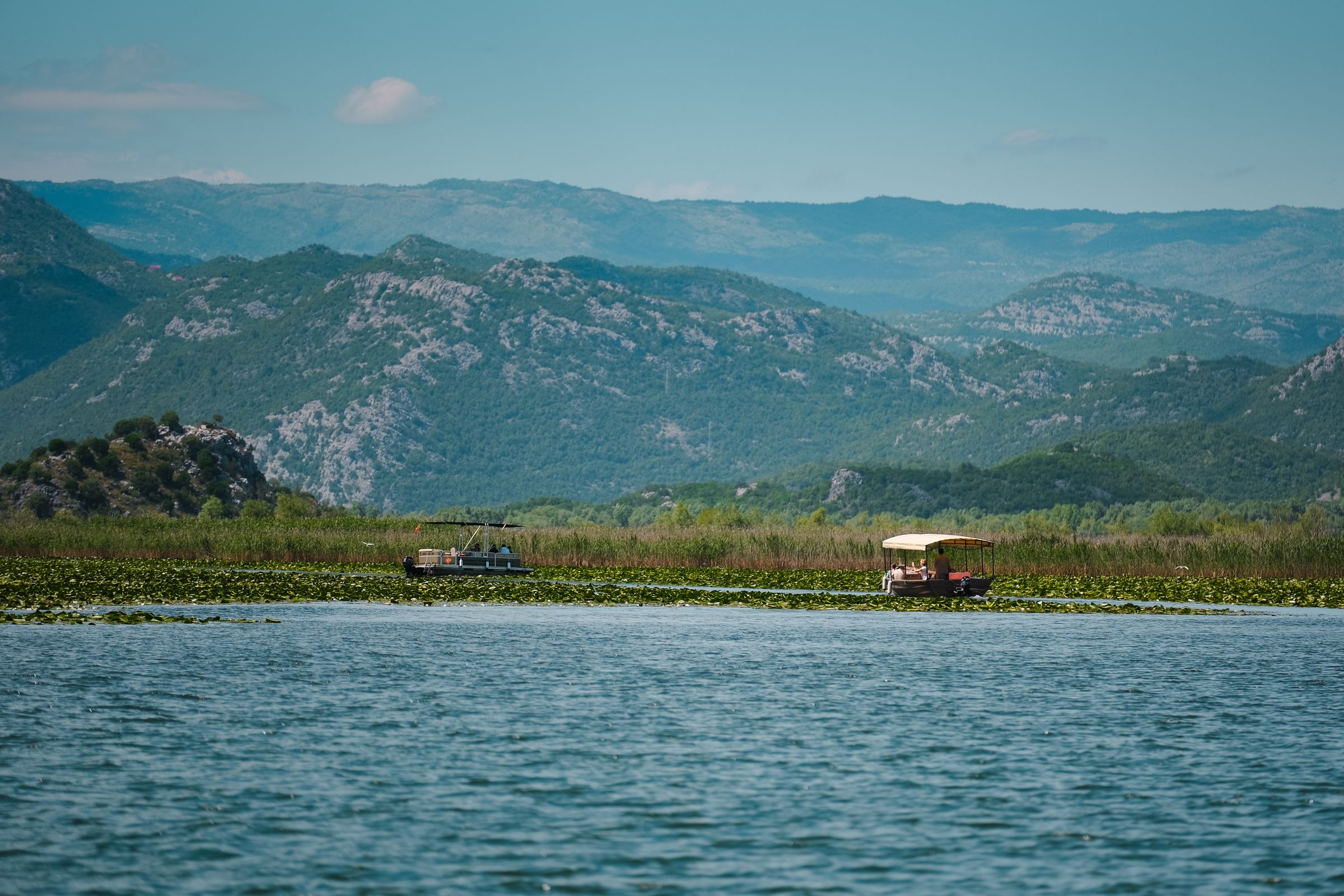
From Virpazar's quay, a small wooden boat takes you into the lily channels of Lake Skadar, past island fortresses and on to monasteries that stand on islands of their own.
Town guide, Montenegro. Meridian Dispatch.
Ninety seconds on Virpazar
One night is enough for an evening walk, the climb to Besac fortress and a morning boat. A second night leaves room for one of the long boat trips or a day in a hired kayak, and an evening at the wine cellars of Godinje.
By train. Virpazar is a station on the line between Bar and Podgorica, between Crmnica and Vranjina, and the state railway, ZPCG, publishes the timetable on zpcg.me. Buses also run from Podgorica. The lake shore villages and beaches need a car, a taxi or a boat.
May to June, and September to October. The water lilies flower from May and are at their thickest in June, and birds are easiest to see in spring and early autumn.
One of three hours or more, to go ashore. The usual group trip lasts two hours and stays on the water, the longer cruises of three or four hours add a stop at Kom Monastery, and the shortest, about an hour, runs out to Lesendro.
Not always. Every visitor over 15 needs the park ticket, which also covers the visitor centres at Vranjina and Virpazar, so ask the operator whether the fare includes it when booking. If not, Montenegro's national parks sell it online.
Podgorica, TGD, is the closest. Tivat, TIV, suits a trip that also takes in the Bay of Kotor; from there the road follows the coast towards Bar and turns inland to the lake through the Sozina tunnel.
Stay in Virpazar if the lake is your trip: the quiet evening and a morning on calm water are the reasons to sleep by the boats. For one boat trip between city sights, base yourself in Podgorica and come out by train.
See all towns in MontenegroCompare Montenegro town by town
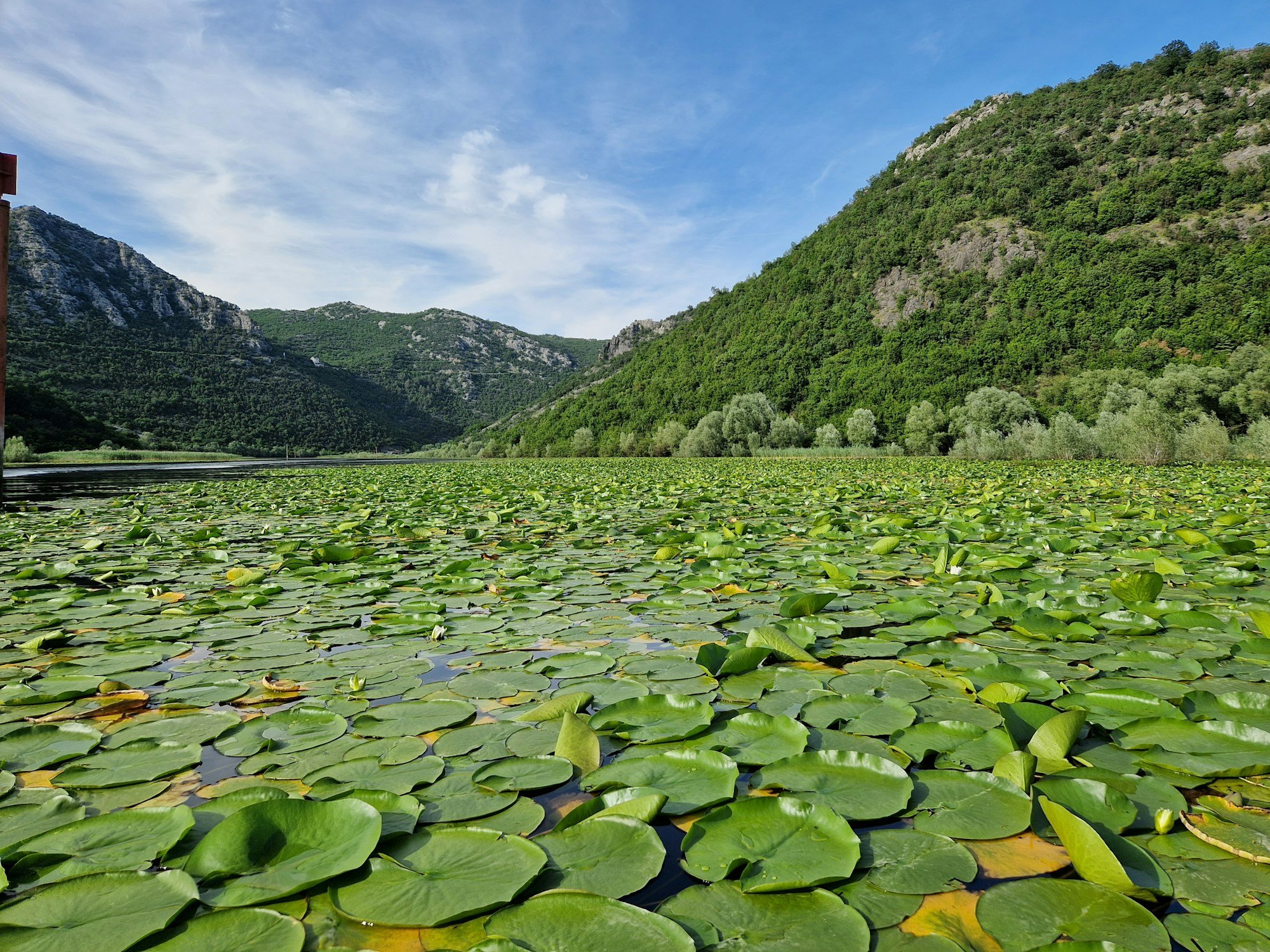
Virpazar is a short street of stone houses where the Crmnica river runs into Lake Skadar, and almost everything here starts at the quay by the bridge. Behind it, vineyards climb the terraces of the Crmnica valley.
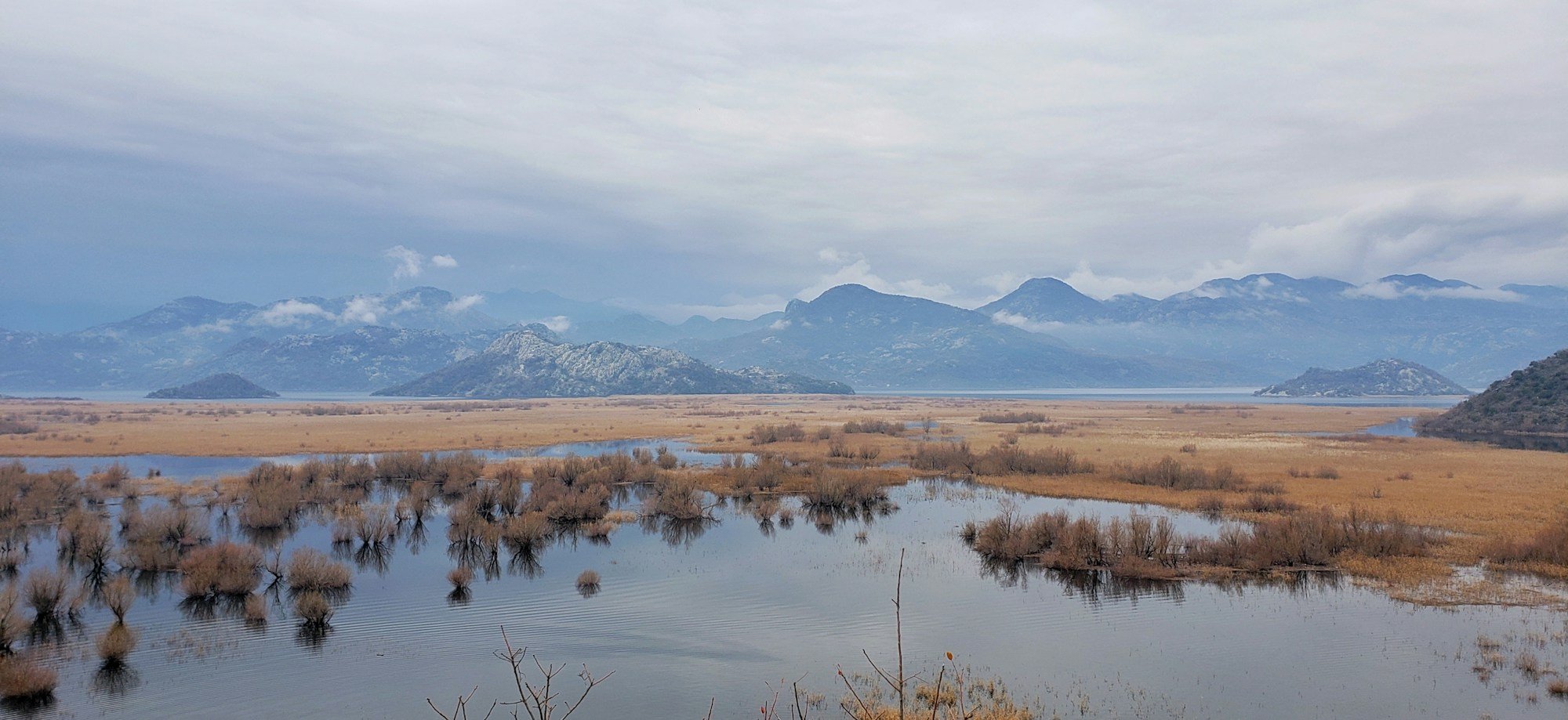
Both of Virpazar's hotels stand on the water by the bridge, a few steps from the boats.
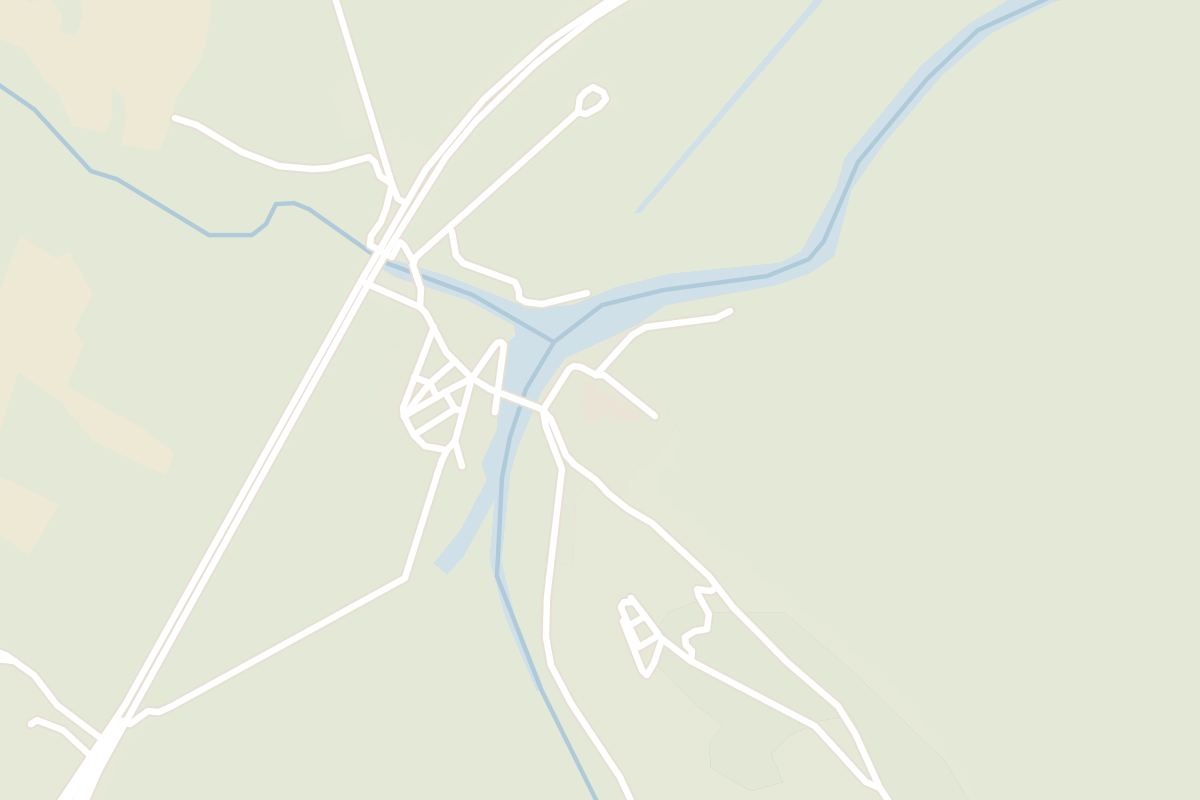 2 min walk from Virpazar harbour
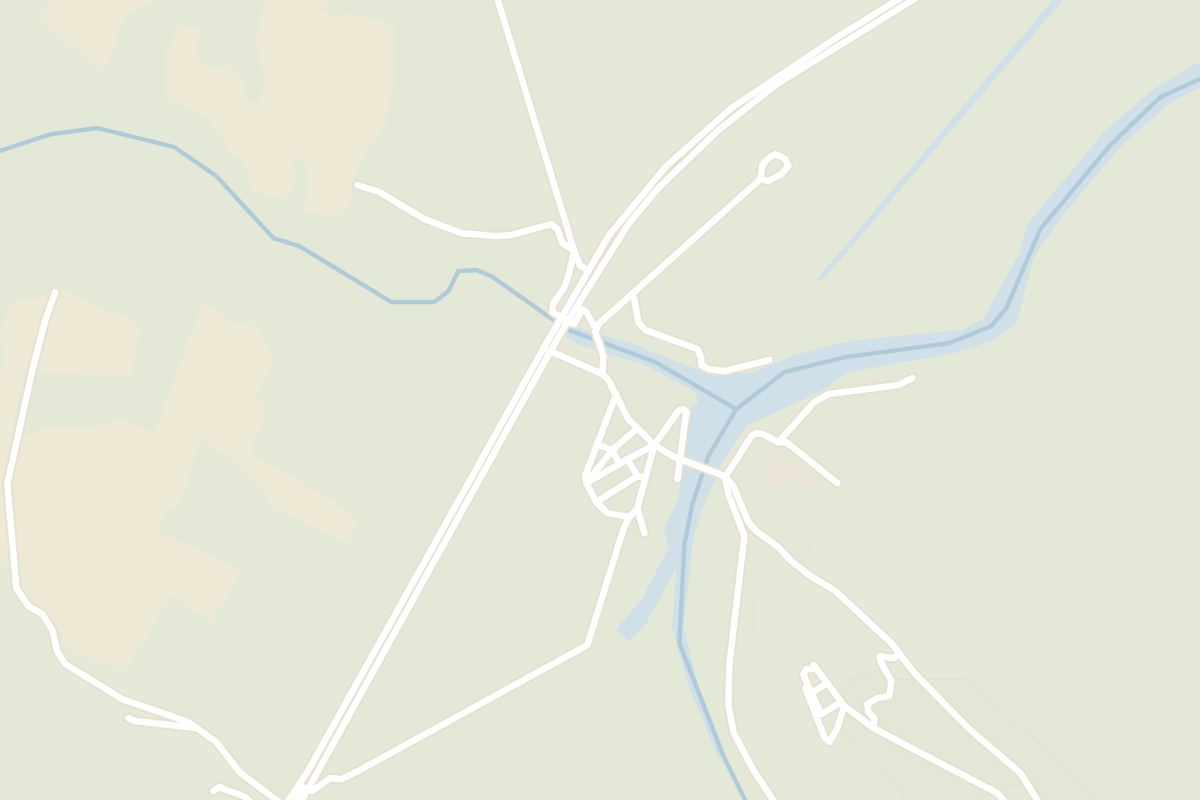 2 min walk from Virpazar harbour
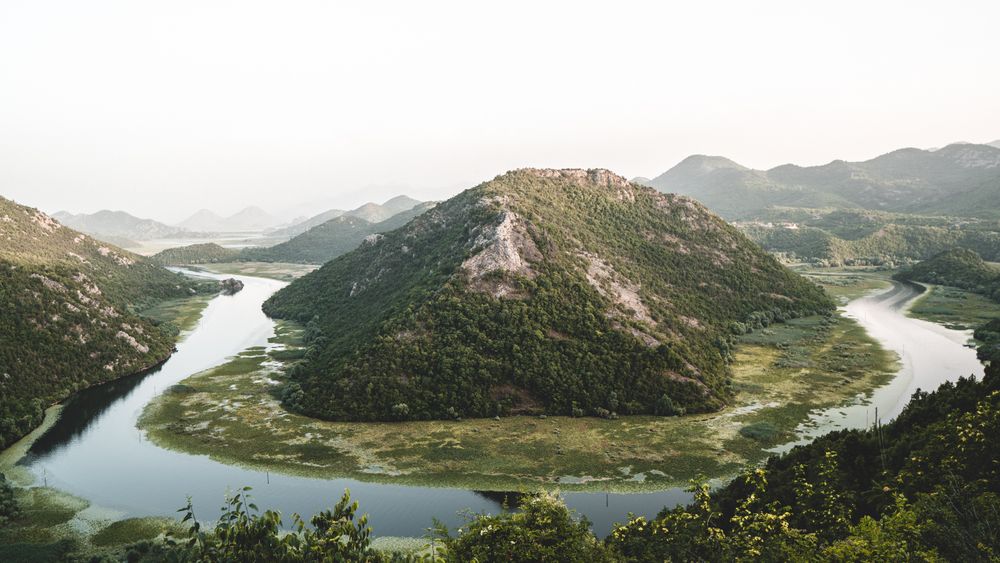
Grouped by what each place is for, from the quay and the fort above it to the islands, monasteries and villages around the lake.
The quay and Besac are a short walk from the bridge. The islands and monasteries are reached by boat, and Godinje and Murići by the lake road.

Quiet channels between floating lilies, and reed beds where Dalmatian pelicans nest in spring: Lake Skadar is a protected wetland where some 280 bird species have been recorded, and you see it from the water.
Read the guide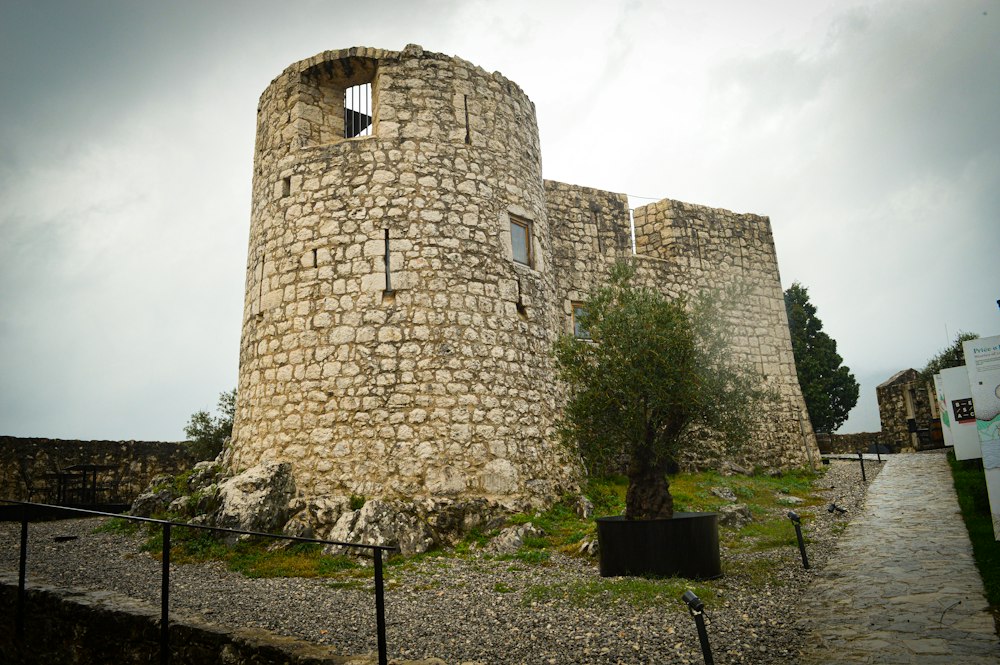
Climb before sunset, when the light runs across the Crmnica basin. The signposted path leaves the road to Murići just south of the village centre and takes 15 to 20 minutes, or drive most of the way up. Entry is ticketed, and outside summer ask in the village when the gate closes.
Read the guideThe Kom tour is the one to book by name: unlike the island ruins on the standard loop out of Virpazar, this monastery is open to visitors. It is a longer trip. On the way the boat winds through water lilies and reeds.
Read the guideTake the shortest boat trip out of Virpazar to see this fort properly. From the causeway road it goes by in seconds; from the water you see the whole fort on its own rock.
Read the guideStart at the old stone bridge, where the boat captains wait along the quay, and compare boats and trip lengths before you choose. The boat stands, the kayak hire and the park ticket booth are all on this short stretch.
The ruin covers a small islet east of Virpazar, opposite Godinje, its walls running almost to the waterline. Boats circle it rather than land, because the walls are unstable, and gulls and cormorants nest in them.
Two small stone churches stand on the island of Beška, in the southern part of the lake. It is the farthest island monastery from Virpazar, so ask for it by name on one of the longest trips, or paddle out in a kayak.
The park's visitor centre stands at Vranjina, where the road and railway cross the lake on a causeway, and holds a small exhibition on the lake. The park ticket covers it, and the visitor centre in Virpazar too, and the staff advise on routes and park rules.
An abandoned walled town stands on a rocky hill above the marshes at the northern end of the lake, with its walls, one gate and a ruined church. The climb from the road takes a few minutes, and the view runs over the reeds to the Morača delta.
Leave the car at the village entrance and walk the stone lanes, where the houses are joined by passages and vaulted wine cellars. Several families pour their own Vranac for tastings, from vines on the terraces around the village.
Below Donji Murići, a long shore of pale pebble and sand slopes into shallow water that warms through the summer. The lake road from Virpazar is narrow and winding, and two cars can barely pass, so drive it slowly.
A stone bridge over the Crmnica, boats moored along both banks and a fort on the hill above.
Climb before sunset, when the light runs across the Crmnica basin. The signposted path leaves the road to Murići just south of the village centre and takes 15 to 20 minutes, or drive most of the way up. Entry is ticketed, and outside summer ask in the village when the gate closes.
Read the guideStart at the old stone bridge, where the boat captains wait along the quay, and compare boats and trip lengths before you choose. The boat stands, the kayak hire and the park ticket booth are all on this short stretch.
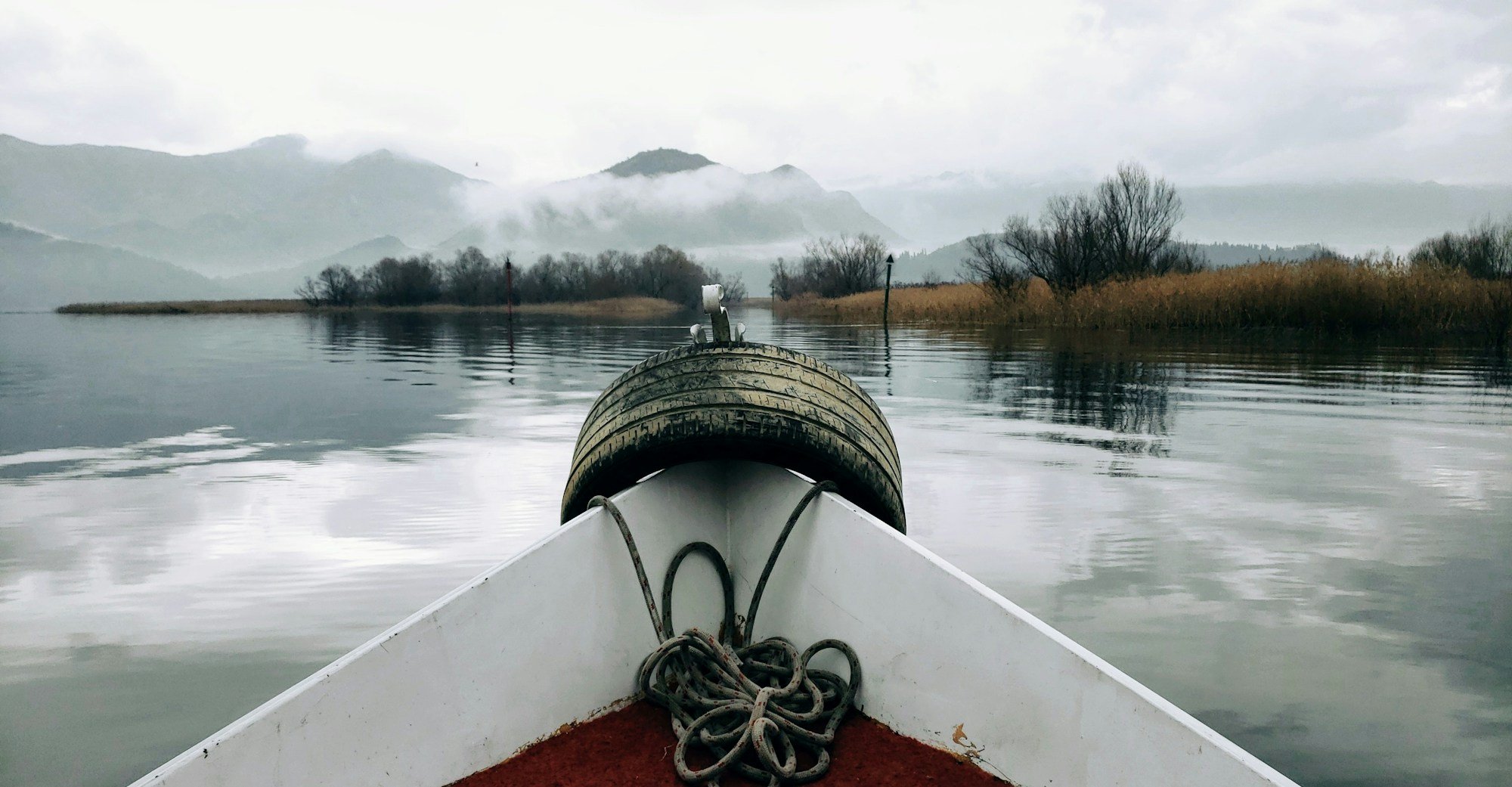
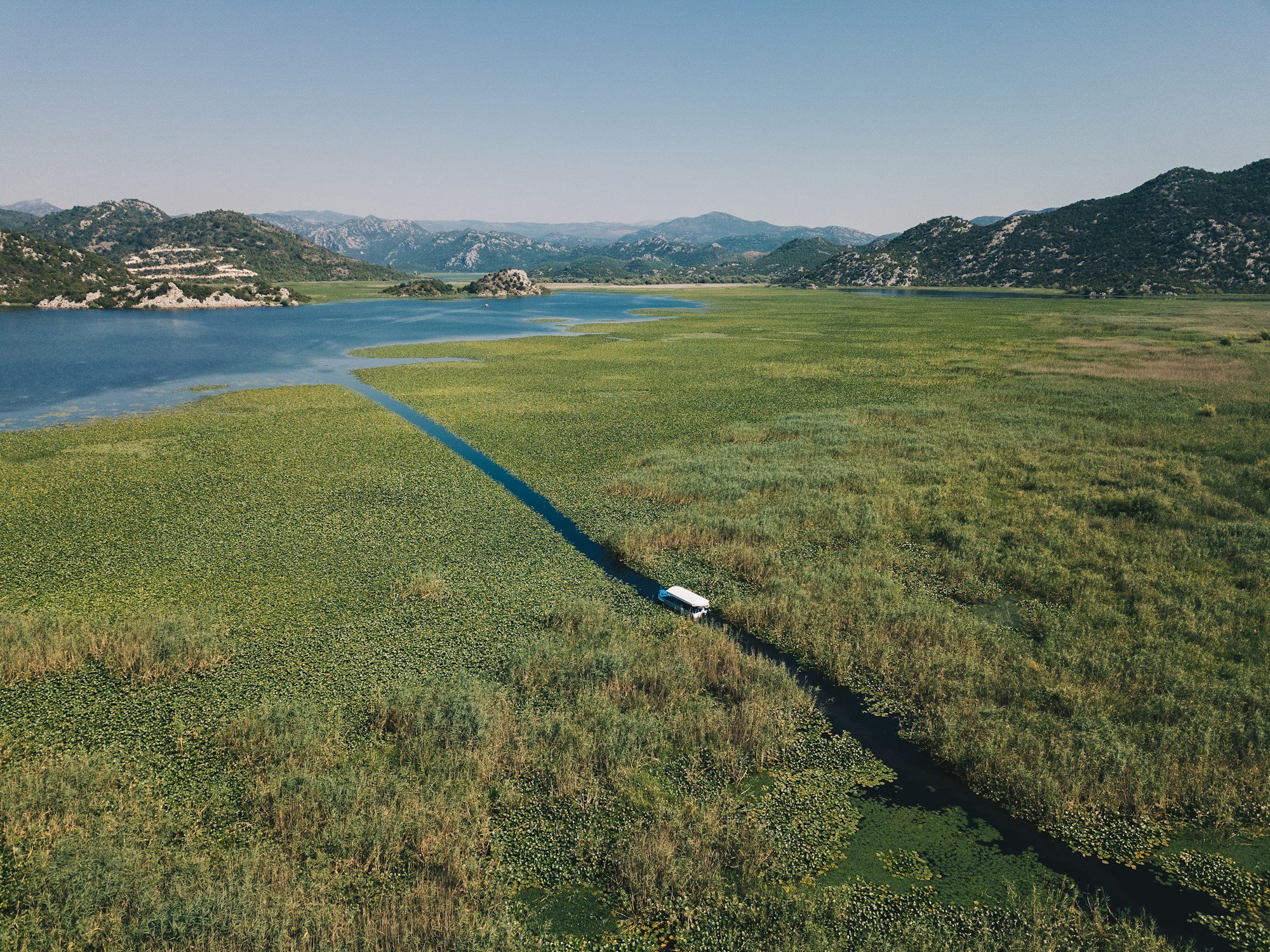
Wooden boats leave the quay for the lily channels, the island forts and the monasteries.
Quiet channels between floating lilies, and reed beds where Dalmatian pelicans nest in spring: Lake Skadar is a protected wetland where some 280 bird species have been recorded, and you see it from the water.
Read the guideThe Kom tour is the one to book by name: unlike the island ruins on the standard loop out of Virpazar, this monastery is open to visitors. It is a longer trip. On the way the boat winds through water lilies and reeds.
Read the guideTake the shortest boat trip out of Virpazar to see this fort properly. From the causeway road it goes by in seconds; from the water you see the whole fort on its own rock.
Read the guideThe ruin covers a small islet east of Virpazar, opposite Godinje, its walls running almost to the waterline. Boats circle it rather than land, because the walls are unstable, and gulls and cormorants nest in them.
Two small stone churches stand on the island of Beška, in the southern part of the lake. It is the farthest island monastery from Virpazar, so ask for it by name on one of the longest trips, or paddle out in a kayak.
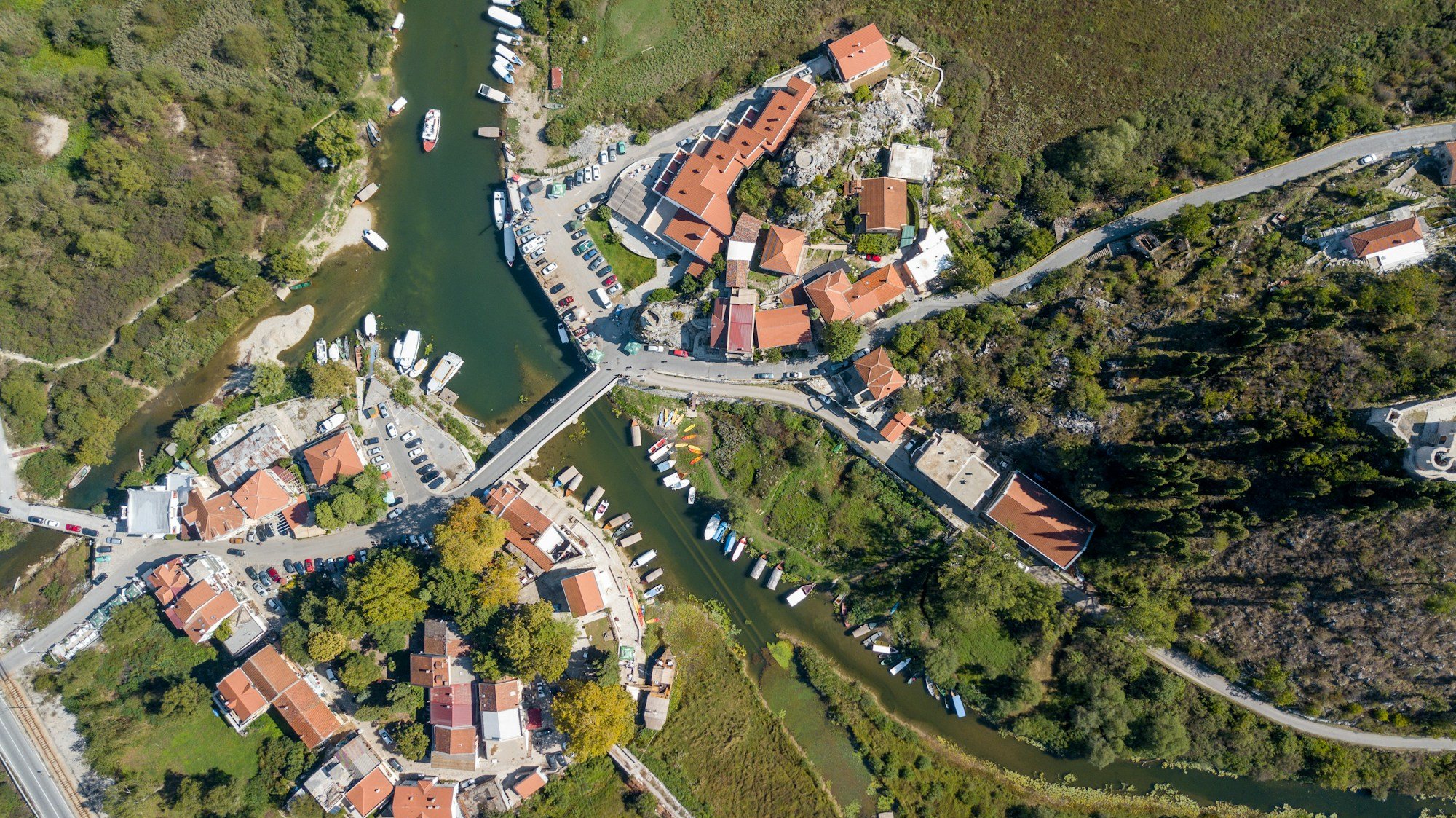
Low wooden boats and kayaks fit the narrow channels through the lily beds that the big tour boats cannot enter.
Quiet channels between floating lilies, and reed beds where Dalmatian pelicans nest in spring: Lake Skadar is a protected wetland where some 280 bird species have been recorded, and you see it from the water.
Read the guideThe Kom tour is the one to book by name: unlike the island ruins on the standard loop out of Virpazar, this monastery is open to visitors. It is a longer trip. On the way the boat winds through water lilies and reeds.
Read the guideTake the shortest boat trip out of Virpazar to see this fort properly. From the causeway road it goes by in seconds; from the water you see the whole fort on its own rock.
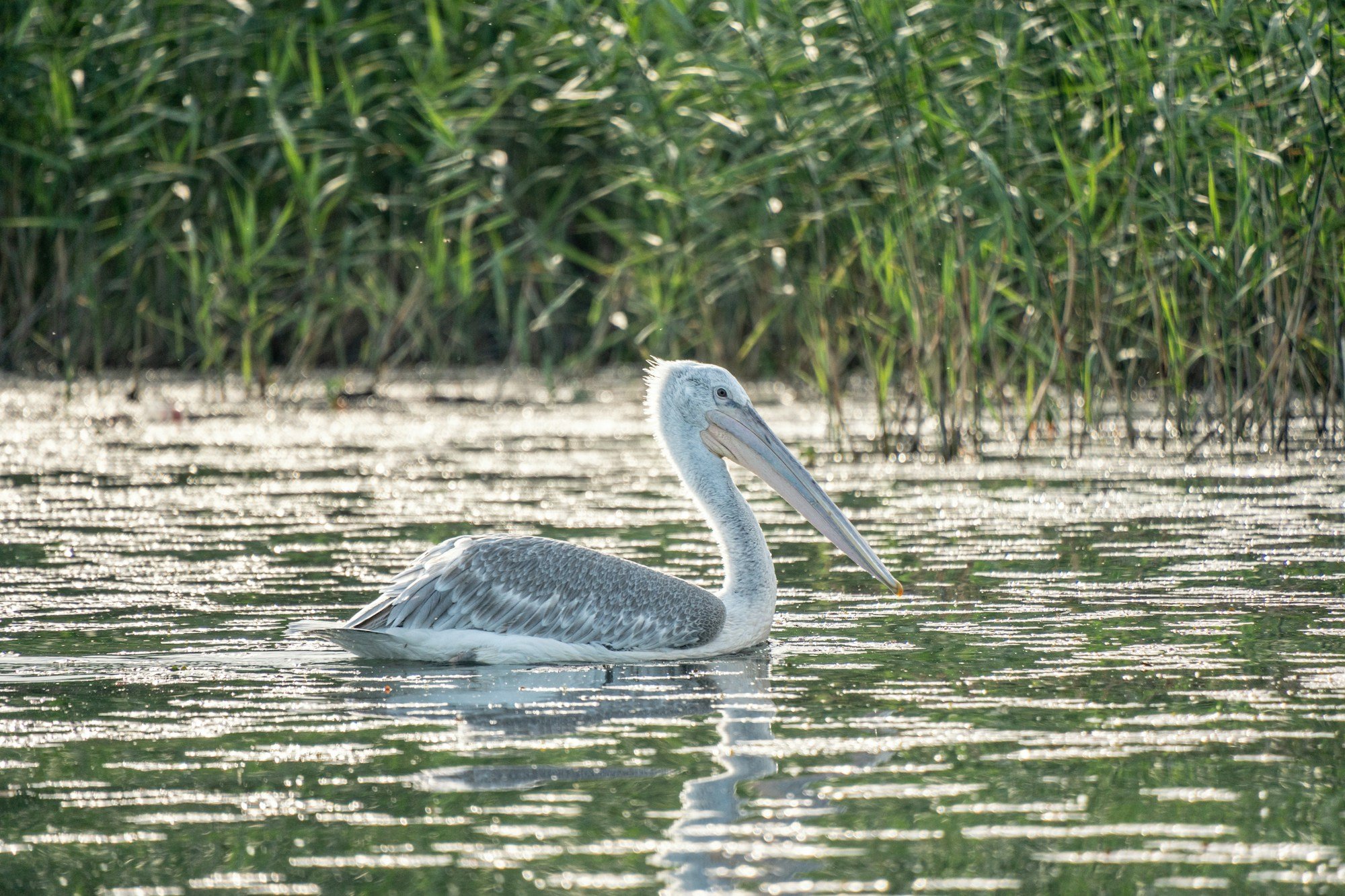
Read the guideDalmatian pelicans, pygmy cormorants and herons breed in the reeds, so pack binoculars.
Quiet channels between floating lilies, and reed beds where Dalmatian pelicans nest in spring: Lake Skadar is a protected wetland where some 280 bird species have been recorded, and you see it from the water.
Read the guideThe ruin covers a small islet east of Virpazar, opposite Godinje, its walls running almost to the waterline. Boats circle it rather than land, because the walls are unstable, and gulls and cormorants nest in them.
The park's visitor centre stands at Vranjina, where the road and railway cross the lake on a causeway, and holds a small exhibition on the lake. The park ticket covers it, and the visitor centre in Virpazar too, and the staff advise on routes and park rules.
An abandoned walled town stands on a rocky hill above the marshes at the northern end of the lake, with its walls, one gate and a ruined church. The climb from the road takes a few minutes, and the view runs over the reeds to the Morača delta.
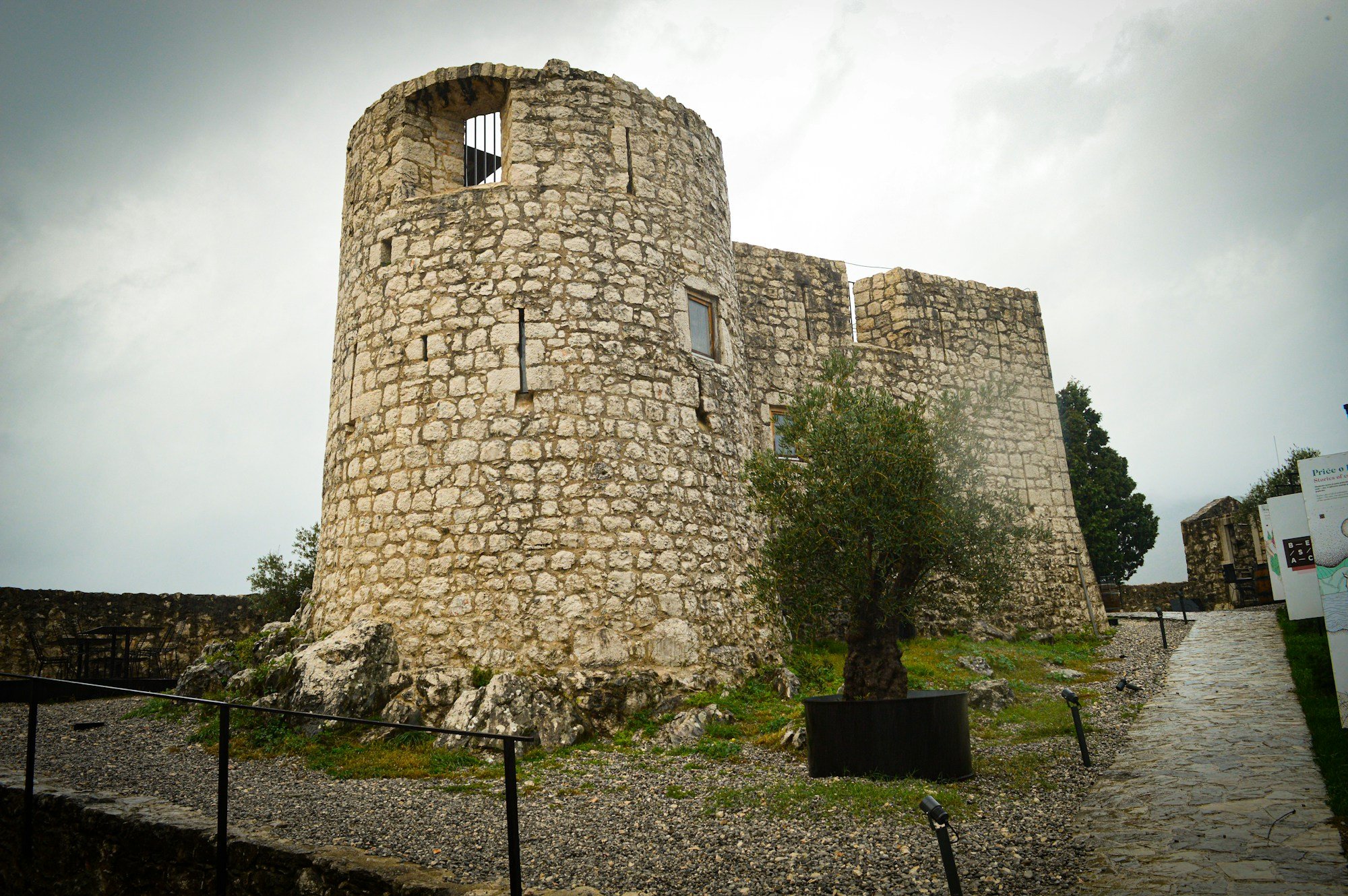
One fort to climb above the village, and three more on islands and hills around the lake.
Climb before sunset, when the light runs across the Crmnica basin. The signposted path leaves the road to Murići just south of the village centre and takes 15 to 20 minutes, or drive most of the way up. Entry is ticketed, and outside summer ask in the village when the gate closes.
Read the guideTake the shortest boat trip out of Virpazar to see this fort properly. From the causeway road it goes by in seconds; from the water you see the whole fort on its own rock.
Read the guideThe ruin covers a small islet east of Virpazar, opposite Godinje, its walls running almost to the waterline. Boats circle it rather than land, because the walls are unstable, and gulls and cormorants nest in them.
An abandoned walled town stands on a rocky hill above the marshes at the northern end of the lake, with its walls, one gate and a ruined church. The climb from the road takes a few minutes, and the view runs over the reeds to the Morača delta.
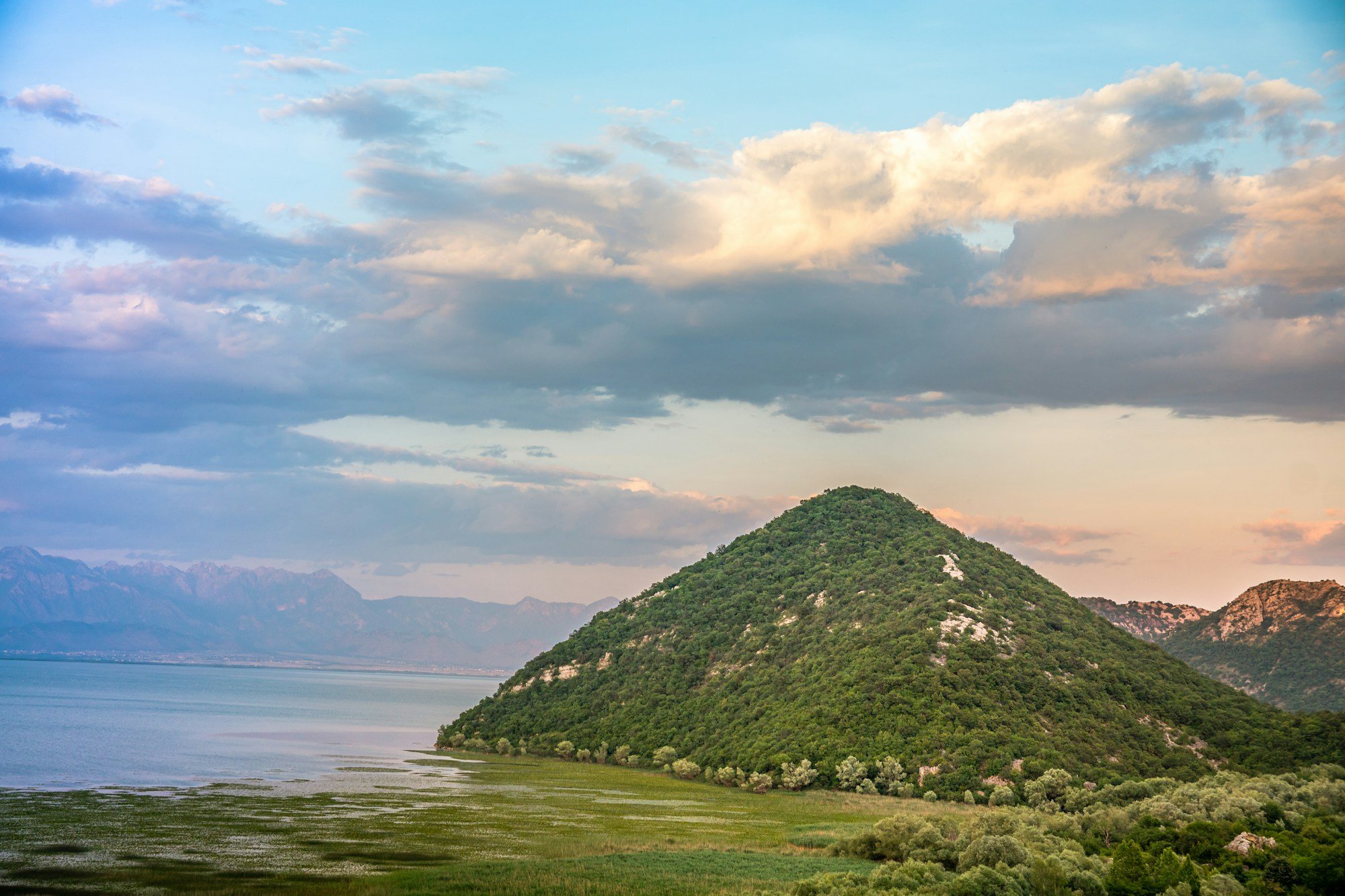
Vranac in the vaulted cellars of Godinje, and a swim at Murići on the lake's southern shore.
Two small stone churches stand on the island of Beška, in the southern part of the lake. It is the farthest island monastery from Virpazar, so ask for it by name on one of the longest trips, or paddle out in a kayak.
Leave the car at the village entrance and walk the stone lanes, where the houses are joined by passages and vaulted wine cellars. Several families pour their own Vranac for tastings, from vines on the terraces around the village.
Below Donji Murići, a long shore of pale pebble and sand slopes into shallow water that warms through the summer. The lake road from Virpazar is narrow and winding, and two cars can barely pass, so drive it slowly.
Come in by the afternoon and walk down to the quay by the old stone bridge, where the boat captains wait. A licensed guide booked ahead knows where the birds are that week, and spares you the sellers on the harbour.
Before dusk, climb through the trees to Besac Fortress on the hill above the village. From its upper walls you see the lake, the rooftops of Virpazar and the Crmnica valley at once.
Book a boat for the morning and ask for a small wooden one: the big tour boats cannot get into the lily channels. For a landing, choose a trip that stops at Kom Monastery; the shortest runs out under the railway bridge to Lesendro.
Keep binoculars to hand on Lake Skadar. The pelicans nest in a protected reserve, so you see them at a distance, while cormorants and herons work the reed edges closer to the boat.
After the boat, drive the narrow lake road to Godinje for a tasting in one of the family cellars. With a second day, carry on round the shore to swim at Murići.
Podgorica is the nearest airport, across the Zeta plain north-east of the lake. The road crosses the water on the Vranjina causeway, beside the Lesendro fort.
Taxis wait outside the terminal. Agree the fare before you set off, and ask for the bridge by the harbour in Virpazar.
Collect the car at the airport. You will want it for Godinje and the lake road to Murići, which the train does not reach.
Take a taxi to Podgorica railway station for a train on the line to Bar, which stops at Virpazar. From the station, follow the footpath into the village rather than the main road, which has no pavement.
Tivat, TIV, on the Bay of Kotor, is the other way in, and the better one for a trip that starts on the coast.
Every Montenegro town, place and dispatch, on one map.

A small resort with a red sand beach, a Venetian fort at one end and a seafront promenade under old pines.

From the promenade you look out over fine reddish sand to two rocky islets, one topped by a chapel.

A walled islet of stone houses, now a single resort, is tied by a sand causeway to a pebble beach.
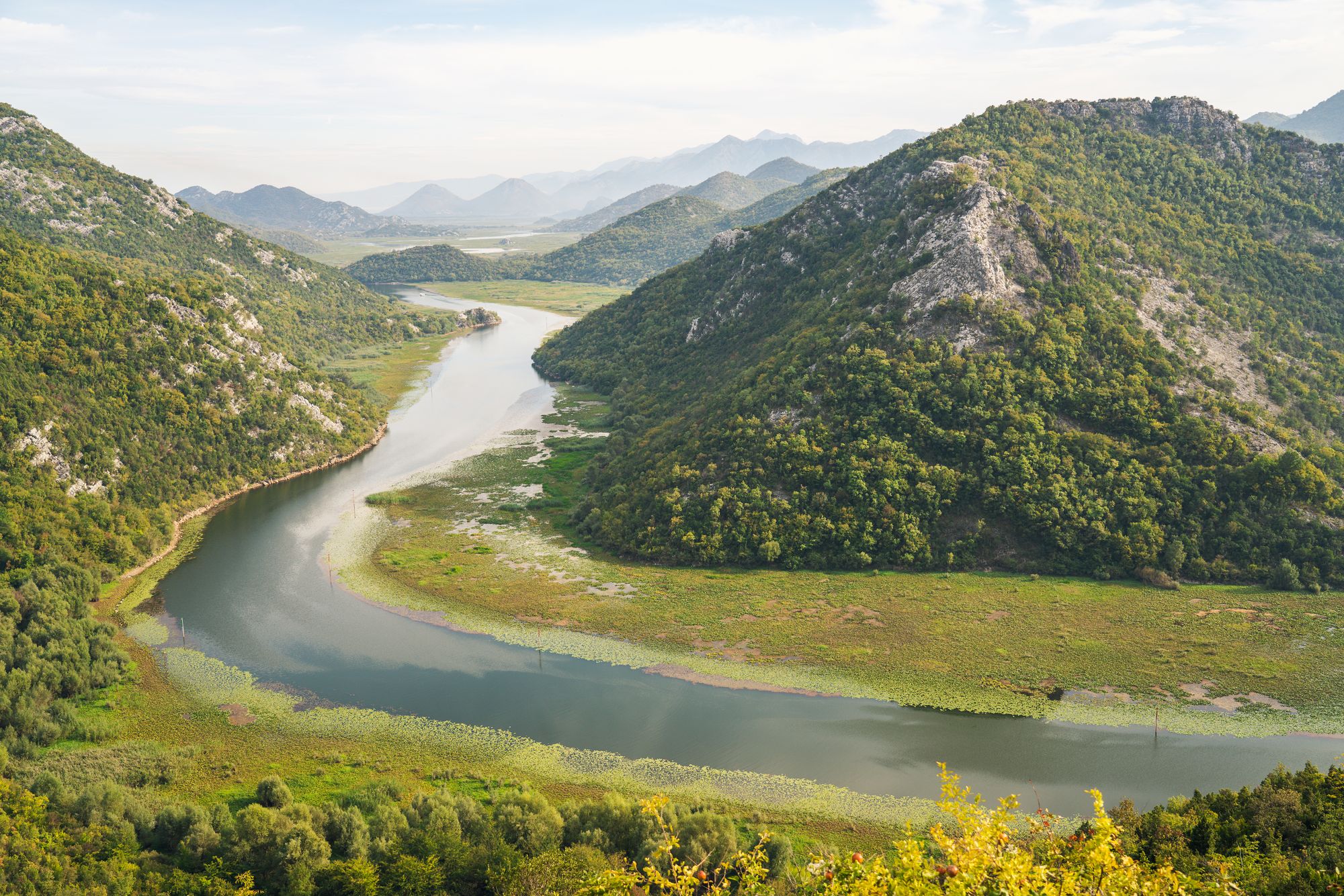
Fifteen kilometres of reed-lined canyon run between the village dock and the open lake, and the boats from Virpazar never see them.
Last updated