Things to do
7-
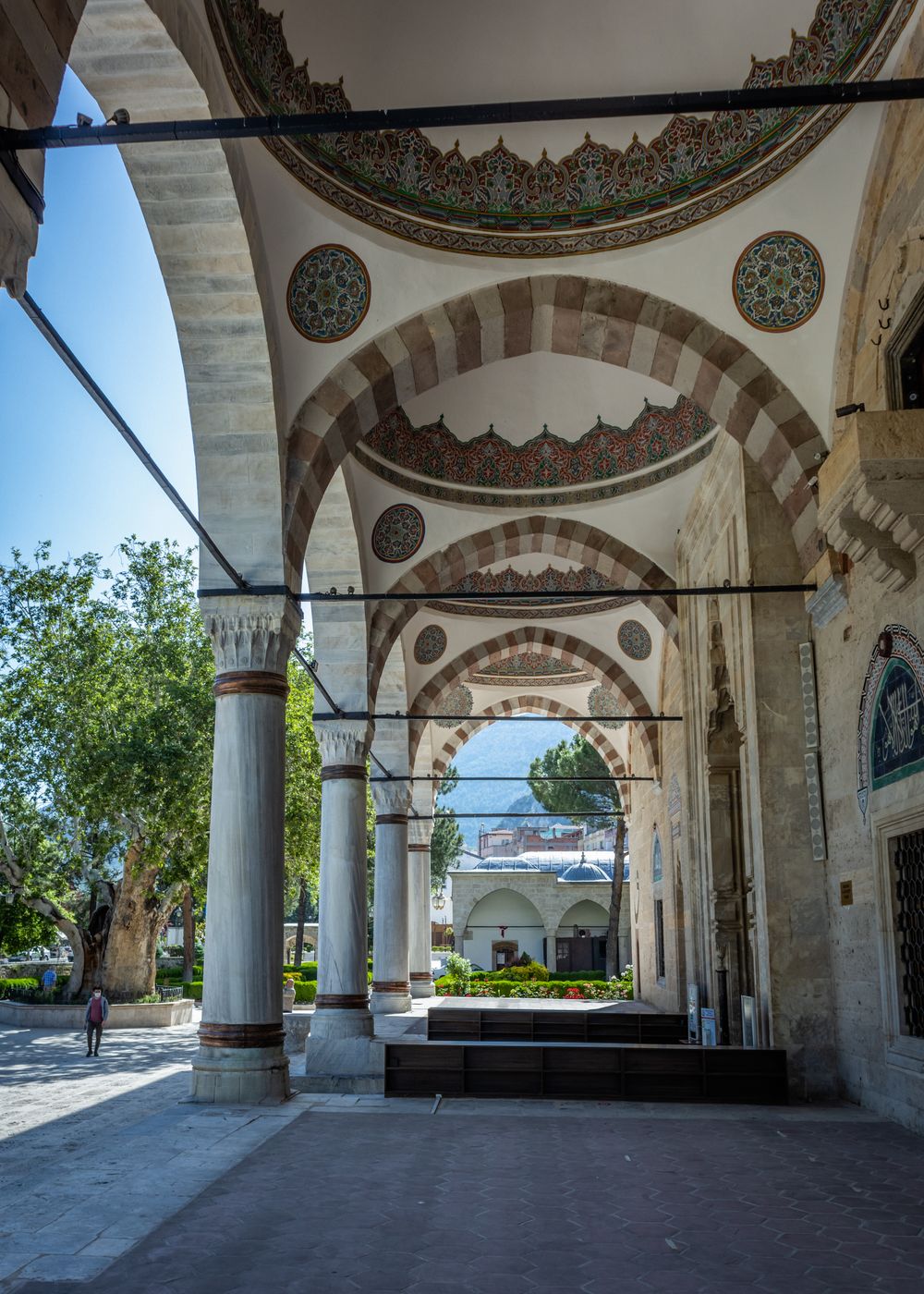
Fatih Mosque
Built as the church of the Panagia Chrysokephalos, the golden-headed Virgin, it served as the cathedral of Trebizond and the burial place of emperors, and became a mosque after the Ottoman conquest of 1461, when Mehmed II attended the first prayer. The domed basilica, probably of the tenth or eleventh century, is unusual for its galleried aisles. It stands in the Ortahisar district.
-
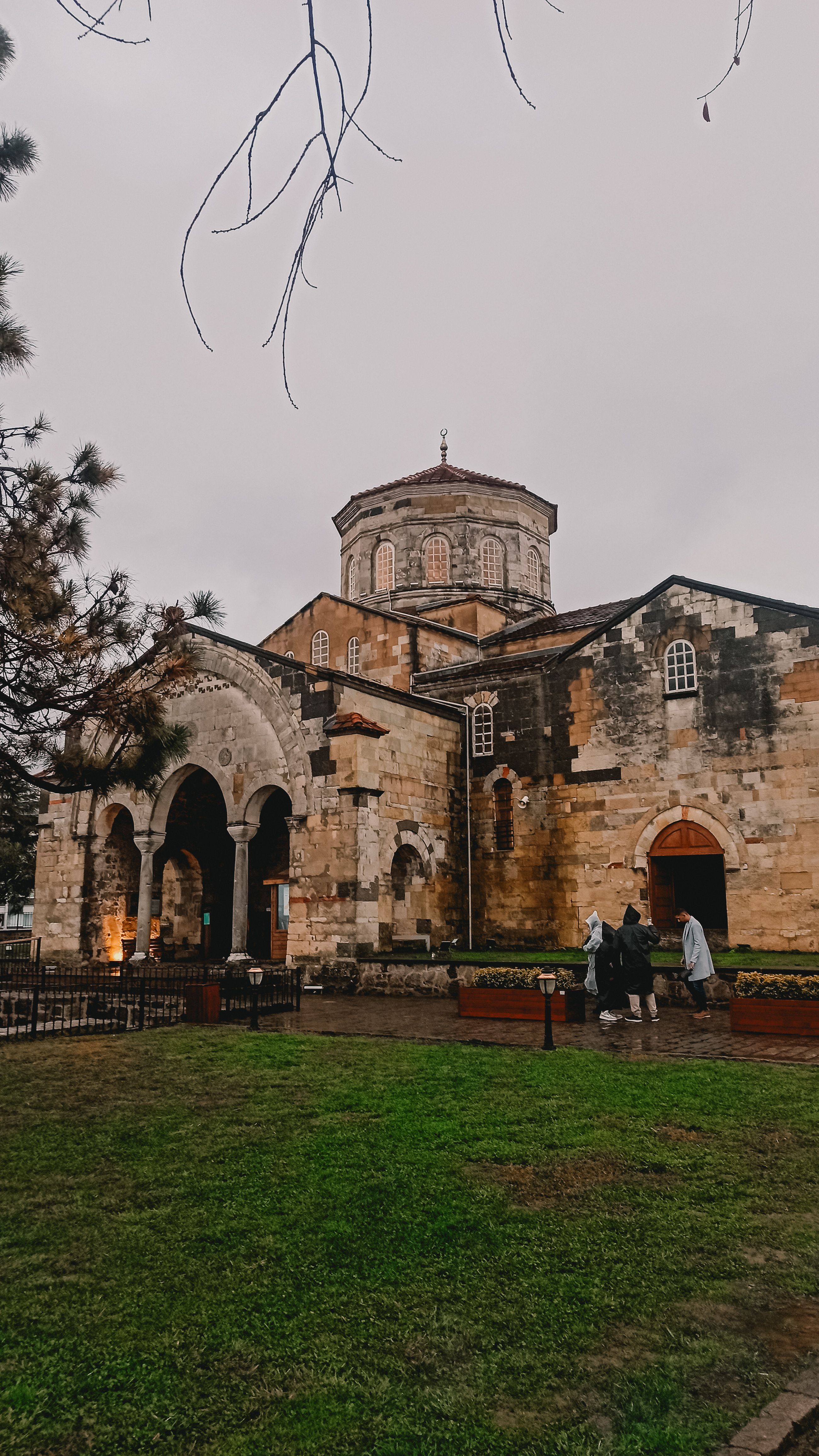
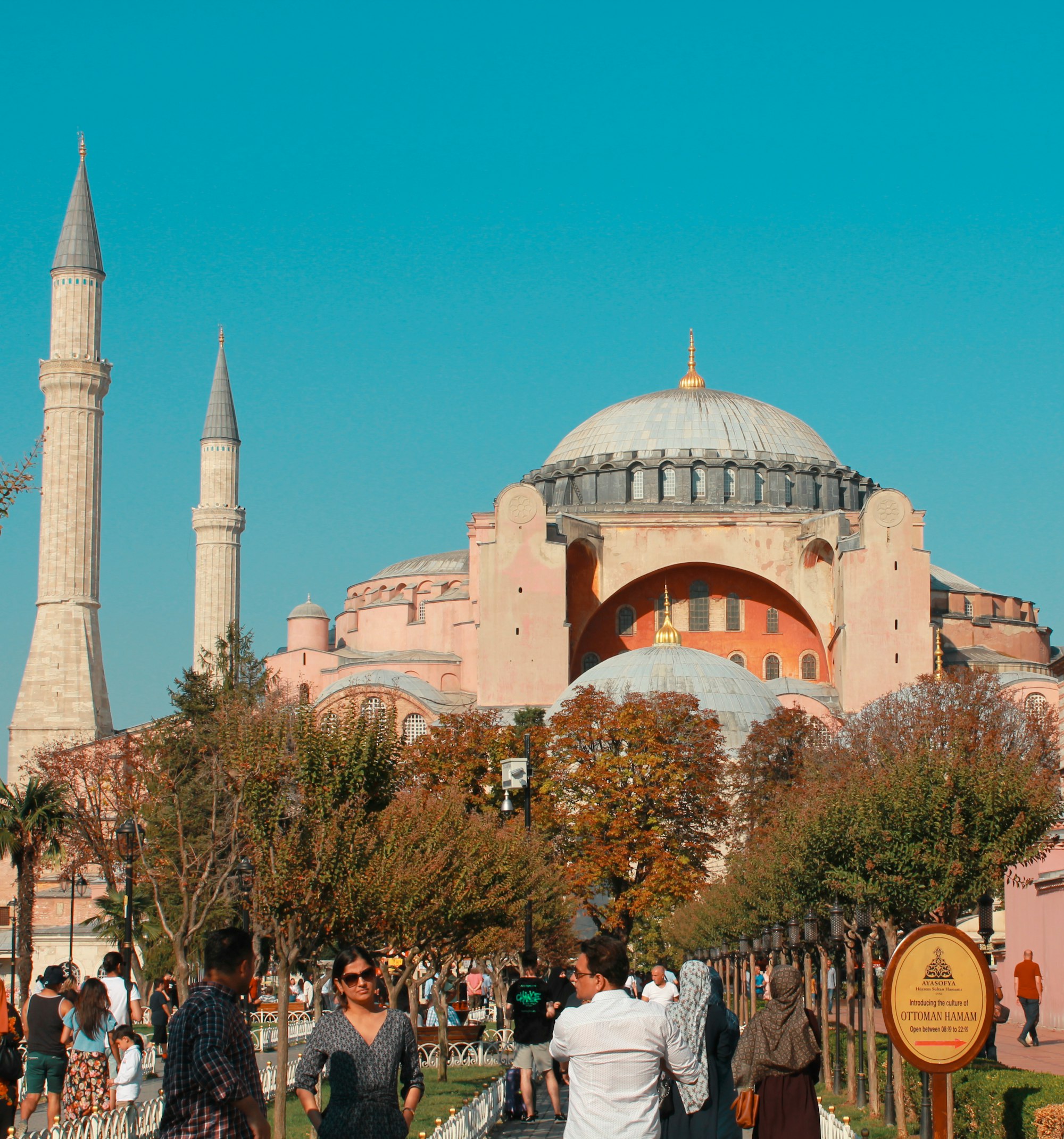
Hagia Sophia
A thirteenth-century Byzantine church on the shore west of the centre, carrying the best surviving Komnenian wall painting anywhere, with a carved frieze of Adam and Eve over the south porch. It functions as a mosque and the frescoes in the nave are screened.
-
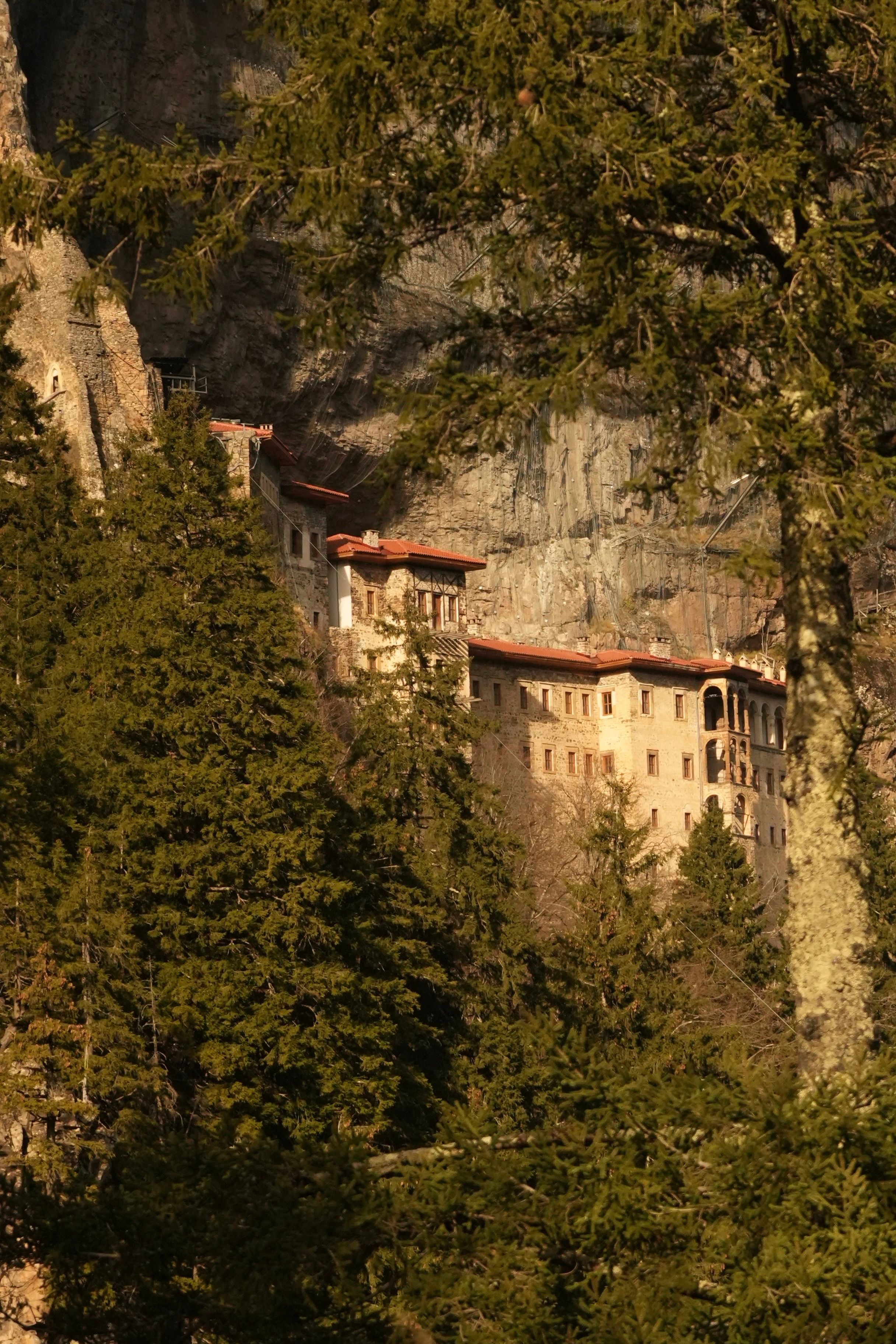
Sumela Monastery
A Greek Orthodox monastery built into a cliff at about twelve hundred metres above the Altındere valley, inside a national park in the Maçka district, with frescoes covering the rock church inside and out. Tradition places its founding in the fourth century. Rock falls closed it in 2015 and it reopened as a museum in 2019; on 15 August, the Feast of the Assumption, a liturgy is held and a special pass is needed.
-
Boztepe Hill
The hill three kilometres southeast of the centre, where tea gardens look down over the whole port and the Black Sea. Four sacred springs lie on its slopes, and a mosque near the summit was a church in the nineteenth century. It is a short taxi ride up and the standard end to an afternoon, with the Değirmendere valley opening to the east.
-
Kaymaklı Monastery
An Armenian monastery on Boztepe hill, three kilometres southeast of the centre, whose oldest chapel carries an inscription of 1424. The main church has served as a barn since the 1960s, yet frescoes of biblical scenes still cover its interior, with a Last Judgment in three sections on the west wall. The site is no longer in use and can be visited.
-
Panagia Theoskepastos Monastery
A former convent of the Empire of Trebizond at the foot of Boztepe, founded under Alexios III in the fourteenth century and set on two terraces inside a high protective wall. The rock church holds inscriptions and portraits of Alexios III, his wife Theodora and his mother Irene. Repeated repairs gave the complex its present form in the nineteenth century.
-
Trabzon Museum
Painted walls fill every floor but the basement of the Kostaki mansion, built between 1898 and 1913 for the banker Kostaki Teofilaktos with materials brought from Italy. Atatürk stayed here on his first visit to the city in 1924. The basement holds the archaeology, the ground floor shows the house itself and the first floor the ethnography collection.