Things to do
10-
Bodrum Castle
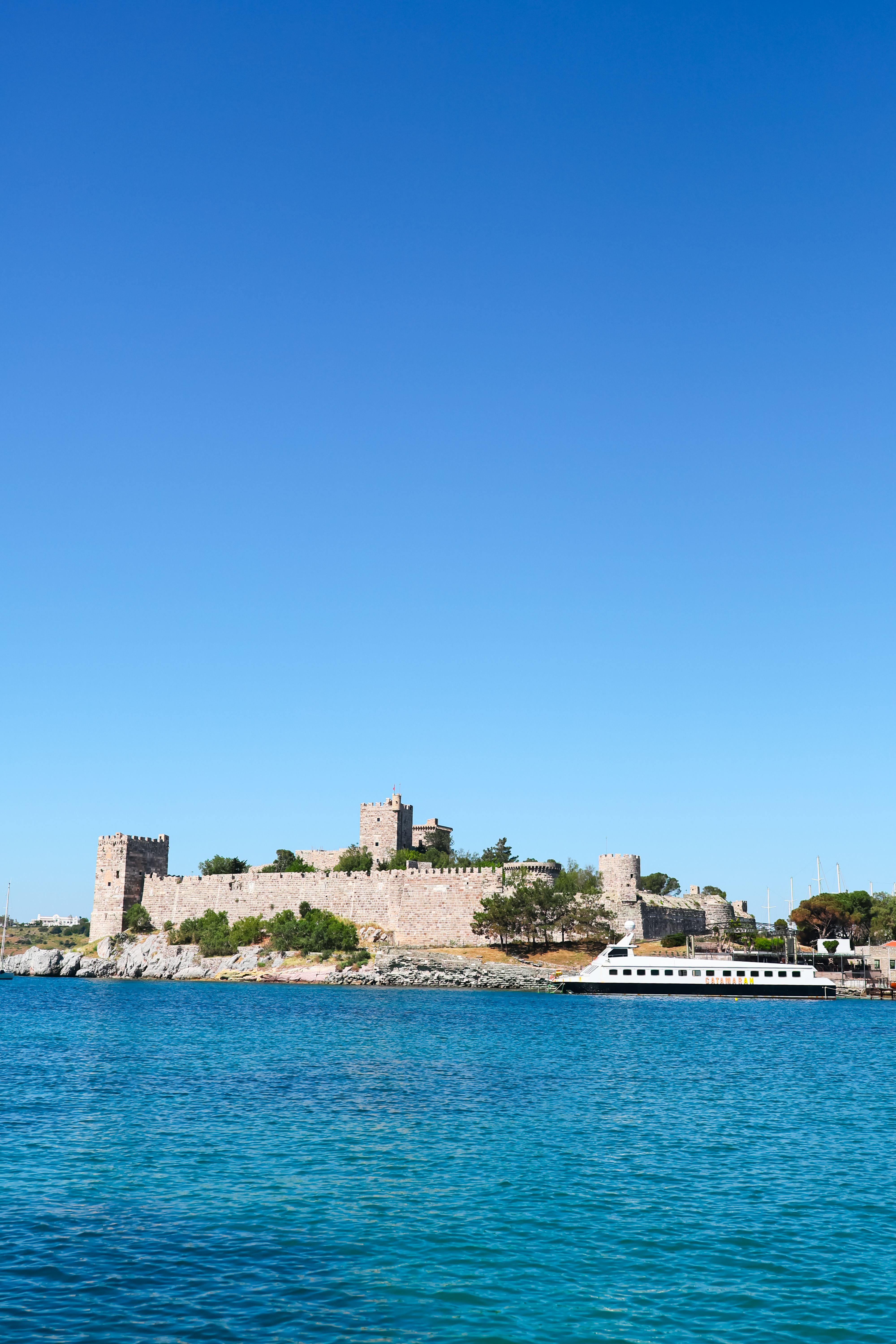
The Castle of St Peter, built by the Knights Hospitaller from 1402 with green volcanic stone and marble taken from the ruined Mausoleum, on the headland between the two harbours. Its four towers carry the names of the English, French, German and Italian knights who built them, and the English tower still shows a carved lion on its west face. Inside is the Museum of Underwater Archaeology.
-
Gümüşlük
A fishing village on the western tip of the peninsula built over ancient Myndos, where part of the old harbour lies just under the water and can be waded across to Rabbit Island. Building is restricted over the ancient site, which is why the village has stayed low and quieter than the resorts along the north coast.
-
Mandarin Oriental
A large resort on Paltar Bay near Göltürkbükü with two private beaches and its own jetty, cut into the hillside so that the rooms all face the sea. It is the peninsula's biggest luxury address, set on the quieter north coast well away from the crowds of the Bodrum harbour front.
-
Amanruya
A hotel of separate stone cottages set in olive groves above a private beach on the north coast of the peninsula, each cottage with its own courtyard and pool. It sits deliberately remote from Bodrum town, so guests come for the seclusion and the beach, and the harbour and the castle are a drive away.
-
Bitez
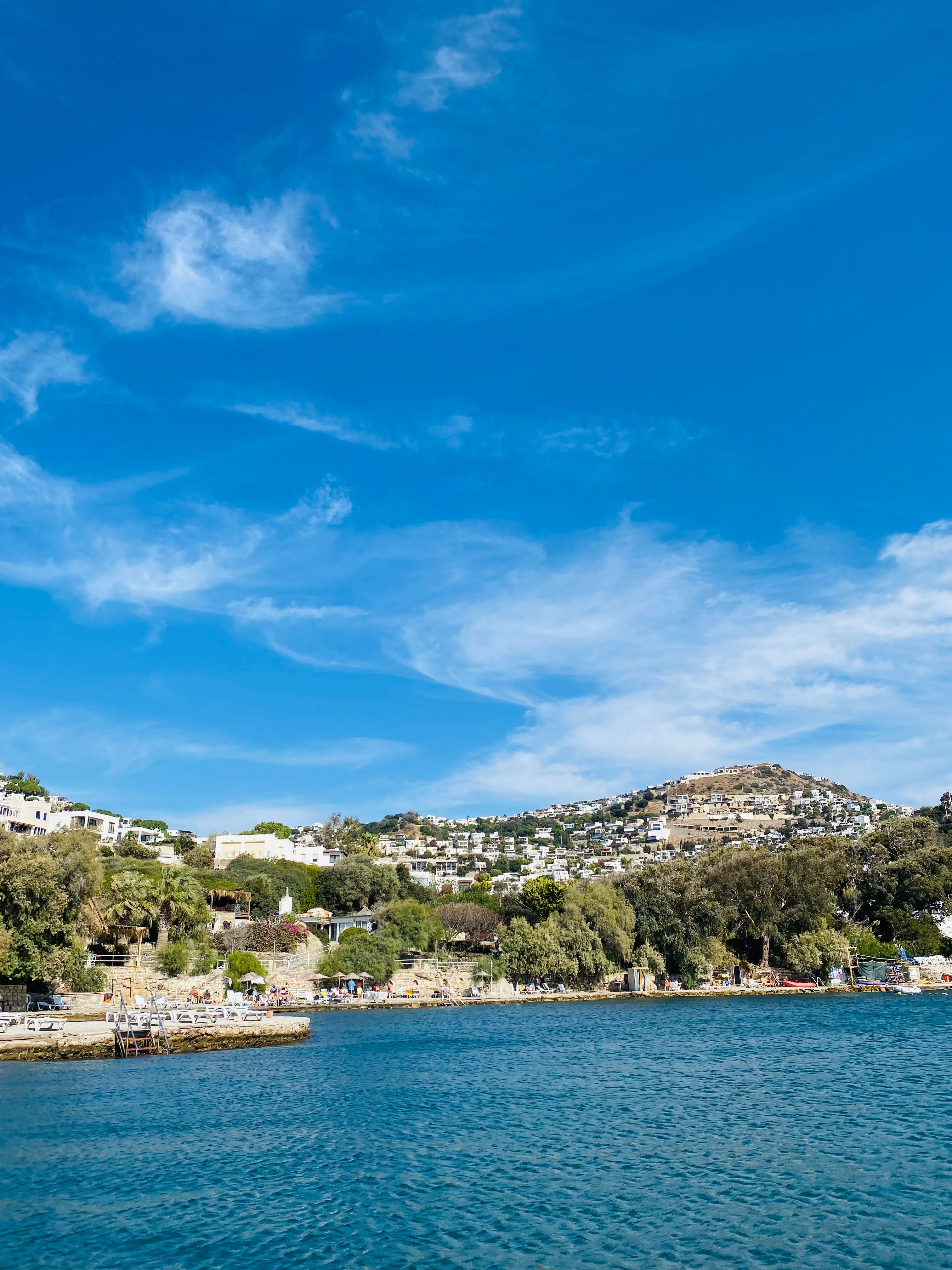
A shallow bay of tamarisk trees and wooden jetties four kilometres west of Bodrum and almost merged with it, with the calmest swimming on the peninsula and a windsurfing beach in the afternoons. Its blue flag beaches fill in summer, when the population swells well beyond its year-round residents, and the waterfront restaurants set their tables right on the sand.
-
Kara Ada
The island at the entrance to Bodrum harbour, reached by day boat, with an iron-rich hot spring in a cave on its north shore that swimmers plaster themselves with. The ancient Greeks called it Arkonnesos, and it remains a favourite anchorage for yachts working the bay, so nearly every harbour day tour builds in a stop here.
-
Mausoleum at Halicarnassus
Foundations and scattered blocks of the tomb built for Mausolus around 350 BC, once about 45 metres high and dressed with 400 statues. It was counted among the seven wonders and gave the language the word mausoleum. Earthquakes brought it down, the Knights reused its stone in the castle, and the surviving reliefs and lions went to the British Museum, so the site explains what is missing.
-
Pedasa
A Lelegian hill settlement above Konacık with its city wall, cisterns and a temple terrace, reached on a marked path through pine. It was a city-state by about 400 BC and a member of the Delian League, until Alexander handed it to Halicarnassus. The site is empty and unticketed, and the walk up takes about an hour on foot.
-
Theatre at Halicarnassus
A Greek theatre cut into the hill above the town in the fourth century BC and enlarged under the Romans, one of the oldest in Anatolia. It seats around ten thousand and still hosts summer concerts and the Bodrum International Ballet Festival. From the upper rows the view runs down over the castle and the harbour, and entry is free.
-
Zeki Müren Arts Museum
A short walk from the harbour, the house where the singer Zeki Müren spent his last years was opened as a museum in 2000 and kept much as he left it. Inside are his stage costumes, his own paintings, his awards, letters from fans and the piano and furniture he used, and in the garden stand his Buick Regal and a bronze statue of him.