Things to do
6-
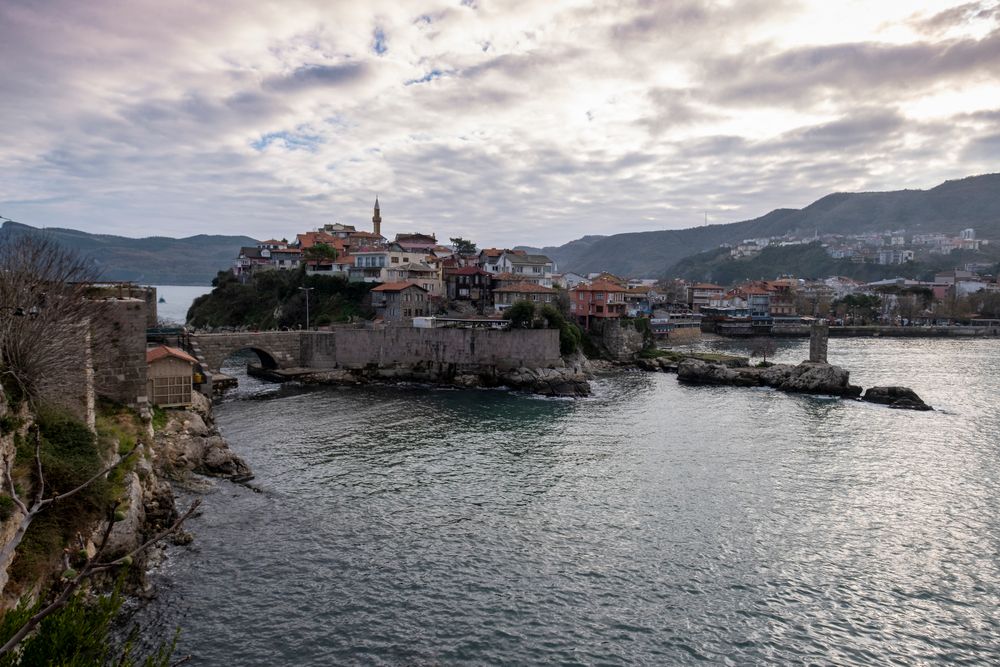
Amasra Fortress
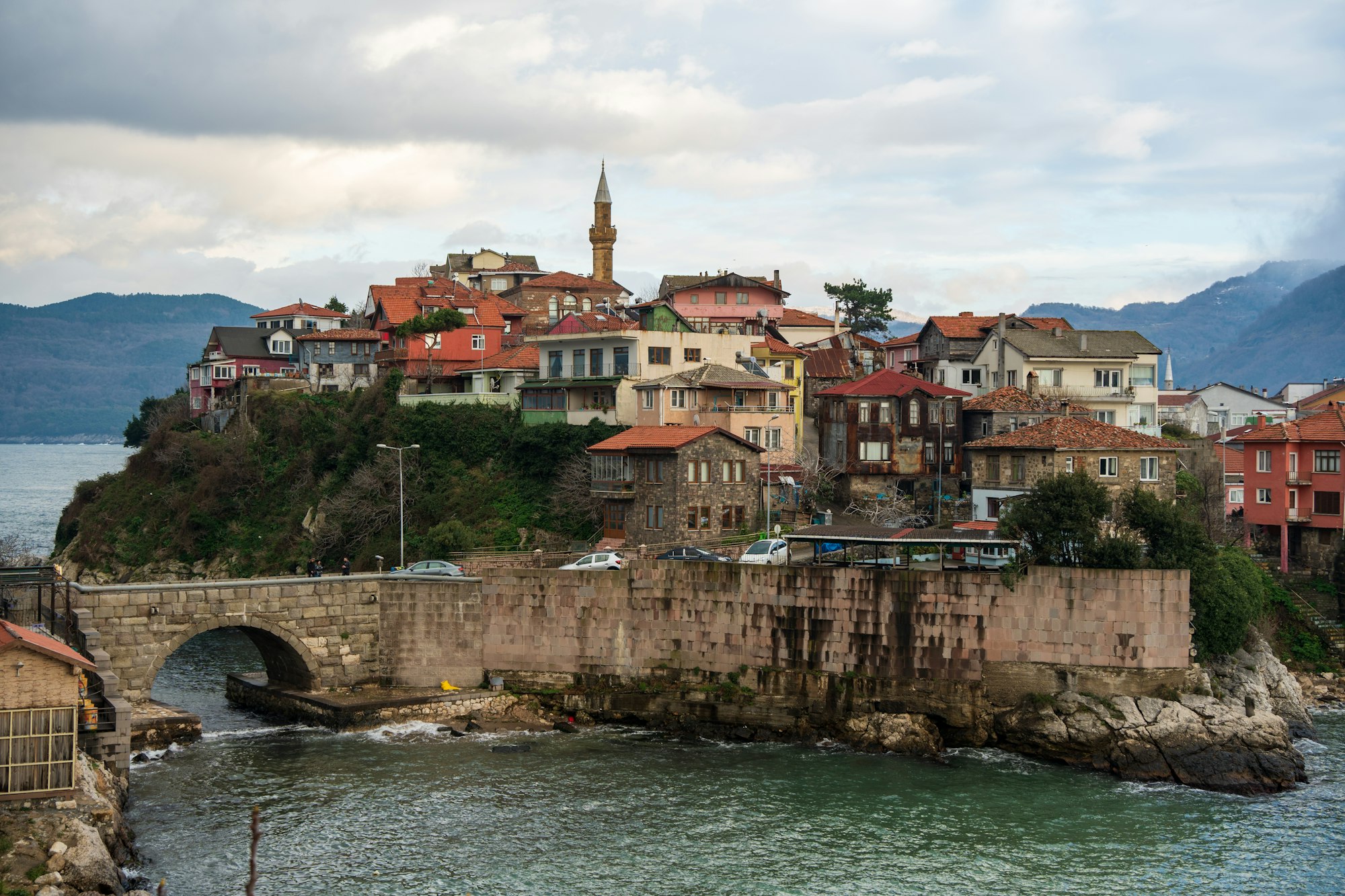
Built by the Romans and repaired by the Byzantines, Genoese and Ottomans, the fortress encloses the headland and Boztepe island in two parts, joined by the Kemere Bridge. Genoese coats of arms, an eagle and a Medusa head survive on the walls. The quarter inside is still lived in, so the lanes are residential, and the fortress sits on the UNESCO tentative list.
-
Amasra Museum
Begun in 1884 as a naval school and left unfinished for decades, the building has held the town museum since 1982. Four halls divide the collection evenly between Roman and Byzantine finds from the headland and the ethnography of the coast. A statue of Mehmed II stands outside, and the building was restored recently, so an hour covers the whole of it.
-
Büyük Liman Beach
Sand and shingle curve around the larger of the town's two bays, sheltered inside the harbour arm with the fortress walls above it. It fills quickly on summer weekends when visitors arrive from Ankara. The Black Sea stays cool, the swimming season is short, and the water is calmer here than on the open side of the headland.
-
Kemere Bridge
Joining the peninsula to Boztepe island, this single-arched stone bridge of the Roman period was repaired under the Byzantines and links the two halves of the fortress. A restoration finished in 2014 took every stone apart and rebuilt it with some new cut stone. Barely twenty-seven metres long, it is crossed in a minute and easily missed on the way to the island quarter.
-
Kuşkayası Monument
About four kilometres out of town on the Bartın road, a Roman roadside monument is cut into the rock above a forested slope. It was made for the emperor Claudius and shows a headless standing figure, perhaps the emperor or the governor, beside a Roman eagle and an inscription in Latin and Greek. A staircase climbs to it from the road, and there are views back over the town.
-
Tavşan Islet
Named for its rabbits, this uninhabited islet lies less than two hundred metres off the northern shore of Amasra, with the ruins of a cross-shaped Genoese church on it. A local belief holds that the sick who pass through a gap in the rocks on its northeastern side will recover, which brings a steady trickle of visitors across from the mainland.