Things to do
5-
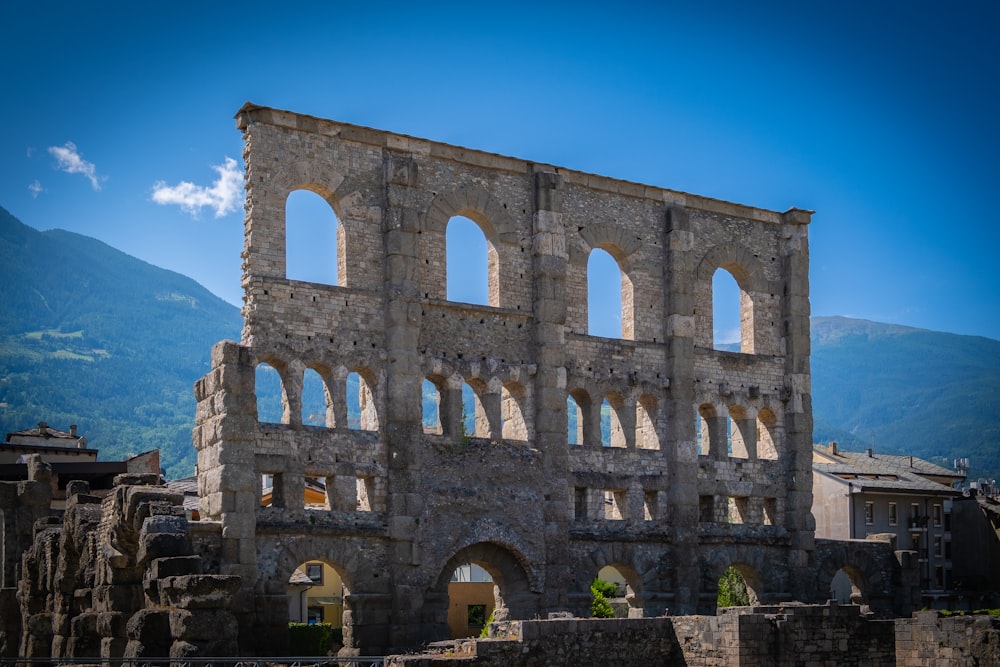
Teatro romano
The theatre's southern facade still stands twenty-two metres high in the middle of the town, which is why Aosta reads as Roman from street level rather than from a dig. The site is open through the day and a visit takes about twenty minutes, with the adjacent forum area included.
-
Arco di Augusto
A triumphal arch of 25 BC marking the founding of the colony, standing at the eastern approach on the road to the passes. It has never been buried or moved. It stands on a traffic island now, and the roof above it was added in the eighteenth century.
-
Castello di Fenis
The most complete castle in the valley, with a double ring of walls and turrets and a frescoed courtyard. It was a residence rather than a fortress, which is why it survives whole. It stands about half an hour east of Aosta and is entered on a timed guided tour.
-
Dora Baltea
The glacier-fed river running the length of the Aosta valley, and one of the most used rafting waters in Italy. The stretch between Morgex and Pre-Saint-Didier is where the centres put in, and sections below reach grade four when the melt is running.
-
Parco nazionale del Gran Paradiso
Italy's first national park, created in 1922 out of a royal hunting reserve, and the reason the alpine ibex still exists. The valleys south of Aosta run into it and the animals are visible from the paths. Cogne and Valsavarenche are the usual bases inside it.