Things to do
12-
Aljafería
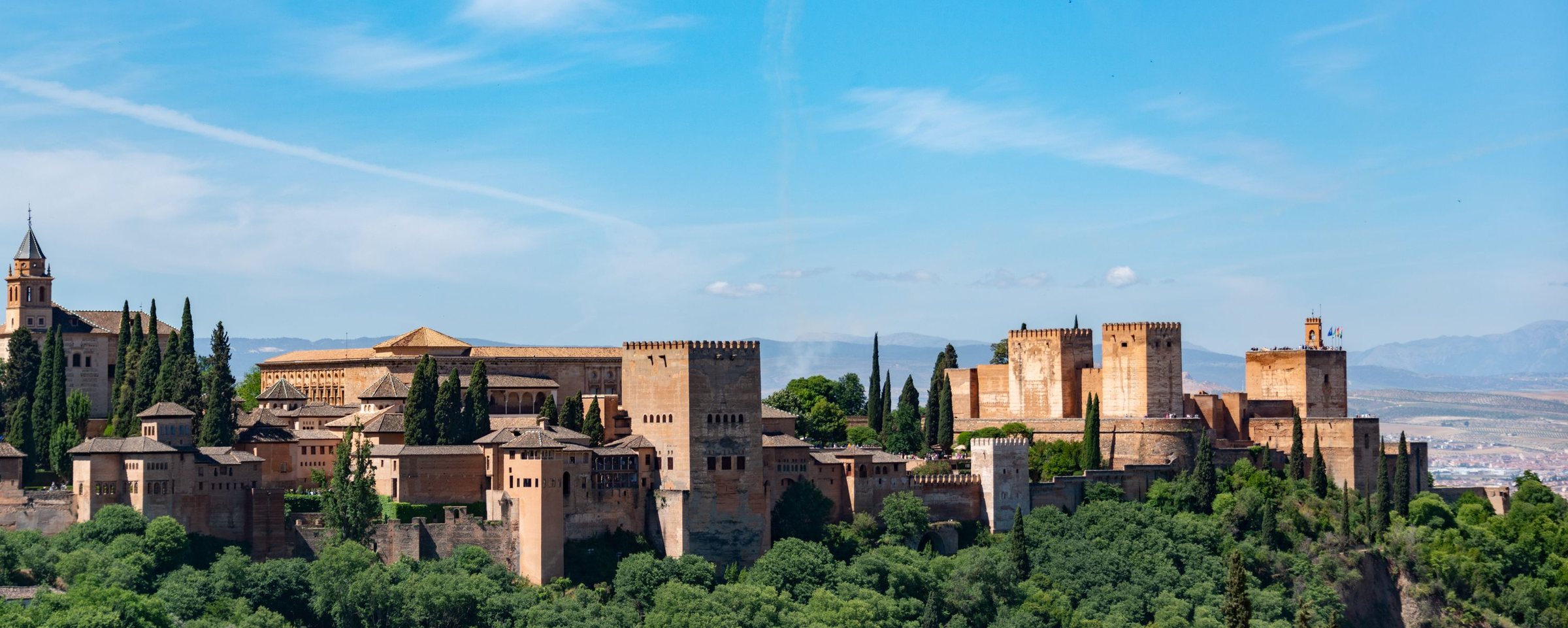
Built as a palace for the Muslim rulers of the city, the Aljafería keeps its carved arches and a courtyard of orange trees behind a later Christian palace and fortress walls. The building also houses the regional parliament, so some rooms close while it sits. Guided visits explain how the layers fit together. Allow an hour and a half and come in the morning, when the courtyard is quiet.
-
Basilica of Our Lady of the Pillar
Four corner towers and tiled domes mark the basilica on the Ebro bank, and entry to the nave is free. Inside, the small statue of the Virgin stands on her jasper pillar, and Goya painted one of the dome frescoes. A lift climbs one tower for a view over the river and the square. Mass runs through the day, so visitors keep to the aisles during services.
-
El Tubo
Narrow lanes south of the Plaza del Pilar hold a dense run of tapas bars, and the quarter is where Zaragoza goes out to eat. Bars specialise in a single dish, so locals move from counter to counter. Weekend nights after nine are loud and packed; a weekday early evening is calmer. Many bars close one day a week, which varies by bar.
-
Forum of Caesaraugusta
Under the Plaza de la Seo lie the excavated foundations of the Roman forum, reached by a glass entrance on the square. Walkways cross the old market shops and a stretch of the great drain, and an audiovisual show sets out how the forum looked. It belongs to a route of four Roman sites across the centre, and a combined ticket covers them. A visit to the excavations and the show takes about an hour.
-
Goya Museum
Housed in a Renaissance mansion near La Seo, the Goya Museum holds paintings by the artist and a full run of his printed series, including the Caprichos and the Disasters of War. Earlier Spanish and European work fills the lower floors. Goya was born in a village outside the city, which explains the depth of the collection. An hour and a quarter is enough for the prints.
-
La Seo Cathedral
Brick, tile and stone from several centuries meet in La Seo, the city's older cathedral, a short walk along the square from the basilica. Its outer wall carries Mudéjar brickwork in green and white ceramic, and a museum inside shows a large collection of Flemish tapestries. Visitors pay to enter, unlike the basilica. A visit to the chapels and the tapestry rooms takes about an hour.
-
Mercado Central
Iron columns and glass cover the modernist hall of the central market, which reopened after a long restoration. Stalls sell Aragonese ham, cheese, fruit and fish, and a few counters serve food to eat on the spot. Mornings are the liveliest time, when locals do the day's shopping. The market sits a few minutes west of the Plaza del Pilar.
-
Monasterio de Piedra
Waterfalls, grottoes and a canyon with walls more than 100 metres high fill the park around this former monastery near Nuévalos, a long day trip by car from the city. A marked circuit runs past the cascades and through a cave behind the largest fall. Paths are wet and stepped in places, so good shoes matter. Tickets can be bought online before the visit, and weekends in spring are the busiest.
-
Museum of Zaragoza
Set on the Plaza de los Sitios, the Museum of Zaragoza covers archaeology from Roman mosaics to Islamic fragments, and a fine arts section with several paintings by Goya. It is a quieter visit than the sights on the riverfront. Entry is free. An hour and a quarter covers the main rooms, and the garden square outside makes a good pause.
-
Parque Grande José Antonio Labordeta
South of the centre, the city's largest park climbs from shaded avenues and fountains to the Cabezo de Buenavista viewpoint. A botanical garden and long tree-lined walks make it a cool escape on summer evenings. Runners and families fill the paths at weekends. The tram reaches its edge, and an unhurried loop takes about an hour.
-
Plaza del Pilar
Stretching for several hundred metres between the basilica and La Seo, this paved square is the city's front room and the easiest place to get one's bearings. A statue of Goya stands near the tourist office, and a sloping fountain shaped like a map of Latin America sits at the western end. Evening is the best time to cross it, when the towers are lit and families come out to walk.
-
Puente de Piedra
Four bronze lions guard the ends of the stone bridge over the Ebro, and the far bank gives the classic view back to the basilica. Crossing takes a few minutes on foot. Late afternoon puts the sun on the towers and domes for photographs. The riverside paths on the northern side continue east and west for a longer walk.