Things to do
20-
Alameda Apodaca
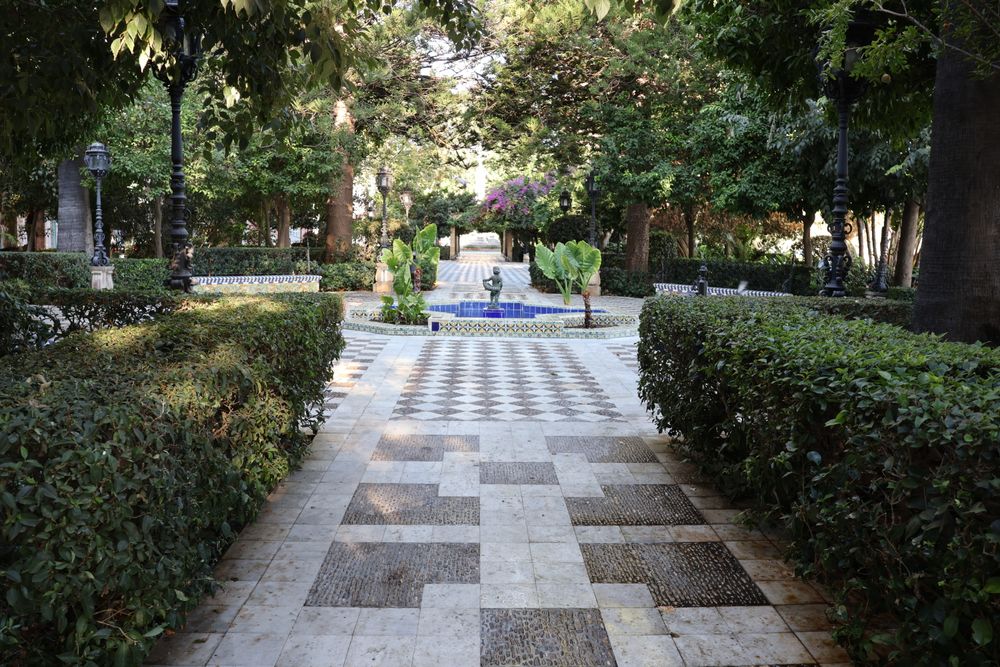
Old ficus trees with roots spilling over their beds shade this seafront garden on the bay side of the old town, laid out with tiled benches, fountains and iron lamps. It runs north from the Plaza de España to the Baluarte de la Candelaria and is far quieter than the lanes behind it. The walk continues along the walls to Parque Genovés and La Caleta in about twenty minutes.
-
Cádiz Cathedral
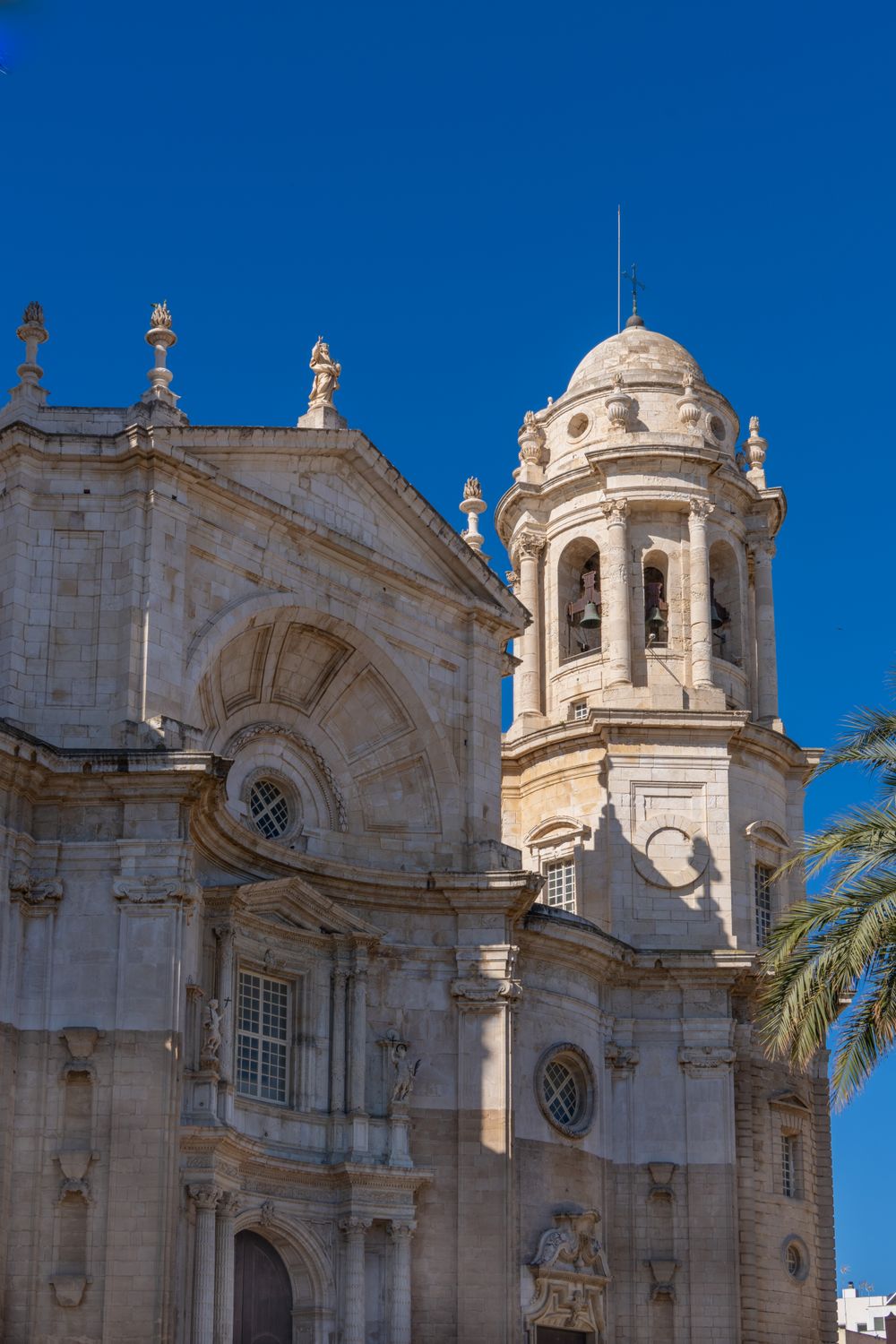
Golden glazed tiles cover the dome that rises over the seafront, and it can be seen from almost every rooftop in the old town. Inside, the crypt sits below sea level, and on rough days the Atlantic can be heard against the wall outside. Climb the clock tower for a view over the flat roofs and watchtowers, and allow over an hour for church, crypt and tower together.
-
Castle of San Sebastián
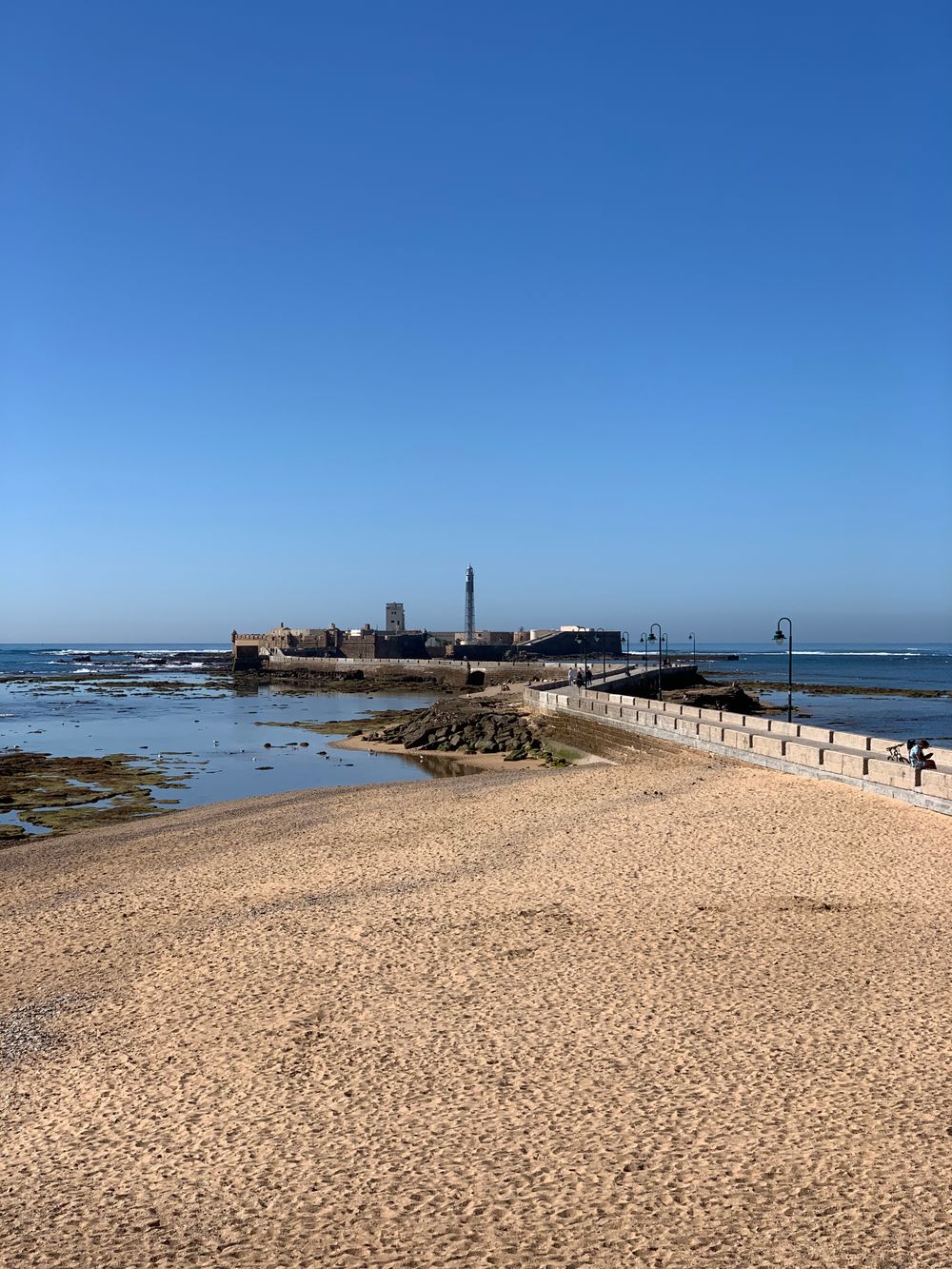
Walk the long stone causeway out from La Caleta to this fort on its own islet, with a lighthouse beside it and open Atlantic on three sides. The walk itself is the reason to come, best in the evening as the light goes. On windy days waves break over the edges of the path, so check the conditions before setting out, and allow about an hour there and back.
-
La Caleta
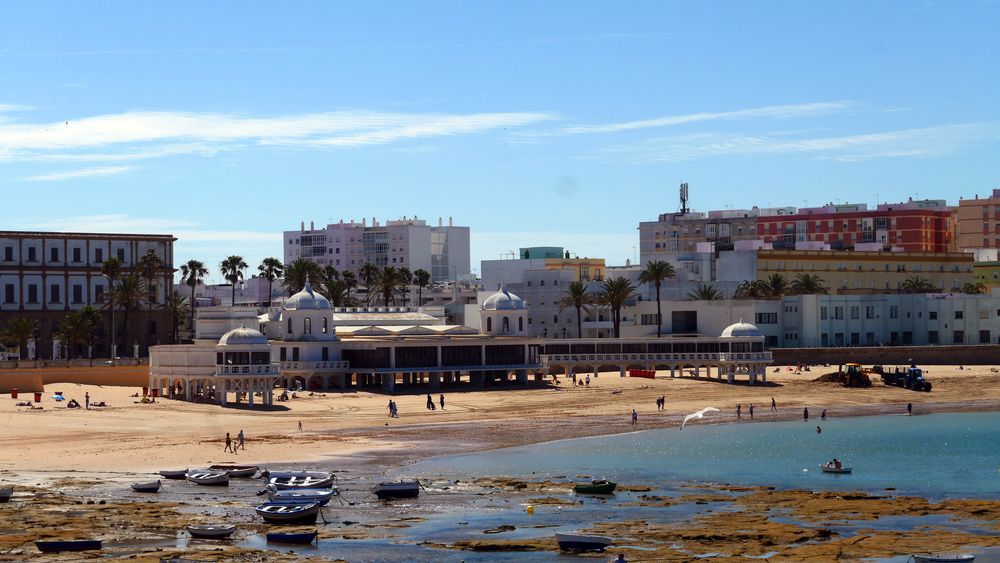
Fishing boats rest on the sand of this small beach tucked between two castles, and it is the stretch of the city most photographed at sunset. The water is sheltered and calm for a swim, and the tide changes the beach a great deal, from a wide strip at low water to a narrow one at high. Come in the last hour of light, when the sun drops into the sea straight ahead.
-
Mercado Central
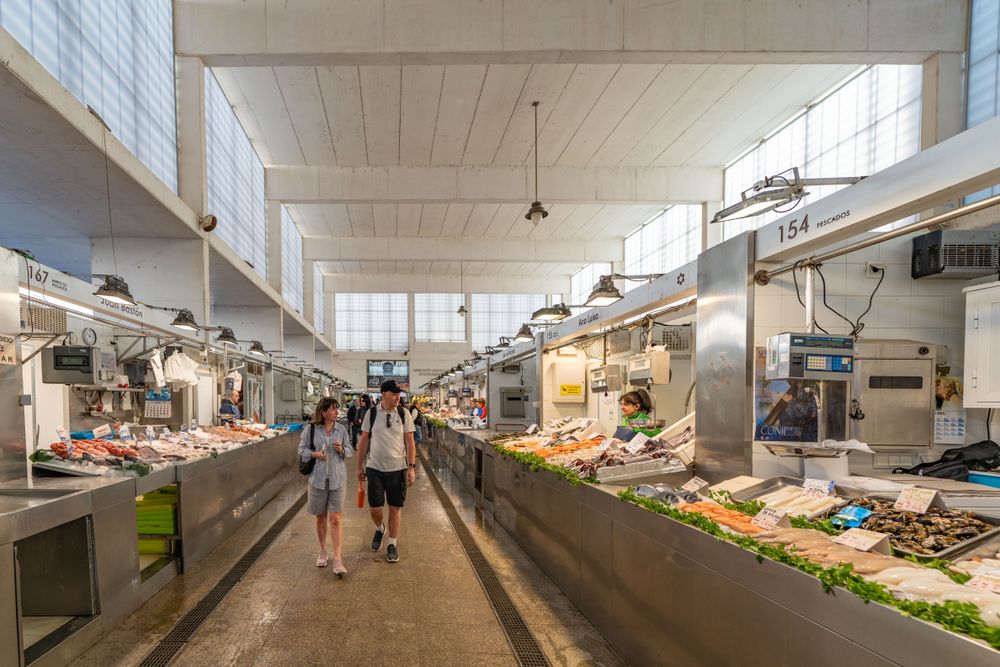
Tuna, prawns, cuttlefish and shellfish landed that day cover the fish hall stalls in the morning. Colonnades enclose a covered market in the middle of the old town, with fruit, meat and spice sellers around the edge. Food stalls around the outer arcade serve fried fish and small plates through lunch, and much of the market is shut on Sundays.
-
Parque Genovés
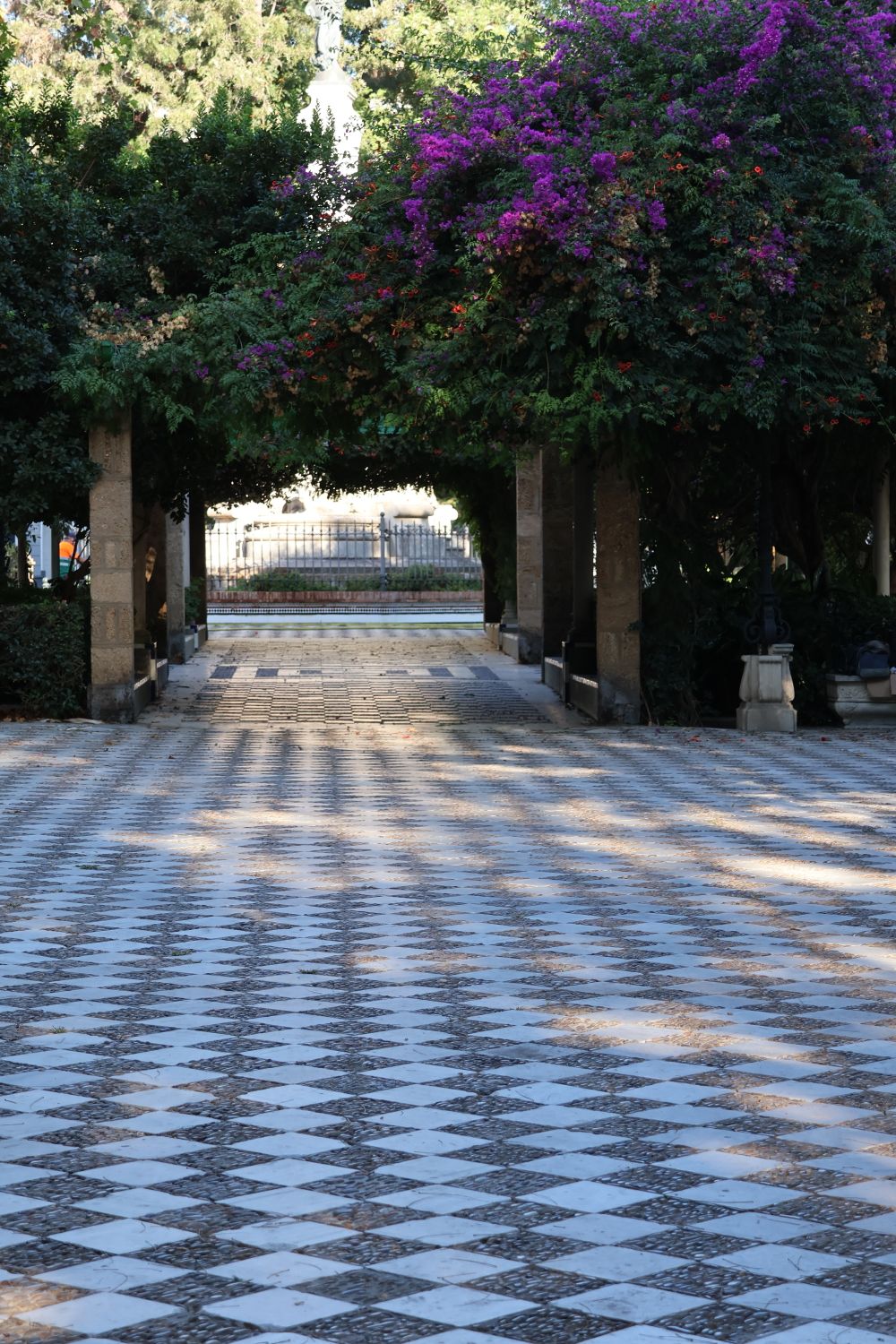
Clipped hedges shaped into domes and arches line the paths of this seafront garden between La Caleta and the Alameda. Exotic trees, a small lake and an artificial grotto with a waterfall fill the middle, and benches face the sea along the outer edge. It takes about three quarters of an hour at an easy pace, and it makes the shaded link on a walk around the old town walls.
-
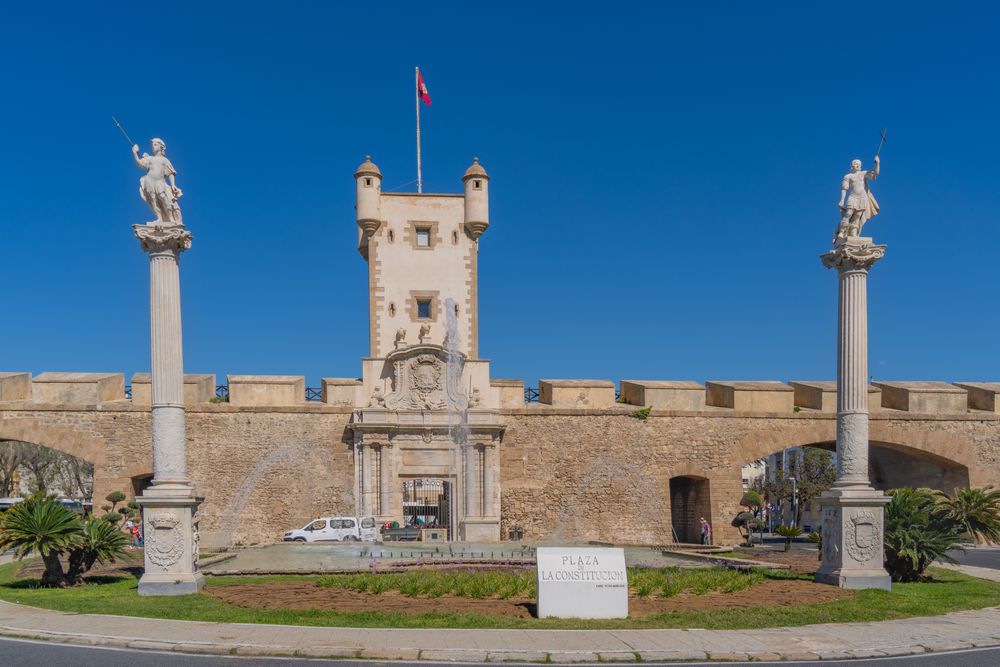
Puertas de Tierra
A wall of pale stone crosses the whole isthmus here, and its arched gate was for centuries the only way into the old town by land. The tower and the walkway along the top reopened in December 2024, with free entry, a virtual reality room and views over the bay on one side and the Atlantic on the other. It is closed on Mondays and Sunday afternoons, and for a long break at midday.
-
Barrio de la Viña
Fishermen's families once filled the narrow streets of this barrio by La Caleta, and it is still the city's main quarter for fried fish, tapas bars and evening crowds. In February it becomes the heart of Carnival, when costumed singing groups perform satirical songs in the squares. Walk Calle Virgen de la Palma at dinner time, when the fried-fish terraces fill the whole street.
-
Campo del Sur
Breakwater blocks line this seafront avenue on the Atlantic side of the old town, which runs for about 1.5 km from the cathedral towards La Viña. Pastel houses face the open sea, and from the middle of the promenade the view back along the sea wall to the cathedral is the one on most postcards of the city. On a big swell, spray comes over the wall.
-
Carnival of Cádiz
For about ten days each February or early March, costumed groups called chirigotas sing satirical songs about the year's news on street corners across the old town, in La Viña and around the Plaza de San Antonio. The official contest runs at the Gran Teatro Falla in the weeks before, with the final on Carnival's opening Friday. Rooms in the old town sell out months ahead, and evenings by the sea are cold and windy.
-
Castle of Santa Catalina
Star shaped walls with pointed bastions enclose this fortress at the northern end of La Caleta, begun at the very end of the sixteenth century to guard the bay. Its courtyards and old barracks now hold free exhibitions and craft workshops, and summer concerts are staged inside the walls. The ramparts give the clearest view back across the beach to the Castle of San Sebastián on its islet.
-
El Pópulo
Behind the cathedral, three old stone arches lead into the medieval core of the city, a tight knot of lanes, small squares and whitewashed houses. The Roman theatre lies inside it, and the quarter is quiet by day and busy with bars after dark. Enter through the Arco de la Rosa beside the cathedral and leave by the Arco del Pópulo facing the town hall square.
-
Gran Teatro Falla
Red brick arches in a Moorish revival style front this theatre, a short walk from La Caleta. For most of the year it stages plays, concerts and opera, and in the weeks before Carnival it hosts the official contest of the city's singing groups, broadcast across Andalusia. Contest seats sell out within hours; the façade is best seen from the Plaza de Fragela.
-
Museum of Cádiz
Two white marble sarcophagi carved with human faces, left by the Phoenician settlers of the city, are the pieces to see in this museum on Plaza de Mina. Upstairs, a run of saints painted by Zurbarán fills the fine art rooms, and the top floor keeps the old puppets of the city's traditional theatre. Allow about an hour and a half, and note that it is closed on Mondays.
-
Oratorio de la Santa Cueva
Two chapels sit one above the other here: a sober underground chapel below, and above it an oval room in gold and white that holds three large paintings by Goya set into its arches. It is small and takes about half an hour, and the Goya canvases are the reason to go. Check opening times before walking over, since hours are short and it shuts for services.
-
Playa de la Victoria
Wide, fine sand runs for kilometres along the newer side of the city, backed by a seafront promenade with beach bars and lifeguard posts in summer. This is the place for a full beach day with room to spread out, unlike the small coves of the old town. City buses run here from the centre, and in July and August the sand fills quickly by late morning.
-
Plaza de las Flores
Flower stalls fill this small square beside the main post office, one block from the Mercado Central, and it is busy from morning until late. Fried fish is sold here in paper cones to eat on a bench, the classic Cádiz lunch.
-
Roman Theatre
Rows of stone seating lie half buried behind the cathedral, uncovered after a fire cleared a block of warehouses in the old Pópulo quarter. Works on the interpretation centre limit access, and only small groups go in at a time, so there is often a short wait. It takes under an hour, and it fits neatly into a walk through El Pópulo and the arches that lead into it.
-
Torre Tavira
Climb to the highest point of the old town, an old merchant watchtower from which traders once looked out for their ships. At the top a camera obscura projects a live, moving image of the streets, roofs and harbour onto a dish, with a guide naming what passes across it. Capacity in the chamber is small, so reserve a slot ahead, and choose a clear day for the sharpest picture.
-
Yacimiento Arqueológico Gadir
Two Phoenician streets and the remains of their houses lie under the Tía Norica puppet theatre, seen from a glass walkway above the excavation. Visits are guided in small groups and start with a short film on the city's origins. The site is closed on Fridays and on Thursday afternoons, so a morning visit earlier in the week is the safer plan.