Things to do
8-
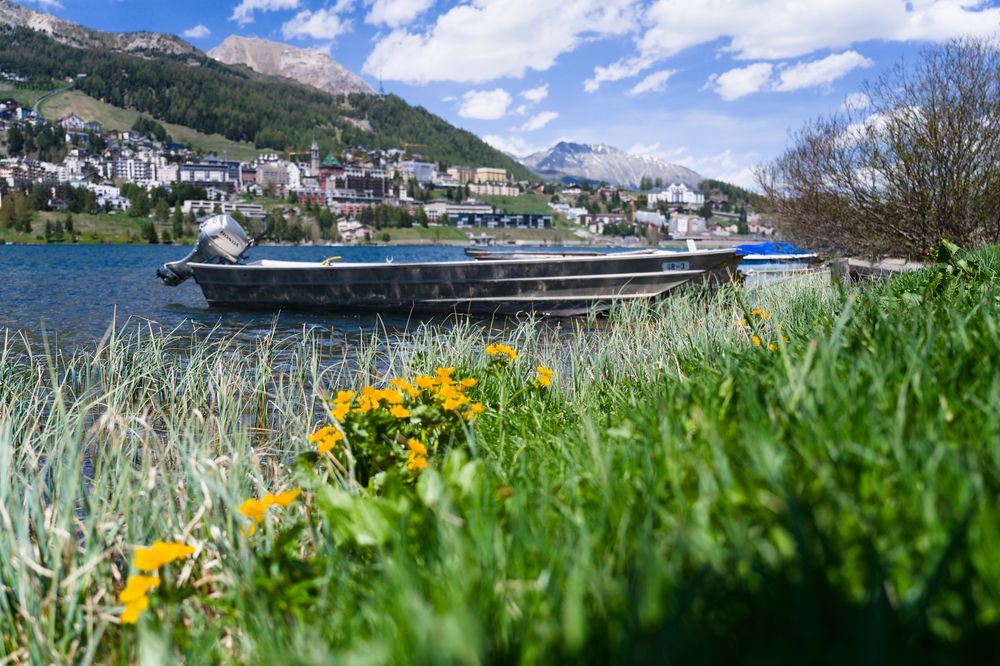
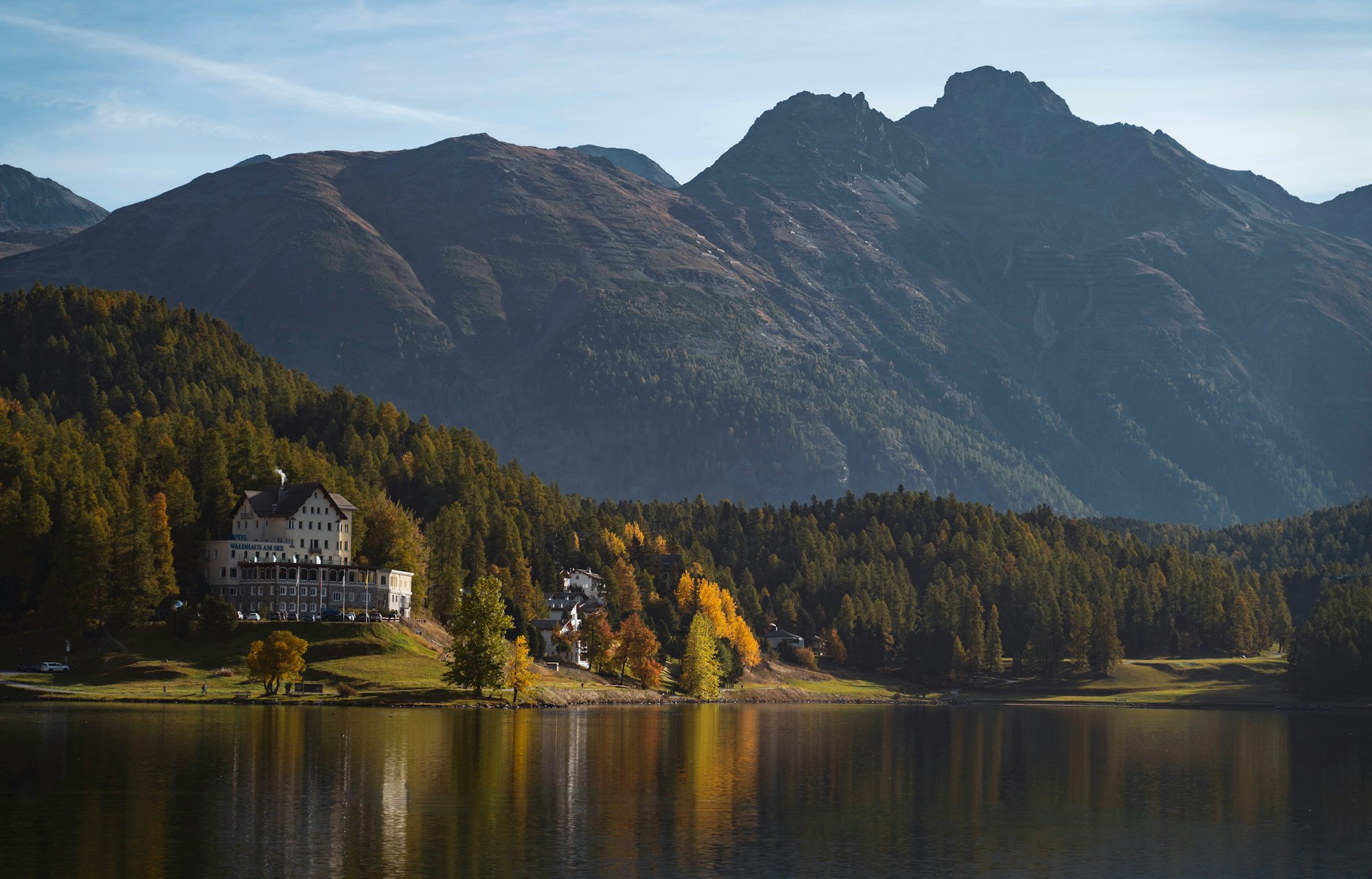
Lake St. Moritz
The lake the town sits above, frozen solid enough from January to hold horse races, cricket and polo on the ice. In summer the path around it takes an hour and passes the Segantini studio and the leaning tower of the old church.
-
Badrutt's Palace Hotel
The tower above the lake, open since 1896 and built by the son of the hotelier who made the winter bet, with a private ski lift and a doorway that has kept the same guest list for a century. It is the building the town is photographed as.
-
Corviglia
The ski mountain directly above the town at 2,486 metres, reached by funicular from the middle of St. Moritz Dorf, with the Piz Nair lift carrying on above it. In summer it is the start of the walk down through the larches to the lake.
-
Cresta Run
Natural ice, rebuilt in a ravine every winter, forms this skeleton track of about 1,200 metres from St. Moritz down towards Celerina, dropping 157 metres. The St. Moritz Tobogganing Club still runs it, and riders still go head first. The season lasts from just before Christmas to late February, and women have ridden it again since 2018.
-
Kulm Hotel
Founded in 1856, this is the house where the winter wager of 1864 was made and where Switzerland's first electric light came on, in the dining room. The Olympia bob run starts in its grounds, the Cresta club lunches in its Sunny Bar, and the park runs down towards the lake and the Corviglia funicular.
-
Lej da Staz
A small brown moor lake in the larch woods between St. Moritz and Pontresina, warm enough to swim in by August, which no other water in this valley is. It is twenty minutes off the main path and it is the local answer to the crowds.
-
Muottas Muragl
A terrace at 2,456 metres reached by a funicular of 1907, looking straight down the chain of Engadine lakes with the Bernina group on the left. It is the view that appears on everything about this valley, and the walk on from it to Alp Languard is easy and long.
-
Segantini Museum
A domed stone building above the town holding the largest collection of Giovanni Segantini, whose Alpine triptych of life, nature and death was painted for a pavilion that was never built and hangs here instead. He died on a mountain above Pontresina at forty-one.