Globe Countries Cities Dispatches World's Best Events Get the App
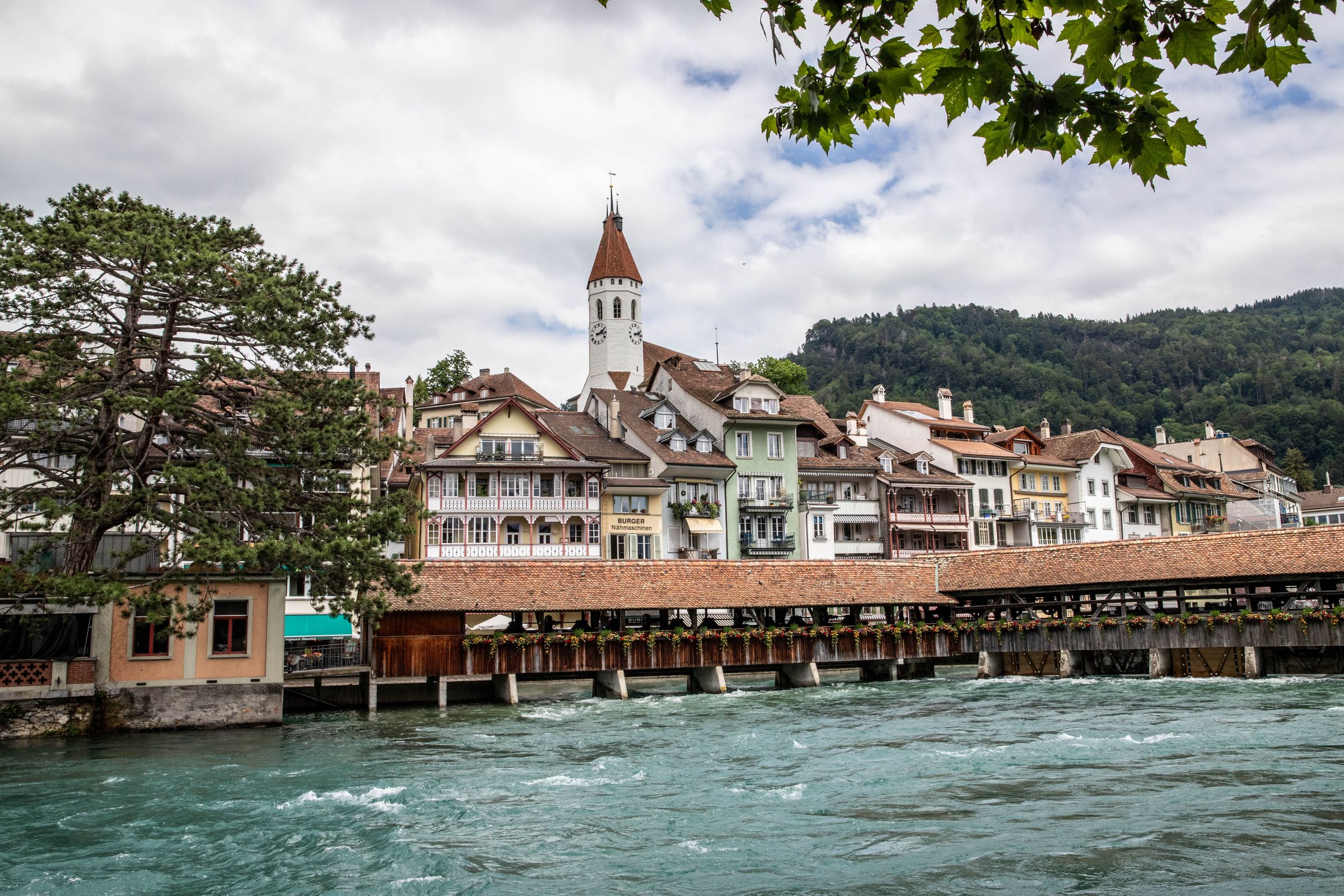
Thun's covered wooden lock bridge over the fast green Aare, with old town houses and the clock tower of the town church behind
The Untere Schleuse on the Aare · built in 1723 and 1724, it still controls the river
Town brief · 46.7580°N 7.6280°E

Thun

Swim the Aare in the afternoon and watch the surfers on the river locks at dusk, then catch an early boat to a castle across the lake.

View on globe

Why you should go

Ninety seconds on Thun

How long
One night, two for the lakea day for the town, a second for a boat, a castle or the Niesen
Getting around
On foot, then by boattrains, buses and lake boats all leave from beside the station
When
June to Septemberthe river pool closes after September and the boats thin out in autumn
Language
Germanspoken as Bernese Swiss German; English is widely used
Money
The Swiss francSwitzerland does not use the euro; cards are taken almost everywhere
Airports
Zurich ZRHabout an hour and a half by train; Bern BRN is closer but small
How long

How many days do you need in Thun?

One night covers the old town, the castle and an evening by the river. A second day belongs to the lake: a boat to Oberhofen or Spiez, the funicular up the Niesen, or an afternoon at the Schwäbis river pool. As a day trip from Bern or Interlaken the town fits into an afternoon, but the lake does not.

Getting around

Do you need a car in Thun?

No. The old town is about ten minutes on foot from the station, and trains, buses and lake boats all leave from beside it. Bern is about twenty minutes away by train, Spiez about ten and Interlaken about half an hour. Overnight guests receive a regional card covering buses and postbuses around the lake, and the old town car parks are the expensive option for drivers.

When

When is the best time to visit Thun?

June to September. The Schwäbis river pool opens from May to September, the lake boats run their full timetable from mid April to mid October, and the Niesen funicular runs from late April to early November. In winter the boats keep a reduced service, and from November to January the castle opens only on Sunday afternoons, apart from daily afternoon opening over Christmas and New Year.

Language

What language is spoken in Thun?

German, spoken locally as Bernese Swiss German, with standard German on signs and menus. English is common in hotels, at the castle and on the lake boats, and the tourist office runs public walking tours of the old town in English and German.

Money

What currency does Thun use?

The Swiss franc. Switzerland is not in the eurozone. Cards are accepted almost everywhere, and the Swiss Travel Pass covers the lake boats.

Airports

Which airport do you fly into for Thun?

Zurich, ZRH, is the main gateway, about an hour and a half away by train with frequent services through the day. Bern, BRN, is the closest airport at about twenty kilometres and twenty minutes by road, but it has few scheduled routes.

Thun is usually done as an afternoon between Bern and the mountains. Stay the night and the town slows down: the day-trippers leave, surfers come out onto the standing waves below the river locks, and in summer an evening boat sails up the lake.

Start on the castle hill. The covered Kirchtreppe climbs from the main street to the town church and the castle gate, and the castle opens at ten from April to October. If you would rather skip the stairs, a lift also serves the Schlossberg.

Then go to the water. The Schwäbis river pool in town is where to try swimming in the Aare. In the other direction, about twenty minutes along the shore from the station, Schadau Park has lawns on the lake and the town's old round panorama painting.

On the second morning, take the boat. Lake services leave from beside the station for Hilterfingen, Oberhofen and Spiez, and the whole run to Interlaken takes about two hours. For the Niesen, take the train to Spiez and change for Mülenen for the funicular to the summit.

Sleep in the old town if you want the river under your window, or by the lake near Schadau for quiet. Any overnight stay comes with a regional guest card that covers the buses and postbuses around the lake, which is the easy way up to the Sigriswil bridge.

Things to do

13
  1. Lake Thun

    Lake Thun

    Lake · 3 hr

    Covering about forty-eight square kilometres, this is the largest Swiss lake entirely within a single canton, with the Niesen at its southern end and Interlaken to the east. BLS boats sail it all year; from May to mid October they include the 1906 paddle steamer Blüemlisalp. Castles stand at Thun, Oberhofen, Spiez and Hilterfingen, all reachable by boat.

  2. Schloss Oberhofen

    Schloss Oberhofen

    Castle · 1.5 hr

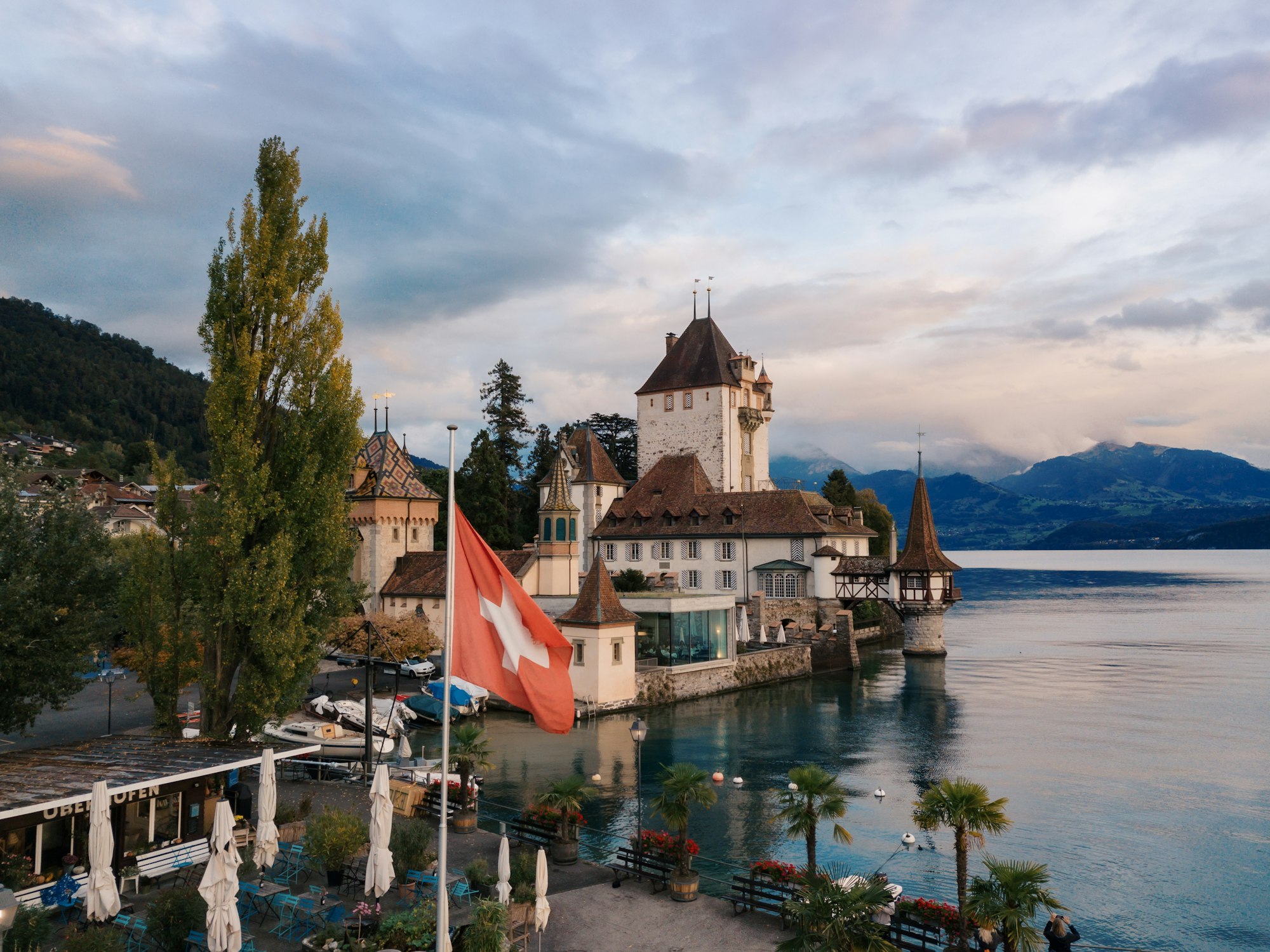
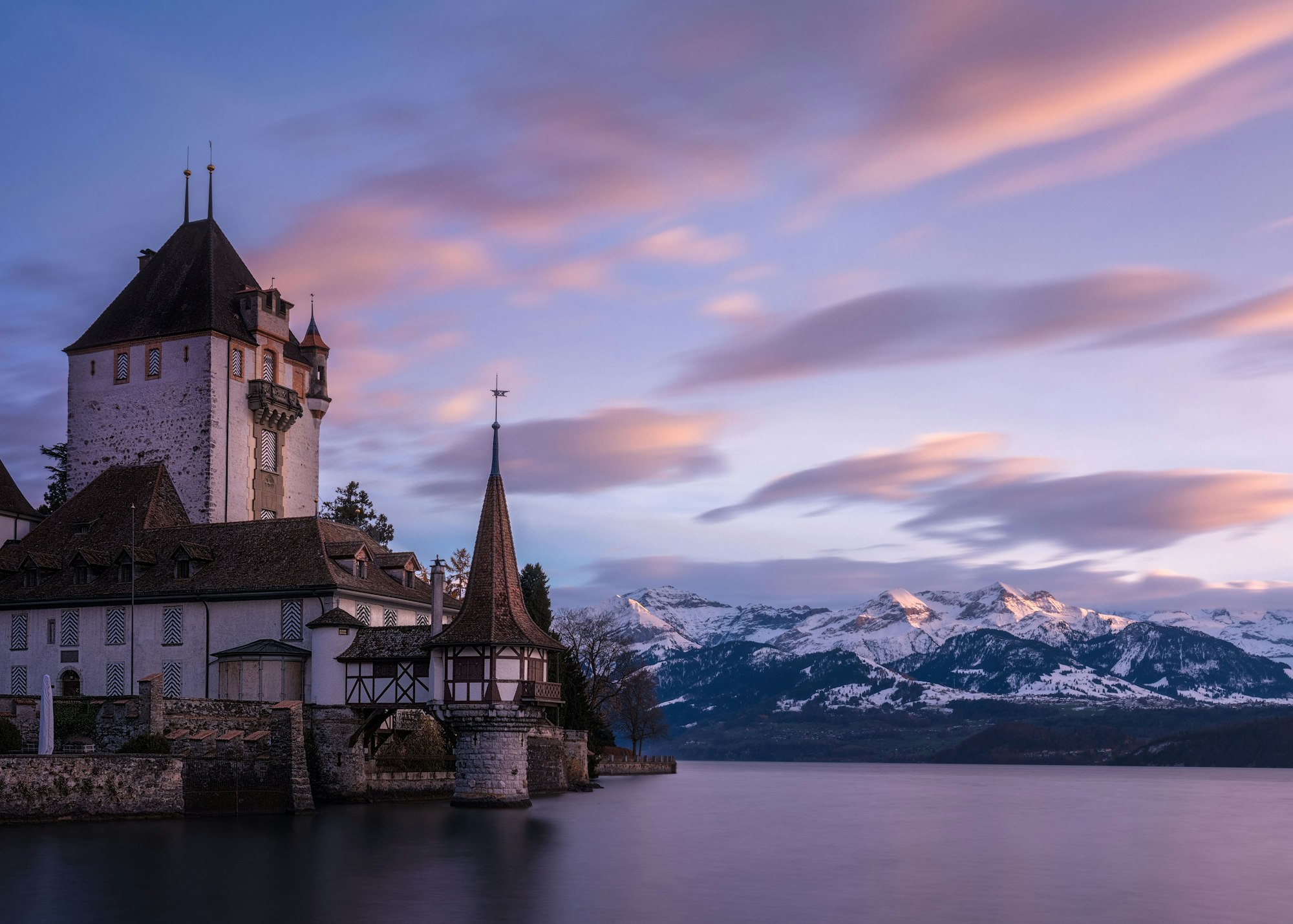
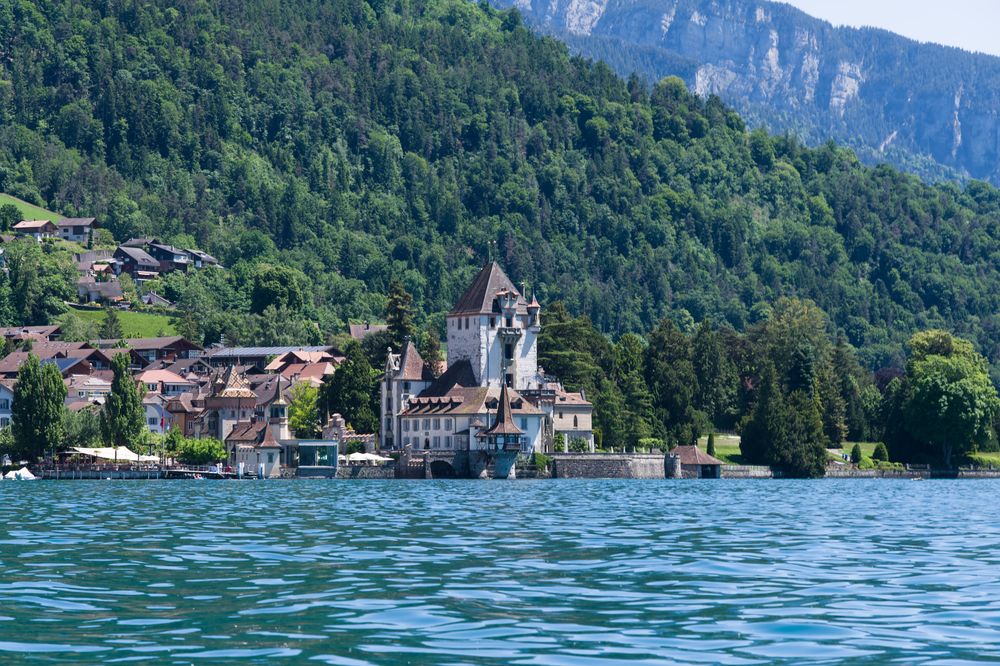
    A castle standing in the water on the north shore, thirteenth century with a Turkish smoking room added in the nineteenth, in an English park of exotic trees running down to the lake. The boat calls at its own pier.

  3. Thun Castle

    Thun Castle

    Castle · 1.5 hr

    On the hill above the old town, this keep from around 1190 carries four corner turrets under one huge roof. Its museum runs over seven levels, from the cellar up through the tall Knights' Hall, and tells the story of the castle and the town. From the turrets the view runs over the lake to the Bernese Alps.

  4. Thun-Panorama

    Thun-Panorama

    Museum · 1 hr

    Marquard Wocher's circular painting of Thun around 1810, about thirty-eight metres long, is the oldest panorama painting to survive anywhere. It hangs in a round pavilion in Schadau Park, viewed from a platform in the middle as if from a rooftop in the old town. The pavilion opens from March to November and closes on Mondays.

  5. Waterfront

    Flussbad Schwäbis

    Waterfront · 3 hr

    Swimmers have used this stretch of the Aare in town since 1884, and the river pool now has lawns, a section for non-swimmers, a paddling pool for children and a restaurant. It opens from May to September. A short, quiet stretch of the river is set aside for swimming, which makes it a calm first taste of the Aare.

  6. Castle

    Hünegg Castle

    Castle · 1.5 hr

    Standing in a lakeside park at Hilterfingen, a short boat ride from Thun, this nineteenth-century castle keeps its original furnished rooms, decorated in the historicist and art nouveau styles of the period. It opens from mid May to mid October, mostly in the afternoons. The park and the shore path beside it are pleasant even on a day the house is shut.

  7. Niesen

    Viewpoint · 3.5 hr

    A near-perfect pyramid rising to 2,362 metres at the south end of the lake, often called the Swiss Pyramid. A funicular from Mülenen, completed in 1910, climbs to the summit. Beside it runs a service stairway of 11,674 steps, the longest in the world, opened to the public only for one stair race a year.

  8. Landmark

    Obere Hauptgasse

    Landmark · 30 min

    Along the old town's main street the pavements run on the roofs of the ground-floor shops, so a second row of shops and cafés opens off a raised walkway above the cobbles. Flags and window boxes hang over it in summer. At the top end the covered Kirchtreppe climbs to the town church and the castle gate.

  9. Castle

    Schadau Castle

    Castle · 1 hr

    Pink and neo-Gothic, this castle was finished in 1854 on the spot where the Aare flows out of Lake Thun. It now holds a hotel and restaurant, and its park is open to walkers, with lawns running down to the water and the Bernese Alps across the lake.

  10. Bridge

    Sigriswil Panorama Bridge

    Bridge · 2 hr

    Strung for 340 metres between the villages of Sigriswil and Aeschlen, this footbridge hangs about 180 metres above the Gummischlucht gorge, with Lake Thun and the Bernese Alps beyond. A fee is paid on site for the crossing. Paths drop into the gorge below for a loop back to the start, and the bridge is open in all weathers.

  11. Castle

    Spiez Castle

    Castle · 2 hr

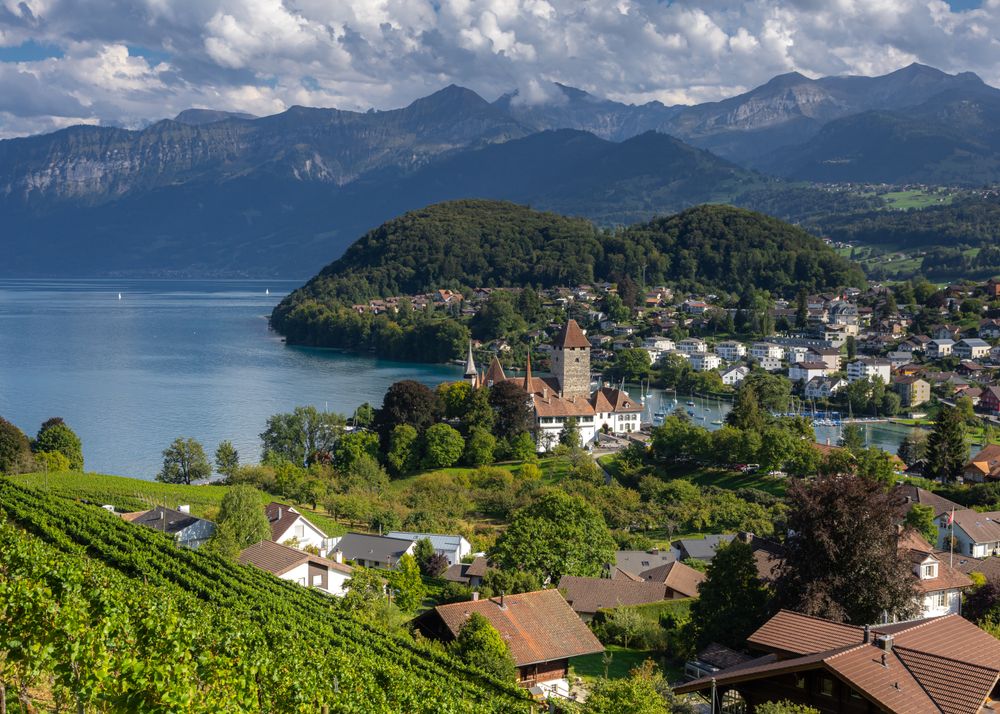
    Above a small harbour on the south shore, this castle stands among vineyards, with a Romanesque church beside it and a tower that looks down the length of the bay. The museum opens daily from May to October, from late morning except on Mondays, when it opens in the afternoon. Trains from Thun take about ten minutes, and the lake boats call at the pier below.

  12. Viewpoint

    Stockhorn

    Viewpoint · 4 hr

    Reached by cable car from Erlenbach in the Simmental, the 2,190-metre summit looks over Lake Thun to the Alps on one side and across the Swiss lowlands on the other. The cars change at the Chrindi middle station, where a short, easy path circles the Hinterstockensee lake. The lift runs in a summer season and a shorter winter one.

  13. Bridge

    Untere Schleuse

    Bridge · 30 min

    Built in 1723 and 1724, this covered wooden lock still controls the Aare as it leaves the lake, and a footpath crosses on top of it. Window boxes line its rails in summer. Below the town's locks the river forms standing waves, and on warm evenings surfers take turns on them while the cafés of Mühleplatz look on.
Basemap Meridian · data © OpenStreetMap
Explore

More of Switzerland

Switzerland
Country

Switzerland

Every Switzerland town, place and dispatch, on one map.

Interlaken
Town

Interlaken

Interlaken sits on the flat alluvial strip between Lake Thun and Lake Brienz, the name meaning simply between the lakes.

Schilthorn
Viewpoint · Lauterbrunnen

Schilthorn

Stop at Birg on the way down.

Bern
Town

Bern

The federal capital, on a spur inside a loop of the Aare, founded in 1191 and rebuilt in sandstone after a fire in 1405.

Staubbach Falls
Waterfall · Lauterbrunnen

Staubbach Falls

In May and June, when the snowmelt is heaviest, climb the short path to the gallery behind the fall.

Last updated

Meridian Dispatch for iPhone

Plan the trip.
Keep the journal.

Every other travel app asks you to start logging. Meridian Dispatch opens with years of your travel already written, from the photographs you already took.