Things to do
13-
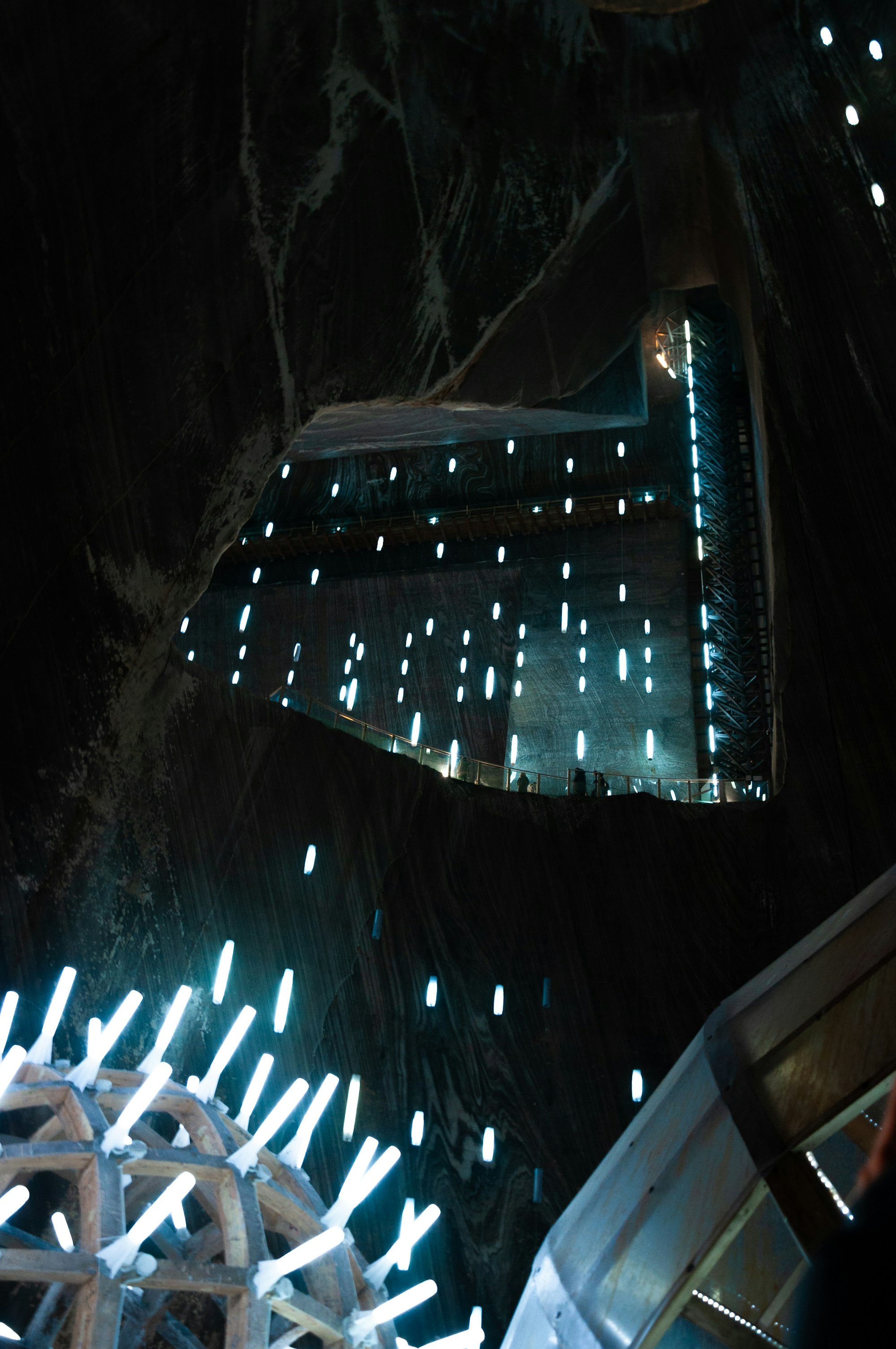
Salina Turda
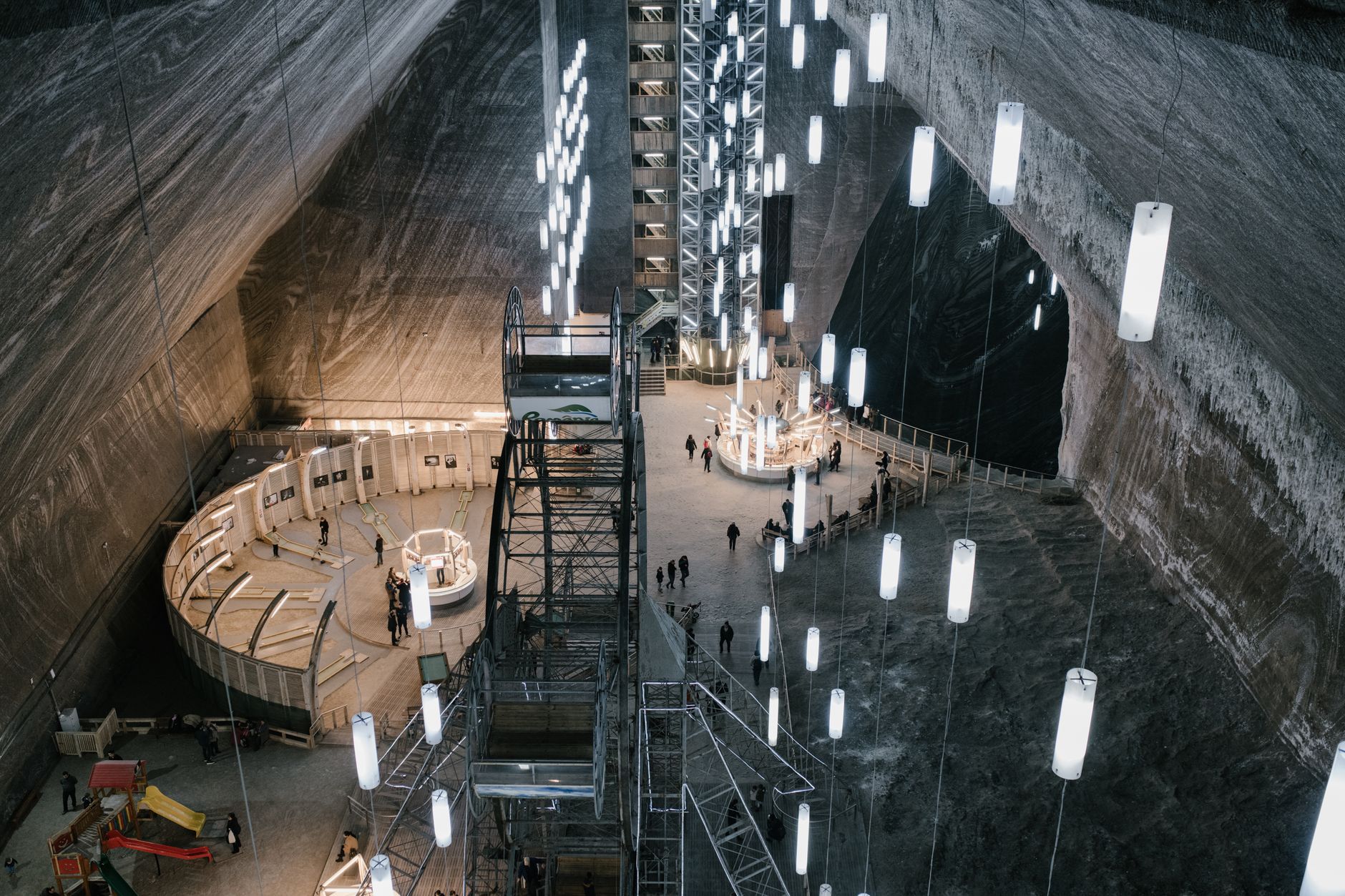
A salt mine worked from the Roman period to 1932, reopened as a visitor site with a Ferris wheel, a boating lake and an amphitheatre installed in chambers up to 120 metres deep. The Rudolf chamber is 42 metres to its ceiling and the air is used as a halotherapy treatment.
-
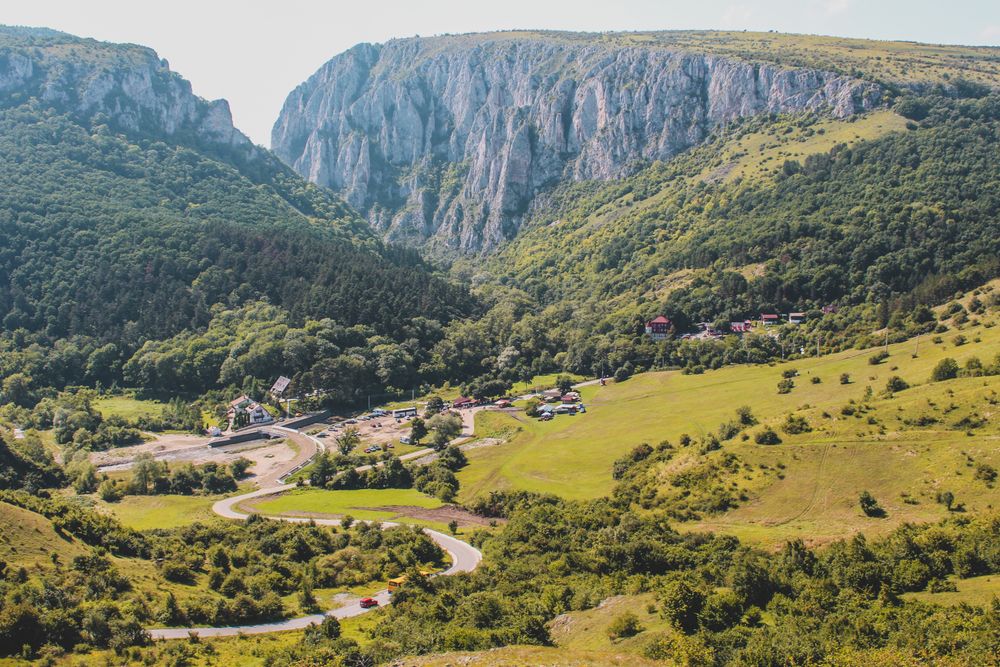
Turda Gorge
A limestone gorge nearly three kilometres long with walls up to 300 metres, crossed on footbridges and cut by the Hășdate. About a thousand plant species have been recorded in it and the path is scrambly in places. The walk through and back takes about two hours and the bridges are slippery after rain.
-
Baciu Gorge
A limestone gorge five kilometres north west of the city, used by climbers, and the edge of the Hoia forest that has attracted a long literature of strange occurrences. The walking is easy and the folklore is free. A bus runs out from the centre and the walk through takes under an hour.
-
Bánffy Palace
The finest Baroque building in Transylvania, finished in 1785 for the governor, now holding the National Art Museum. It is entered straight off the main square and the collection runs from Transylvanian altarpieces to the interwar painters. The courtyard stays open even when the galleries are shut.
-
Cluj Botanical Garden
Fourteen hectares laid out in 1920 across a valley south of the centre, with a Japanese garden, a Roman garden built around salvaged stonework, and glasshouses holding a Victoria water lily. It is a working research garden and it shows. The walk down from the centre takes twenty minutes.
-
Cluj Central Park
The nineteenth century park along the Someș, with a casino building on the lake that now shows contemporary art. It is where the city walks on a Sunday. The lake is rowed in summer and skated in winter, and the casino keeps later hours when an exhibition is on.
-
Ethnographic Museum of Transylvania
The oldest ethnographic collection in the country, founded in 1922, covering the region's Romanian, Hungarian, Saxon and Roma material culture together in one place, which is unusual in a region that normally separates them. Its open air section is in a park north of the centre.
-
Grand Hotel Italia
A large modern hotel on the western approach with a spa floor and the city's most reliable service, used by the business traffic the tech industry brings. It trades on comfort, the pool is full size, and the centre is ten minutes away by tram.
-
Hajongard Cemetery
A hillside cemetery in use since 1585, where the city's Hungarian, Saxon, Romanian and Jewish dead lie in separated but adjoining ground. It reads as a plan of who lived here and when. The paths are steep and unpaved, and the oldest sections are near the top of the slope.
-
National Museum of Transylvanian History
The regional archaeology and history collection, strongest on Dacian and Roman material from the Apuseni, including gold and votive objects from sites that are hard to visit. It stands on Constantin Daicoviciu street near the main square, and the Dacian rooms are the part to give time to.
-
Piața Unirii
The main square, laid out around the church so that the building stands in the middle and the traffic goes around it. The Bánffy palace closes the east side, and the terraces along the north are where the city sits out the evening in summer.
-
Romulus Vuia Ethnographic Park
The open air half of the ethnographic museum, on the Hoia hill, holding farmsteads, wooden churches and technical installations moved from villages across the region. It is quieter than its equivalent in Sibiu and closes earlier. A bus runs up from the centre and a warden opens the buildings.
-
St Michael's Church
The gothic hall church on the main square, begun about 1350 and finished in the 1480s, with the tallest church tower in the country added in the 1830s. Matthias Corvinus was baptised in it and his statue stands outside. The tower is climbed in summer and the square around it is closed to traffic.