Things to do
16-
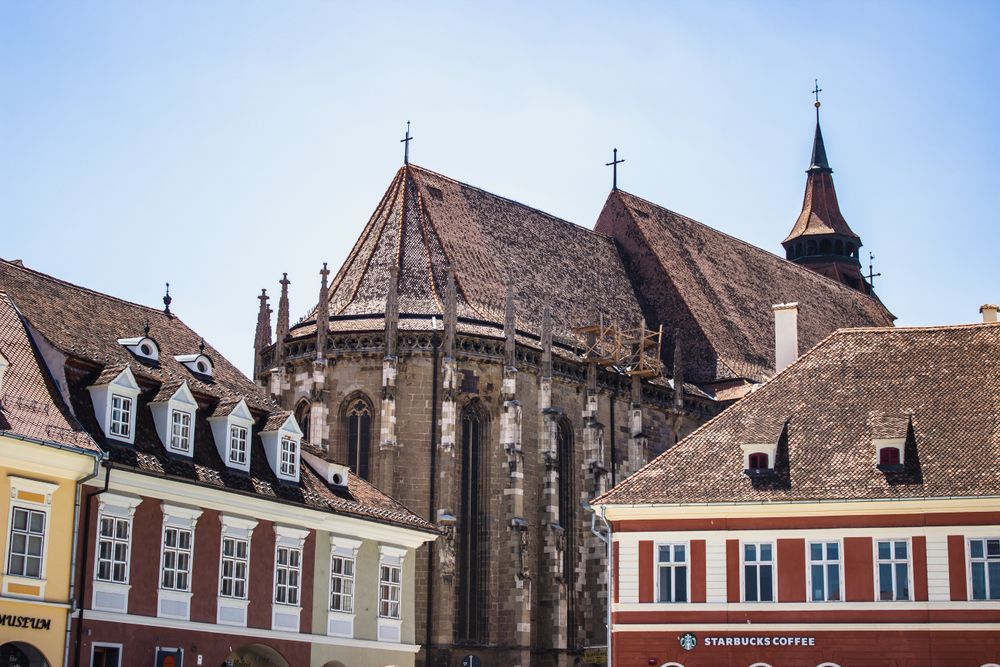
Black Church
Romania's largest gothic church, named for the dark stone of its walls. Inside hang more than a hundred Ottoman rugs given by Saxon merchants. It opens at ten from Tuesday to Saturday and at noon on Sunday and Monday, and tickets are sold at the shop across the road.
-
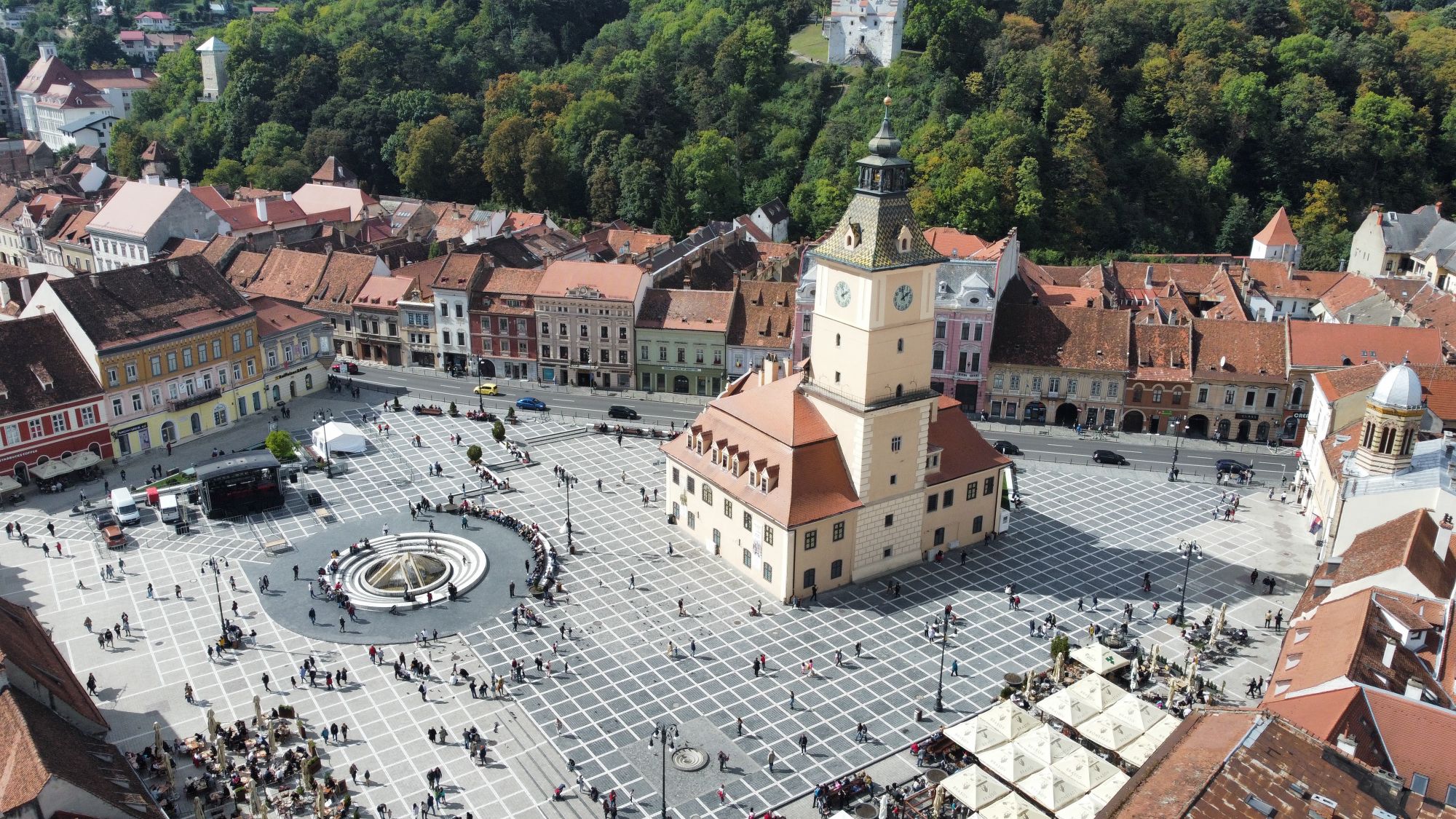
Brașov County History Museum
The town's history museum, inside the Council House in the middle of the main square. The display runs through the town's history in order, and the windows look out on the town from every side.
View more → -
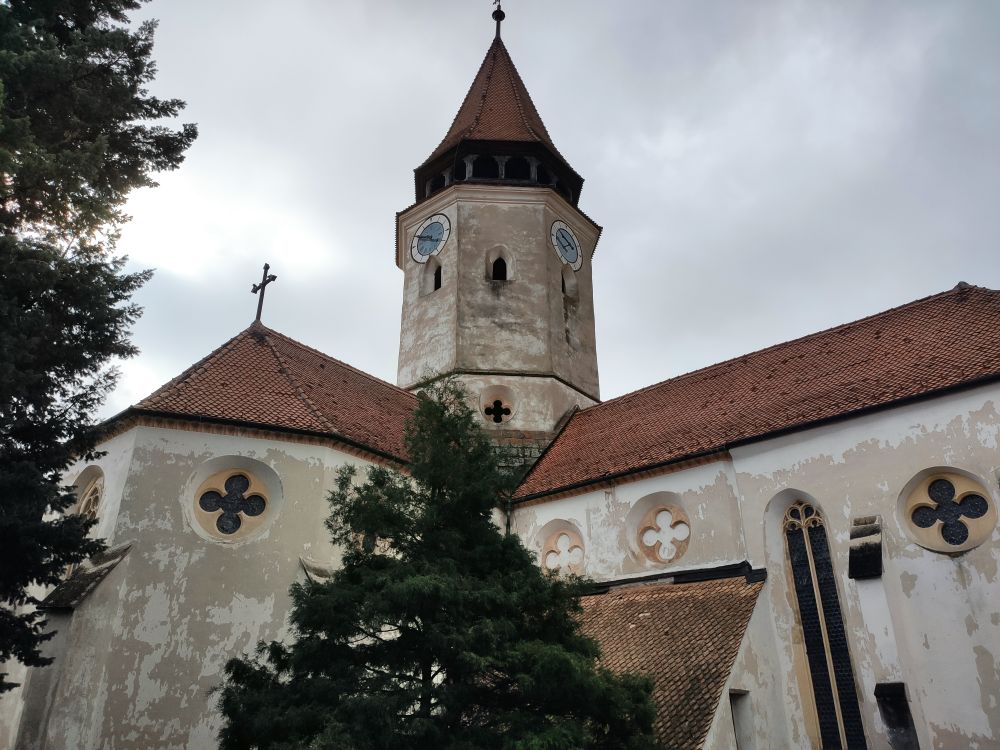
Prejmer Fortified Church
Seventeen kilometres north-east of Brașov, a village church stands inside a round wall with tiers of small storerooms built into the inside of the wall and reached by wooden stairs. Families sheltered in them during raids, and it is on the UNESCO list with the other fortified churches of Transylvania. Buses from Brașov railway station also serve Hărman, so both fit in one morning.
-
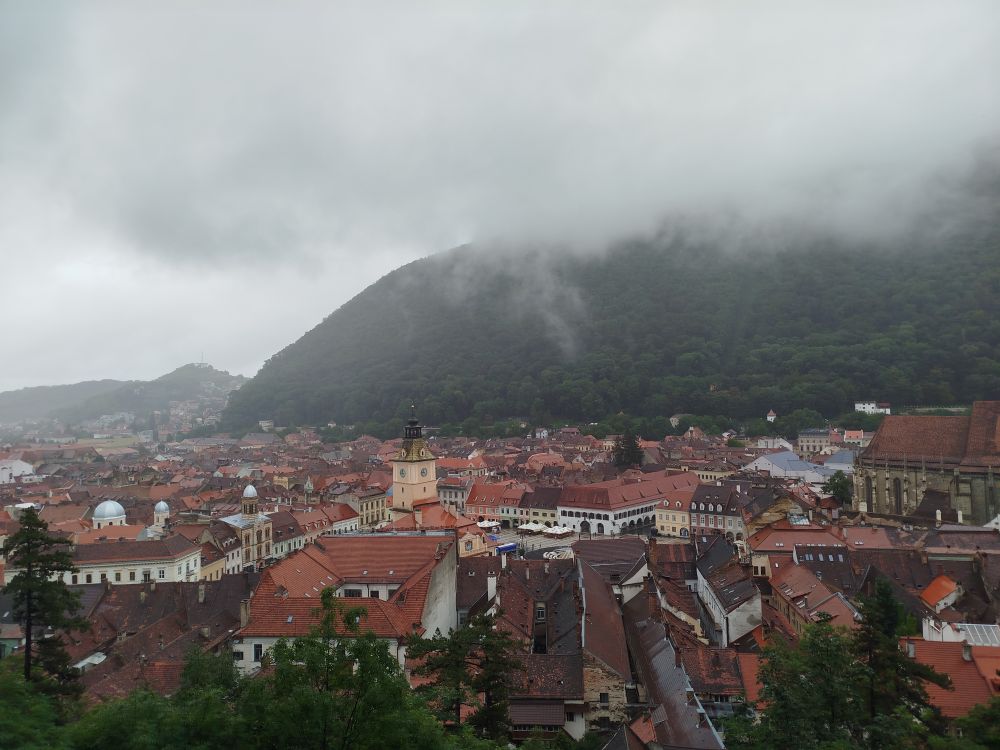
Tâmpa
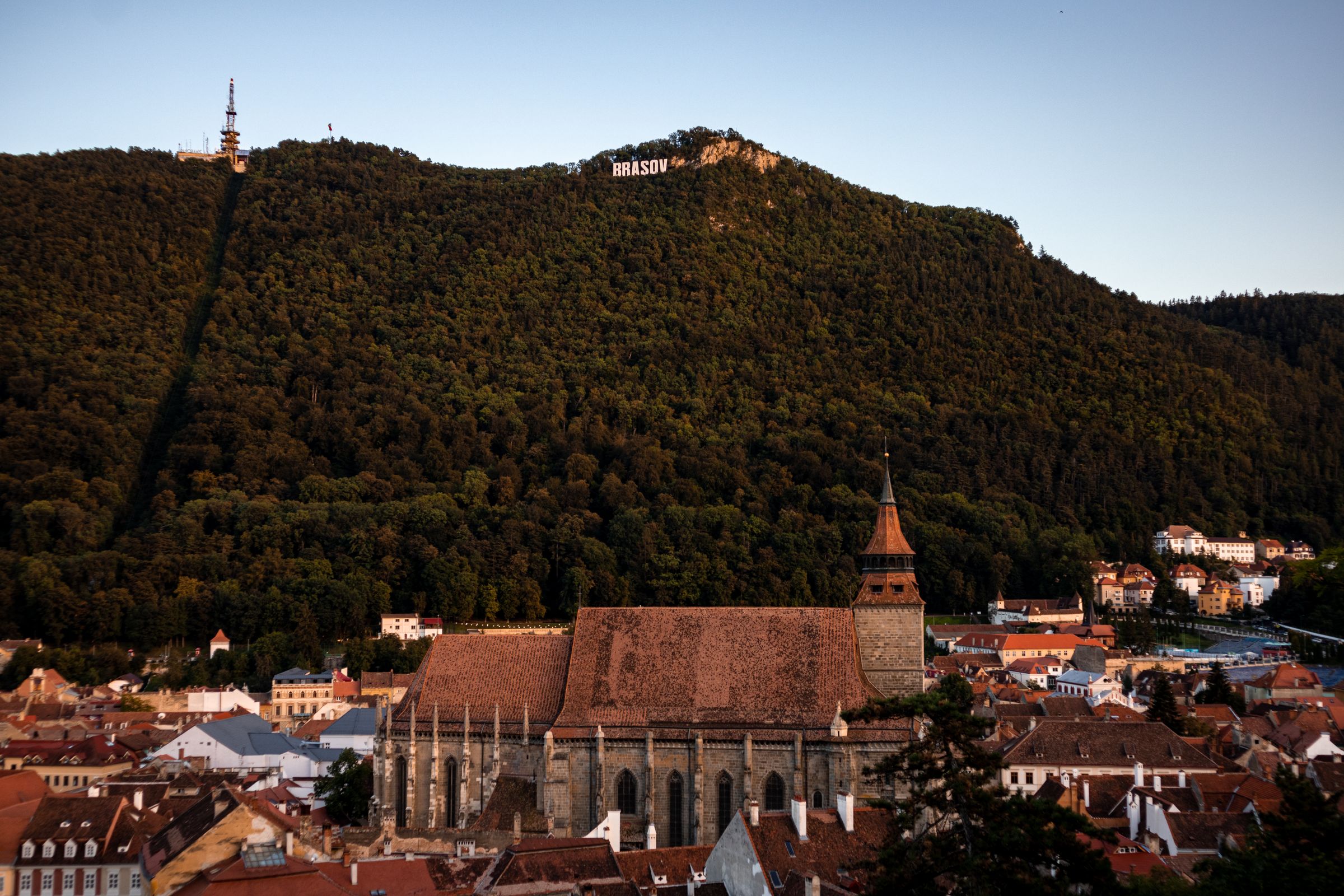
The forested mountain directly above the old town, with a cable car up the north face and a zigzag footpath that takes under an hour. The footpath starts behind the Weavers' Bastion, and the cable car queues at summer weekends. The whole walled old town is laid out below the summit, with the Black Church in the middle of it.
-
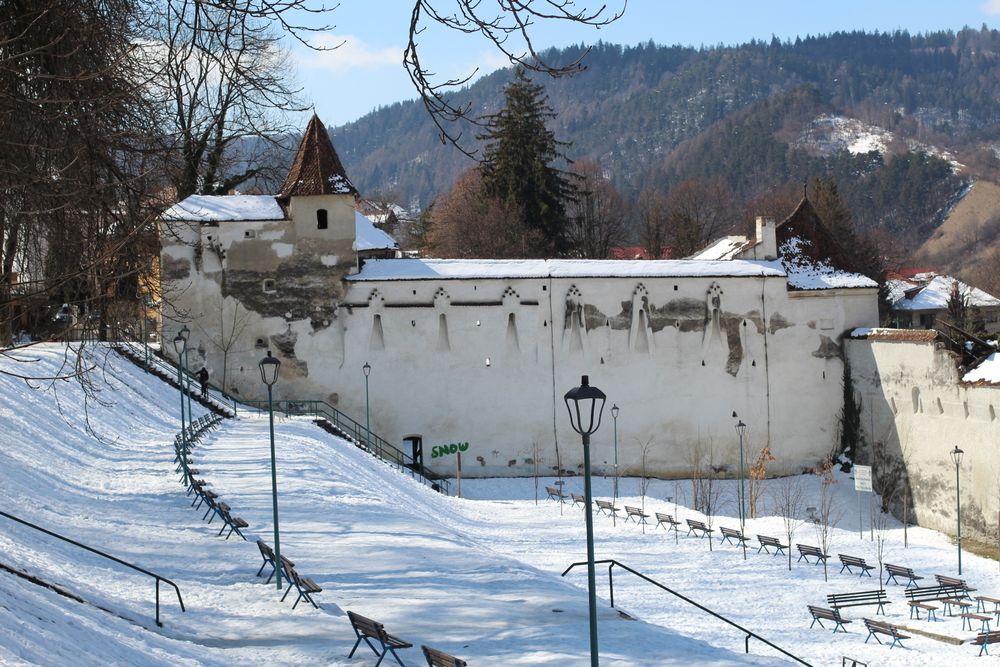
Weavers' Bastion
The only bastion in the town walls open to visitors, a six-sided tower with four tiers of wooden galleries round a cobbled yard. It holds a scale model of the walled town made in 1896, which explains the layout of the old town in a few minutes. It is closed on Mondays, and the footpath up Tâmpa starts just behind it.
-
Black Tower
The White Tower's square twin on the next spur, a five-minute walk along the slope. It was rebuilt after a lightning strike and now has a glass roof. Climb it for the view across to the White Tower and down onto the roofs around the Black Church.
-
Brașov Citadel
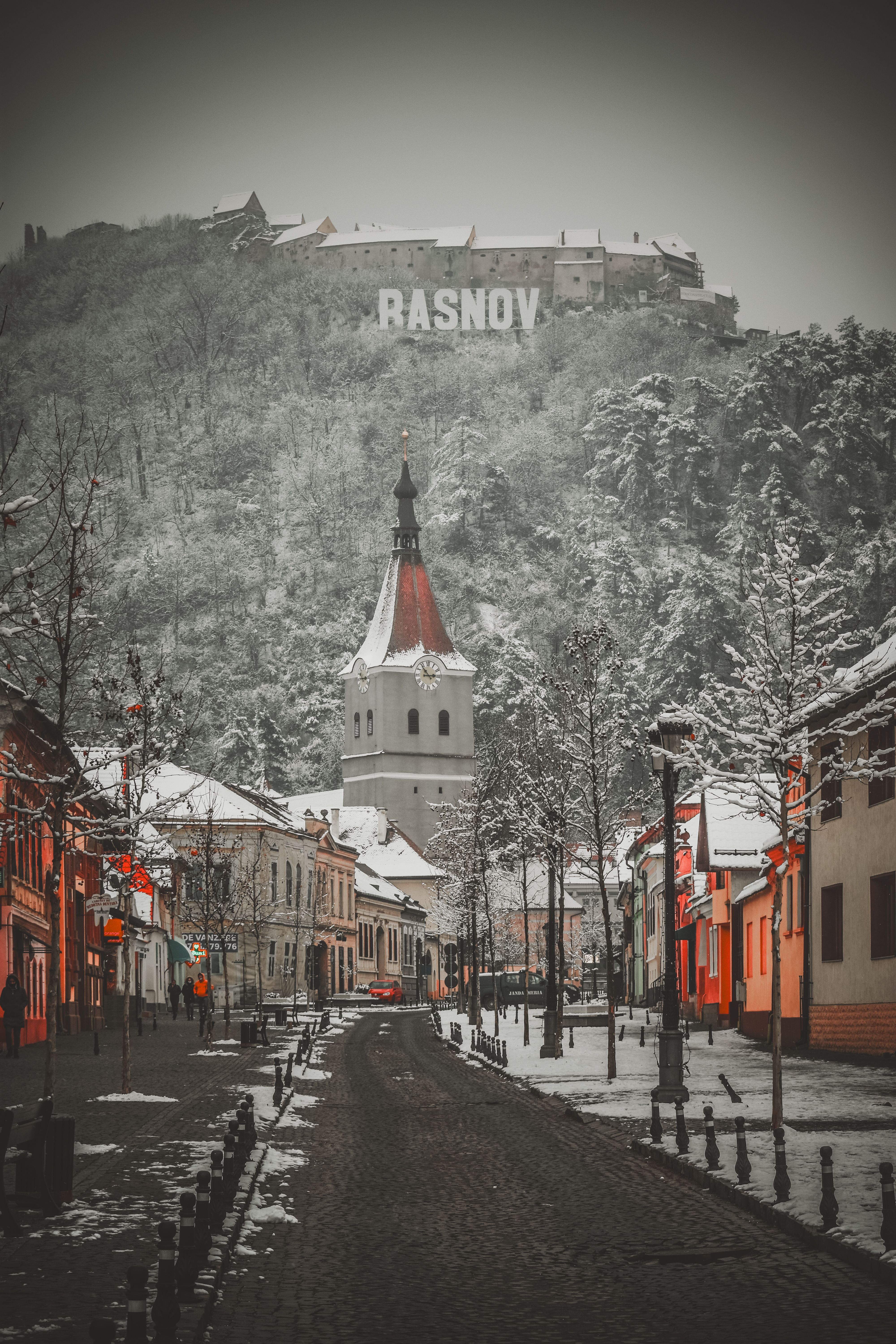
The fortress on Straja hill, just north of the old town, closed to visitors while the city repairs its walls and paths. Its towers are still worth seeing from below. The hill looks across the whole old town to Tâmpa.
-
Casa Wagner
One of the oldest houses on the Council Square, now a small hotel that keeps its vaulted ground floor. The rooms at the front look straight out at the Council House. Everything in the old town is a short walk away.
-
Catherine's Gate
The only original city gate still standing, a slim tower with four corner turrets on the south-western edge of the old town. Walk through it and up the lane to reach the Șchei quarter and St Nicholas Church. The later Șchei Gate stands a few metres away, with a stretch of the old wall between them.
-
Council Square
The old town's main square, ringed by burgher houses in ochre and rose, with the Council House standing alone in the middle. It is busy in every season, and café terraces line it from spring to autumn. The free walking tours start here, and the Black Church stands just off its south-west corner.
-
First Romanian School Museum
A small museum in the courtyard of St Nicholas Church in the Șchei quarter, holding some of the first books printed in Romanian. It tells the Romanian side of the town's story. It opens daily from nine, and the walk out from Catherine's Gate takes about ten minutes.
-
Hărman Fortified Church
A Saxon peasant fortress ten kilometres out on the plain, its church wrapped in a ring wall with grain stores and family rooms built into the inside. A chapel in the eastern tower keeps a painted Last Judgement. Buses from Brașov railway station take about a quarter of an hour.
-
Postăvarul Massif
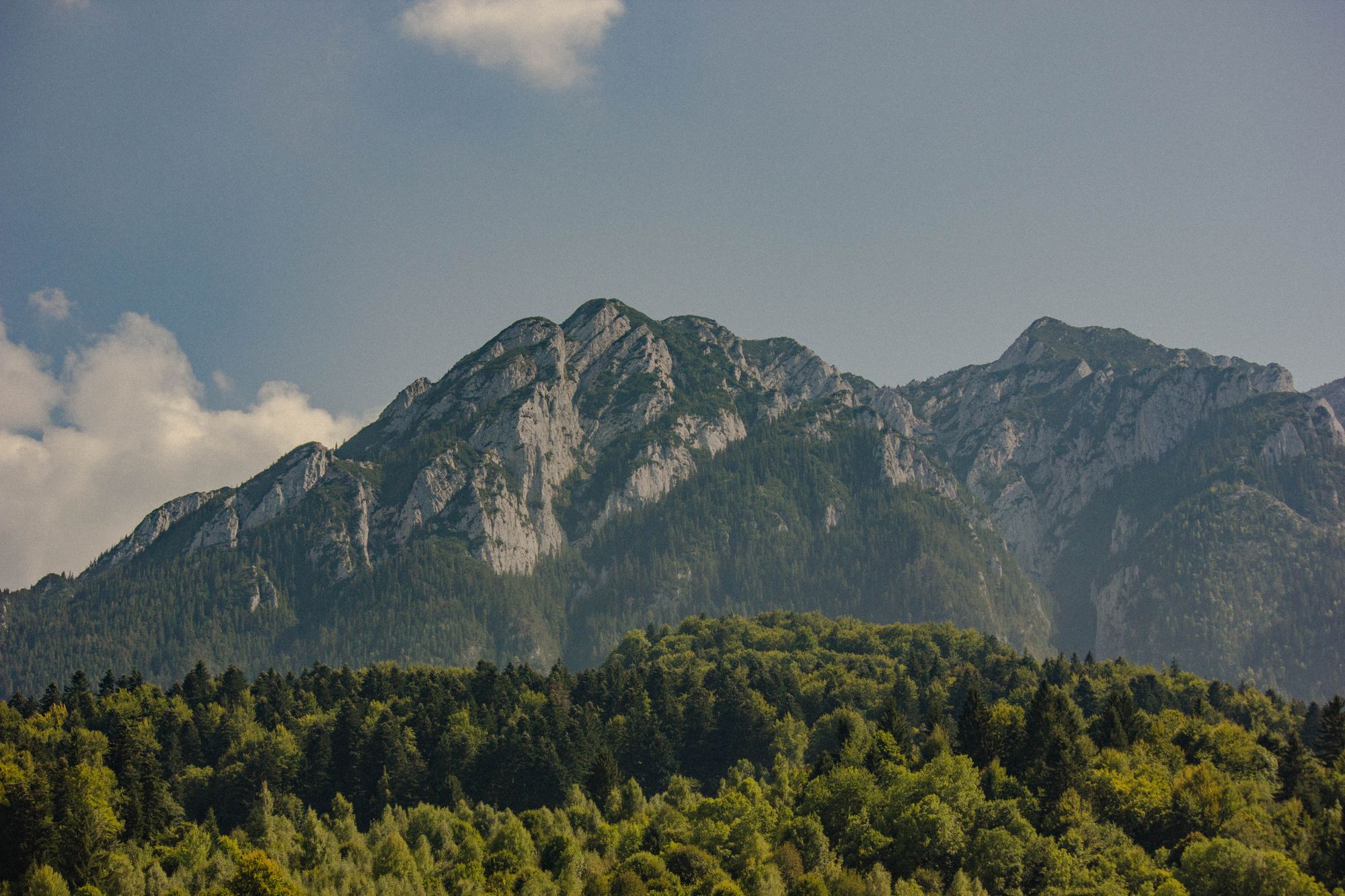
The mountain above Poiana Brașov, with gondolas up from the resort and a ridge walk along the top. It is the town's ski hill in winter and its nearest high summit the rest of the year. The gondola runs in the ski season and on summer weekends, and the path continues along the ridge to Cristianul Mare.
-
Șchei
The Romanian quarter outside the walls, entered through the Șchei Gate and climbing a valley under Tâmpa. At its centre stands St Nicholas Church, with the First Romanian School in the churchyard. The lanes of low houses are much quieter than the old town, and an hour on foot covers them.
-
Seven Ladders Canyon
A narrow limestone gorge in the Piatra Mare massif, climbed on metal ladders and walkways beside seven small waterfalls. The canyon is 160 metres long and rises about 58 metres, and the walk in from the road at Timișu de Jos takes about an hour. It closes in winter, entry is cash only, and weekends are busy.
-
White Tower
A half-round watchtower on the rock above the Graft bastion, reached by a long flight of steps from the path along the walls. It was a lookout outside the walls. Climb it for the view down onto the roofs.