Things to do
28-
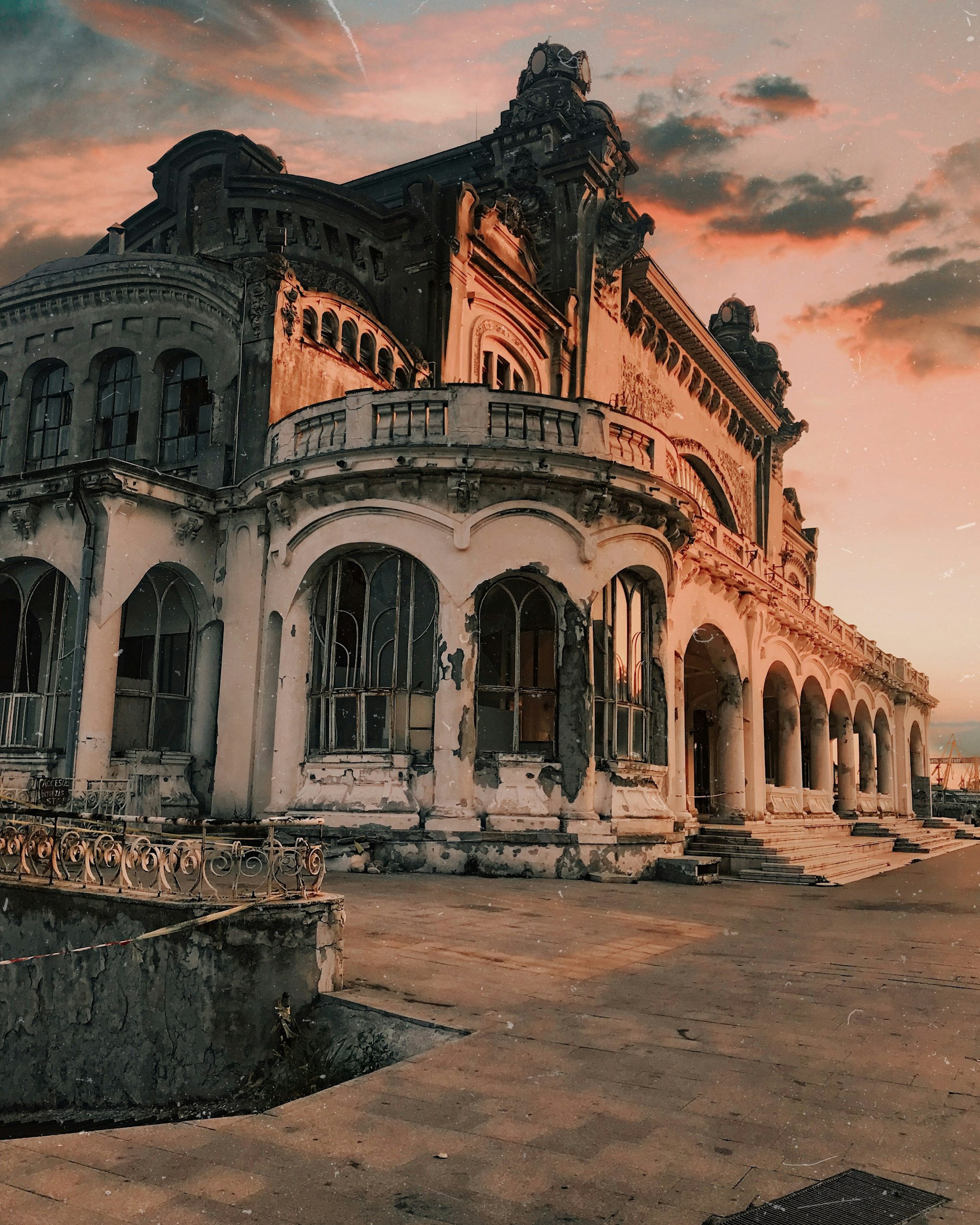
Constanta Art Museum
The city art collection, strong on the Romanian painters who worked on this coast, in a building on the boulevard above the old town.
-
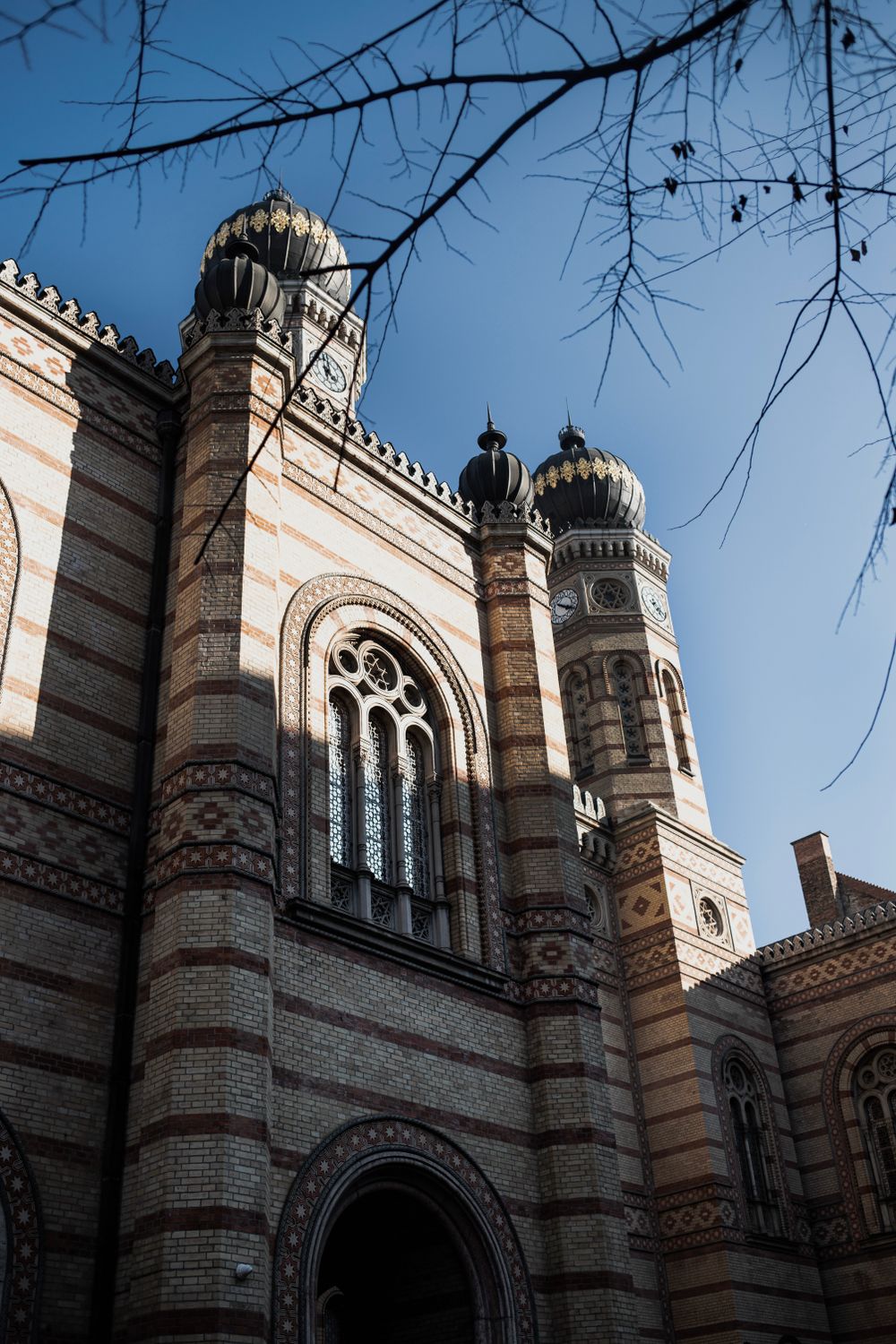
Great Synagogue Constanta
An 1911 Ashkenazi synagogue on the peninsula, roofless and fenced, left as it stands. It is the clearest surviving record of a community that was a fifth of the port.
-
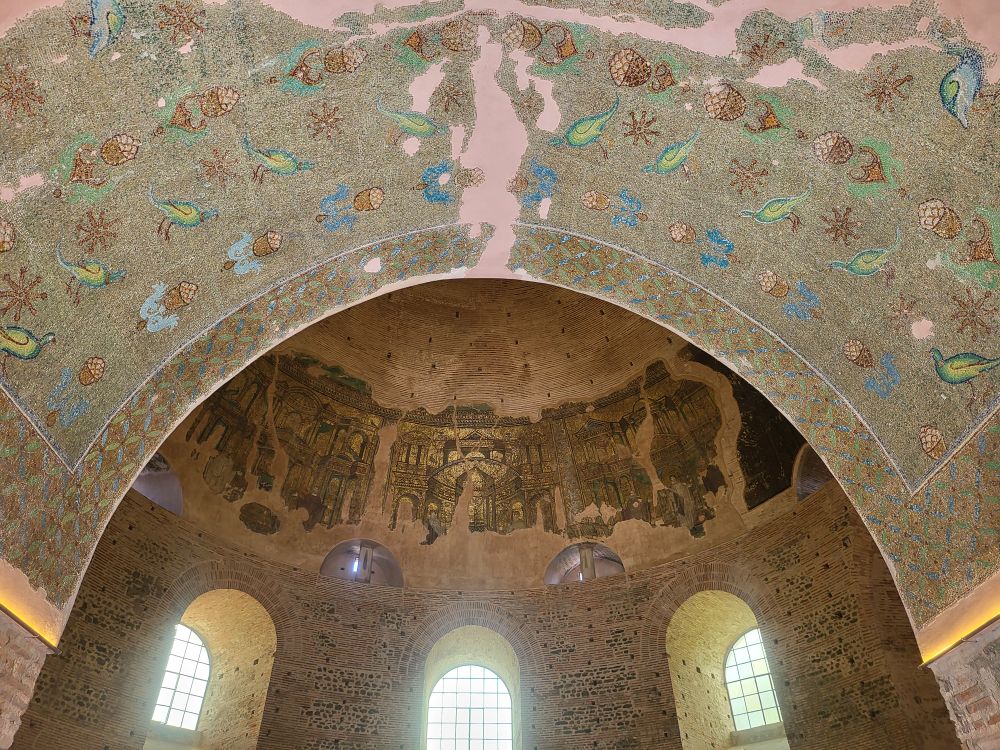
Roman Mosaic Edifice
About 850 square metres of second century mosaic floor from the commercial building that linked the Roman upper town to its harbour, kept under a shed roof where it was found.
-
Archbishops Palace
Beside the Saints Peter and Paul cathedral on the cliff above the port, a brick and stone building of the 1920s houses the archbishopric of Tomis, a see that traces itself to the Greek colony here. Offices occupy most of the interior, so entry is limited to the chapel and the courtyard. The terrace outside gives a clear line along the sea wall.
-
Carol I Old Lighthouse
The 1860 light on the sea wall, disused, standing beside the Genoese one and marking how much the harbour moved in a century.
-
Cathedral of Saints Peter and Paul
The Orthodox cathedral of 1885 above the sea wall, burned in 1941 and rebuilt, in a Byzantine style with a carved iconostasis and a bell tower over the harbour.
-
Constanta Aquarium
An aquarium of 1958 on the seafront below the casino, holding Black Sea and Danube species, which is a narrower and more interesting brief than it sounds.
-
Constanța Casino
An art nouveau casino of 1910 on the sea wall, closed in 1990 and left to the weather for three decades, reopened after a restoration completed in 2024. It is the emblem of the coast and the interior is visitable again. It stands on the cliff walk south of the port, where the sea breaks over the terrace in winter.
-
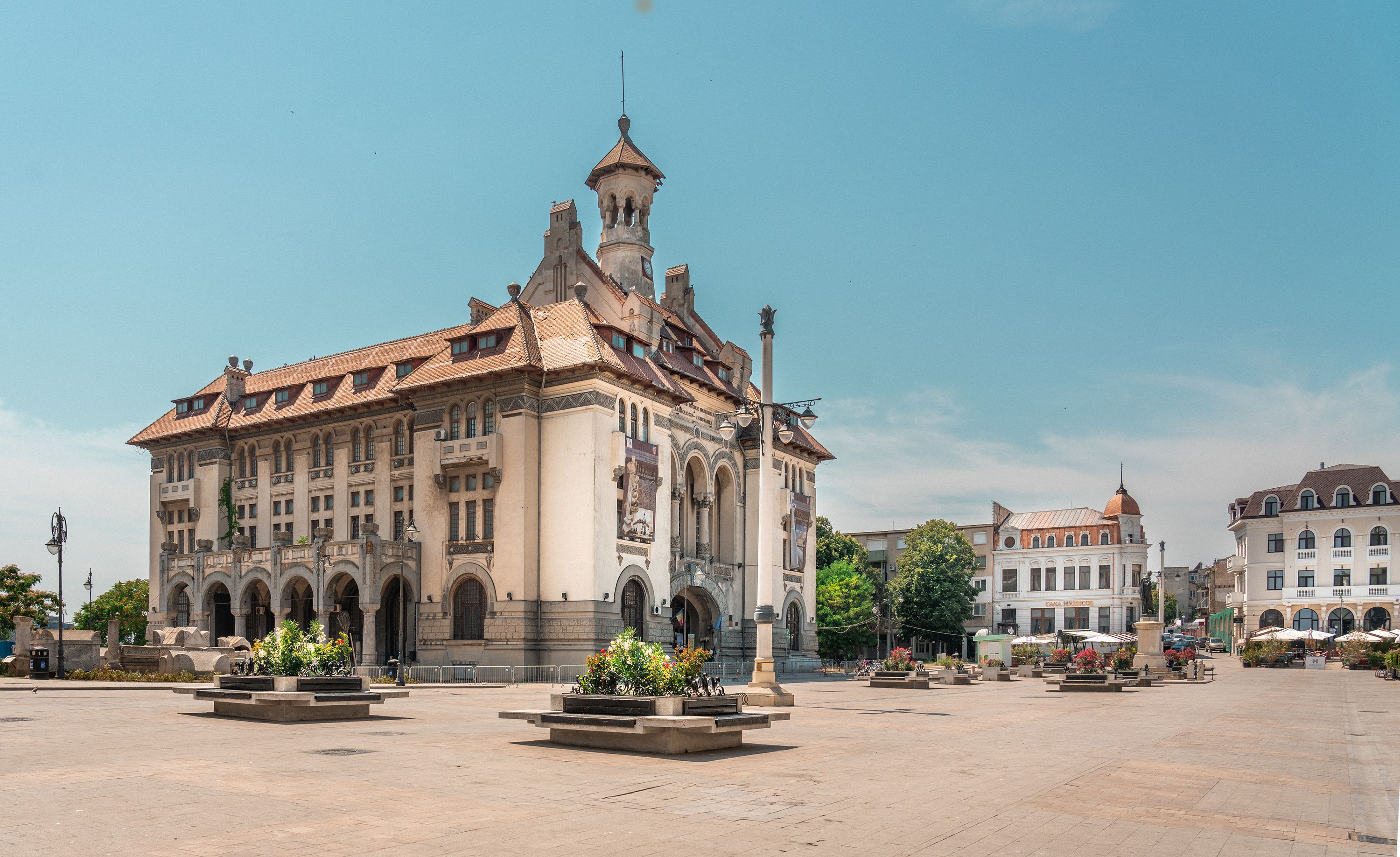
Constanța History and Archaeology Museum
The regional collection covering Greek Tomis, Roman Dobrogea and the medieval province, holding the Glykon serpent and a hoard of statuary found together in 1962. It is the best archaeological museum outside the capital, and the Roman mosaic building beside it is entered on the same ticket.
-
Dormition of the Theotokos Church
An 1885 Orthodox church in the streets behind the peninsula, small, and one of the few nineteenth century buildings the port has left.
-
Faleza Nord
The cliff-top seafront between the old town and Mamaia, residential rather than historic, with the promenade that links the two and the city's ordinary beaches below it.
-
Folk Art Museum
A collection of Dobrogean rural material culture, which is a genuinely different tradition from the Transylvanian and Moldavian ones the country's other museums show.
-
Genoese Lighthouse
A lighthouse of 1860 on the peninsula's point, built by a Genoese company to mark the harbour and disused since 1913. It stands where the ancient port did, ten minutes along the promenade from the museum, and the walk out passes the casino on the sea wall.
-
Grand Mosque of Constanta
The 1910 mosque built for the Muslim community of the Dobrogea, with a 50 metre minaret that can be climbed for the best view over the peninsula and the port. Its prayer carpet came from Ada Kaleh, the Danube island drowned by the Iron Gates dam.
-
Greek Church Constanta
The Greek Orthodox church of 1867, built by the merchant community that ran the grain trade out of this port before the railway came.
-
Histria
The oldest Greek settlement on the western Black Sea, founded about 657 before the common era, abandoned in the seventh century after the harbour silted. Its walls, basilicas and streets stand in a lagoon reserve forty kilometres north, and a museum at the gate explains the plan before the walk.
-
Hunkar Mosque
The older mosque of the peninsula, built in 1868 for the Ottoman garrison and still in use, plainer and much quieter than the one with the minaret.
-
Ion Jalea Sculpture Museum
The work of a sculptor who lost an arm at Marasesti in 1917 and carved for another sixty years, in a nineteenth century house on the peninsula.
-
Lake Siutghiol
The freshwater lake behind Mamaia, separated from the sea by the spit and fed by springs in its own bed, with boats out to Ovidiu island.
-
Mamaia
A sand spit eight kilometres long between the sea and Lake Siutghiol, developed from the 1900s and now the country's main summer resort. The sand is fine and the strip behind it is loud from June to September. Trams and buses run the length of the spit and the lake side is used for water skiing.
-
Mamaia Casino
The 1930s casino on the spit, built when Mamaia was a royal resort rather than a strip, and one of the few old buildings left in it.
-
Natural Sciences Museum Complex
The aquarium, planetarium, dolphinarium and micro-reserve north of the centre, run as one complex, and the reliable wet-afternoon answer here.
-
Ovid Square
The square at the centre of the peninsula, named for the poet exiled here in the year 8 and holding his statue and the archaeology museum.
-
Peninsula
The old town on its own headland, holding the casino, the archaeology museum, the Roman mosaic and the mosque, and small enough to walk end to end in twenty minutes. It empties out of season, which is when it is best.
-
Plaja Modern
The city's own beach at the northern foot of the peninsula, walkable from the old town, and much the quieter of the two.
-
Saint Anthony of Padua Church
Italian stonecutters who worked the port, and the Catholic families who settled alongside them, raised this church in the interwar years, a compact basilica with a square bell tower a short walk from the casino. Mass is said in Romanian and Italian. Opening follows the service times, and the shuttered nineteenth century houses of the quarter justify the walk over.
-
Techirghiol Lake
A salt lake south of the city whose black sapropelic mud has been used as a treatment since the 1890s, and which is saltier than the sea beside it.
-
Tomis Tourist Port
The yacht harbour under the casino, built into the old fishing port, and the best place on the peninsula to look back at the sea wall.