Things to do
20-
Alcazaba of Almería
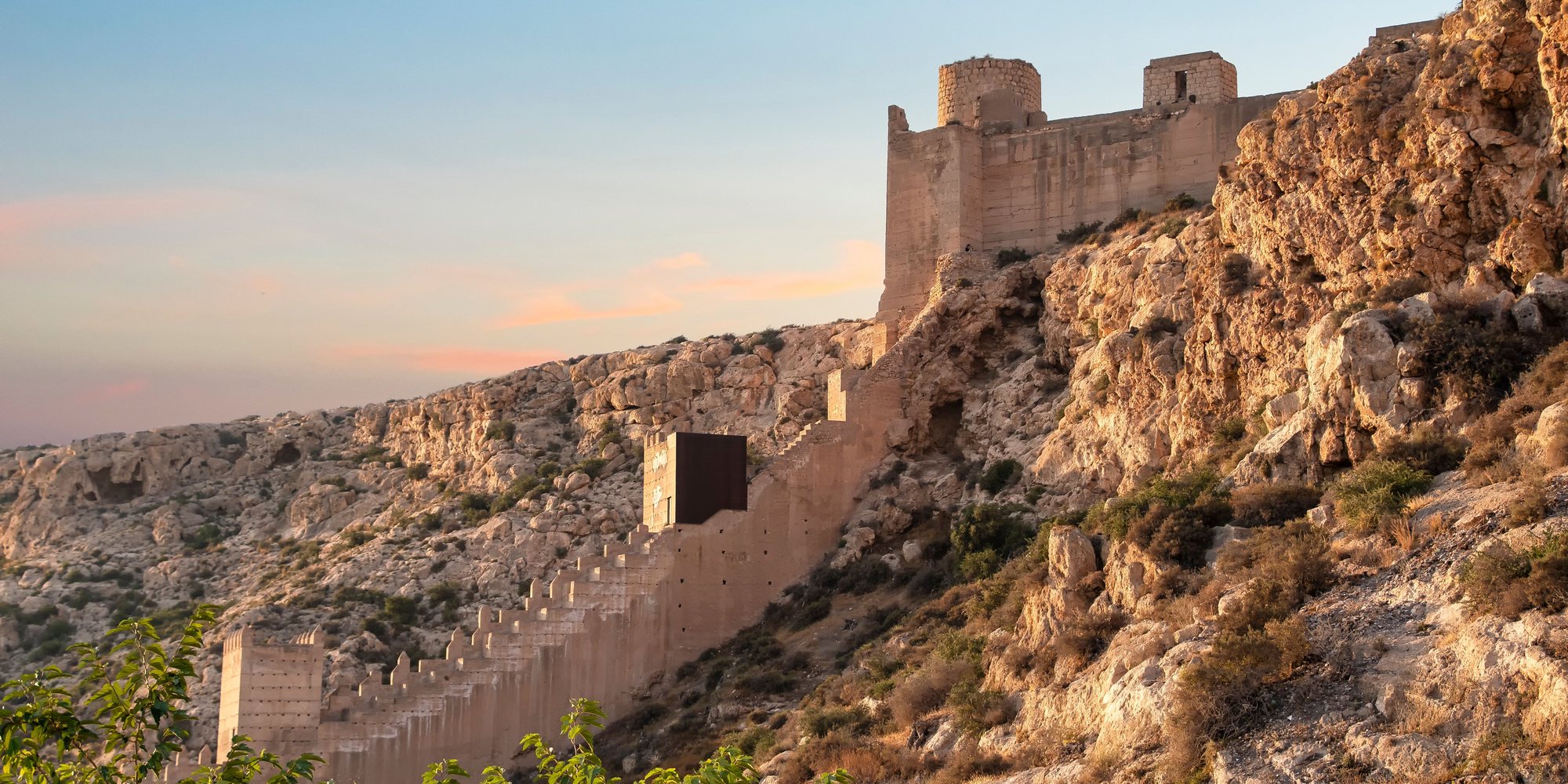
Three walled enclosures climb the ridge above the old town, from terraced gardens with pools and channels to a Christian castle at the top. From the Baluarte del Saliente the view takes in the port, the cathedral and the coast towards Cabo de Gata. Entry is free for EU citizens and ticketed for others, and it is closed on Mondays. The gardens and walls are at their best in the cool of the early morning.
-
Almería Cathedral
Battlements and square corner towers give this cathedral the look of a fort, because it went up while Barbary pirates still raided the coast. Inside are a Gothic nave and carved walnut choir stalls. Entry is ticketed with an audio guide, the tower is a separate ticket, and on Sundays visits open only in the afternoon. The old town's tapas lanes start at its door, around Calle Jovellanos.
-
Cable Inglés
An iron loading dock on stone pillars, built early in the twentieth century to load ore from the inland mines straight onto ships, stands at the western end of the seafront. It has been restored as a raised walkway with a view over the port and the bay. Entry is free, it is open daily until 21:00, later in summer, and the light is best at sunset.
-
Cala de San Pedro
No road reaches this cove: it is a cliff path of about an hour from Las Negras, or a short summer boat ride. A ruined castle stands at the back of the beach, a spring feeds a few trees, and a small community lives in tents and huts in the valley. Carry water and sun cover, since the path has no shade and the cove has no shop.
-
Faro de Cabo de Gata
At the southwestern tip of the park, the lighthouse stands above the Arrecife de las Sirenas, sharp volcanic rocks rising out of clear water. A viewpoint by the road looks straight down on them. The road from the village of Cabo de Gata runs past the salt flats to reach it. Come late in the day, when the low sun lights the rocks.
-
La Isleta del Moro
Fishing boats pull up below this hamlet on a small headland, and its rocky islet can be reached on foot. The water off the rocks is very clear and suits snorkelling and diving, and a few fish restaurants look over the boats. Buses run here from the Estación Intermodal in Almería, less often than to San José. The beach and old fort of Los Escullos are a short walk south.
-
Las Negras
A white village on a pebble bay under a dark volcanic hill, quieter and smaller than San José. From the north end of the beach a footpath of about an hour climbs over the cliffs to Cala de San Pedro, and boats run there in summer. Small seafront bars and dive centres line the front, and the bay is calm for swimming.
-
Mercado Central
Fish and shellfish fill the lower hall of this iron-and-brick market halfway up the Paseo, with fruit, cheese, ham and spice stalls on the floor above. Go in the morning, when the catch is out on the counters; the stalls wind down after lunch and stay shut on Sundays. It is the place to see what the tapas bars will be serving that night.
-
Museum of Almería
Finds from Los Millares, a copper-age walled settlement in the hills to the north, and from the bronze-age culture of El Argar fill a modern building near the station. A tall cut-away column of earth at its centre shows the layers of a dig. It is rarely busy, suits the hottest hours of the day, and is closed on Mondays.
-
Níjar
Pottery workshops line the lower street of this white hill village at the foot of the Sierra Alhamilla, selling glazed bowls and the striped rag rugs called jarapas, woven on hand looms. Lanes climb to a church with a carved wooden ceiling and to a lookout over the plain and the sea. It makes a cooler stop on the way to the coast.
-
Oasys MiniHollywood
Sergio Leone's western town, built in the desert for his films, now runs as a theme park, with staged bank robberies and gunfights in the main street at set times, a saloon show and a zoo behind it. A pool opens in summer. Plan the day around the show times posted at the gate, and bring hats and water against the desert sun.
-
Playa de El Zapillo
East of the centre, the city beach runs along a palm promenade, with grey sand mixed with small stones and calm, shallow water. Beach bars and restaurants line the walk, and it is about twenty minutes on foot from the Paseo. It suits a swim between sights; the clearer water and empty coves are out in the Cabo de Gata park.
-
Playa de los Genoveses
Golden sand curves for a kilometre around a bay with low dunes and no buildings behind it, closed off by a rocky headland at each end. The water is shallow and calm. In summer the car park takes only a set number of cars and shuts when full, so walk over from San José or take the beach bus. Carry water and shade, since there is nothing to buy on the sand.
-
Playa de Mónsul
Grey volcanic rock shapes this small beach: a lava tongue frozen into an overhang, a large boulder on the sand and a high dune at one end. Scenes from Indiana Jones and the Last Crusade were filmed here. Snorkelling is good along the rocks. Summer car access is limited, as at Genoveses, and the beach bus from San José stops here.
-
Plaza Vieja
An arcaded square of white houses behind the red-trimmed town hall, a few minutes from the cathedral. The lanes between the two, Calle Jovellanos among them, hold the old town's tapas bars. Each beer or wine comes with a free tapa picked from a list, so name it when the drink is ordered. The bars are fullest from 21:00, and many shut between lunch and evening.
-
Refugios de la Guerra Civil
More than 4 km of air-raid tunnels run under the Paseo de Almería, dug by the townspeople during the Civil War bombing. The guided visit walks about 1 km of them, past a small operating theatre and the old storerooms. Tours are in Spanish only, must be booked ahead and do not run on Mondays. The entrance is on Plaza Manuel Pérez García, just off the Paseo.
-
Rodalquilar Gold Mines
Concrete tanks and stairways of an abandoned gold plant climb a bare hillside above the village of Rodalquilar, inside an old volcanic crater. Walk up the long stairway, or drive to the top level and walk down through the ruins. The old shafts themselves are sealed. Come early or late, as there is no shade, and add the small geology museum in the village.
-
Salinas de Cabo de Gata
Working salt pans lie behind the beach between the village of Cabo de Gata and the lighthouse, and flamingos feed in the shallow pools for much of the year, with avocets and other wading birds. Hides beside the road look over the water. Bring binoculars, and come early or late in the day, when the birds are feeding and the heat haze is low.
-
San José
Small and whitewashed, this resort at the southern end of the Cabo de Gata park is the usual base for its beaches. The village beach is plain, but Genoveses is about half an hour away on foot over the headland, and from July to September an hourly beach bus runs on to Mónsul. Buses from the Estación Intermodal in Almería take under an hour.
-
Tabernas Desert
Bare badlands of eroded clay ridges and dry riverbeds spread north of the city, where the spaghetti westerns were shot and parts of Lawrence of Arabia were filmed. Roadside viewpoints and marked trails cross it, and 4x4 tours reach gullies that ordinary cars should not try. Summer days pass 40 degrees, so come in spring or autumn and start early.