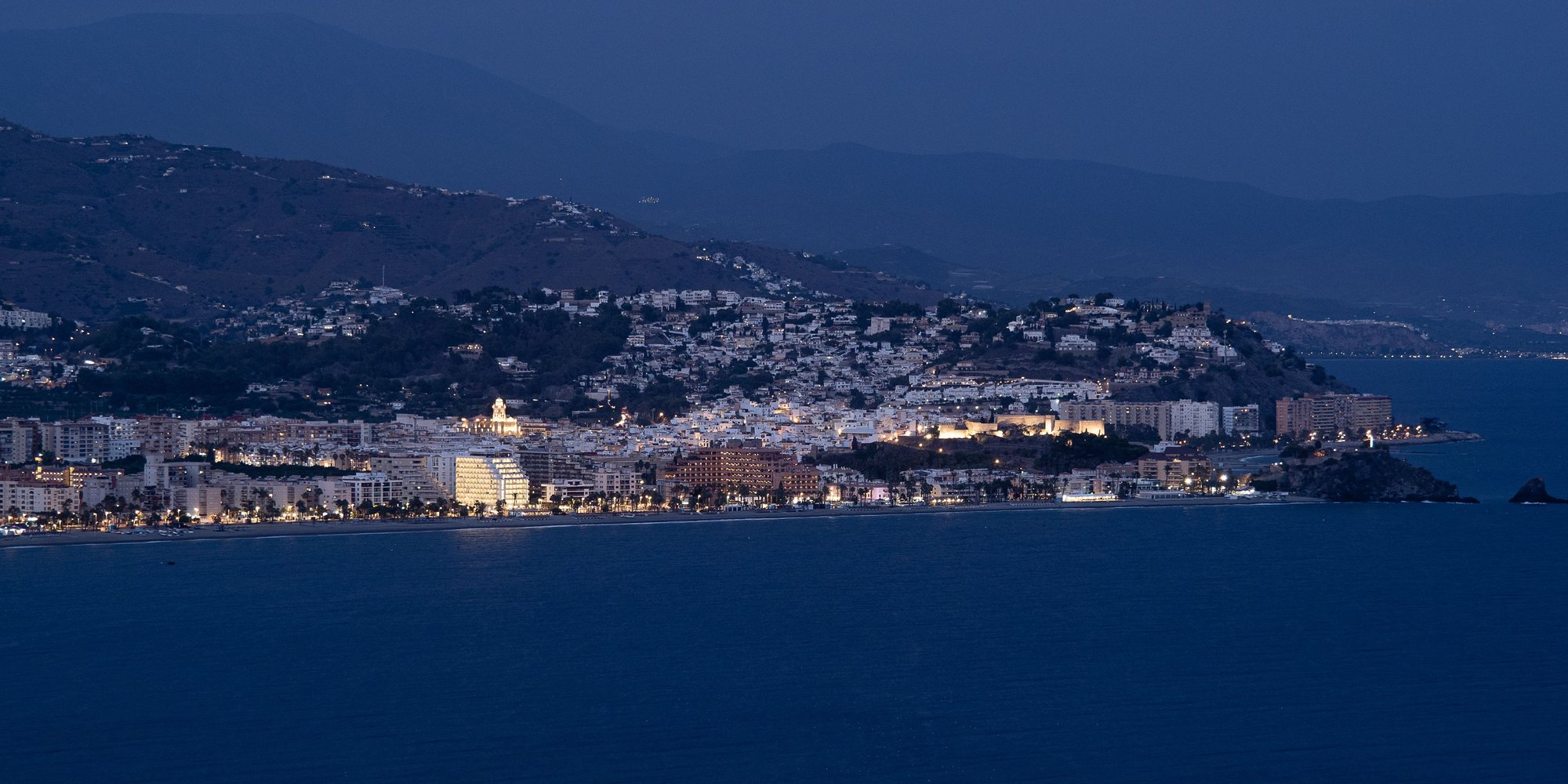
Things to do
14-
Ruins
Acueducto romano de Sexi
Brick and stone arches of a Roman aqueduct, built in the first century AD, still stand in several stretches along the Río Seco and the Río Verde. The section by the bus station is a short walk from the centre. The tallest run, at Torrecuevas on the road up the Río Verde valley, makes a good stop on the drive inland, and both are free to see.
-
Castle
Castillo de Salobreña
A Moorish castle on top of a rock in Salobreña, a white town about a quarter of an hour east of Almuñécar along the coast. Lanes of whitewashed houses and bougainvillea climb to it past a sixteenth-century church built on the old mosque. The walk up is steep and hot in summer, and a local bus climbs from the lower town. Allow a morning.
-
Castle
Castillo de San Miguel
A fortress on the hill above the old town, rebuilt over Phoenician, Roman and Moorish walls, with a dungeon, cisterns and the dug-out remains of a Nasrid palace. The ramparts look down on both town beaches and the Peñón del Santo. One ticket covers the castle and the Cueva de los Siete Palacios museum; both close from early afternoon until the evening, all Sunday afternoon and all Monday.
-
Museum
Cueva de los Siete Palacios
A vaulted Roman cellar under the old town, a short walk below the castle, now holds the town's archaeological museum. Phoenician grave goods, Roman amphorae for oil and wine, and an Egyptian alabaster vase found in a local tomb fill a few low rooms. Entry is only on the combined castle ticket, and the museum closes on Mondays.
-
Church
Iglesia de la Encarnación
A large brick parish church in the middle of the old town, finished in the early seventeenth century and counted as the first Baroque church in Granada province. Inside stands the image of the Virgen de la Antigua, the town's patron. The doors are usually open only around the evening and Sunday Masses, so time a visit for then.
-
Village
Jete
A white village in the Río Verde valley, a short drive inland, surrounded by terraced orchards of custard apple, avocado and mango. The road up from the coast passes the tallest arches of the Roman aqueduct at Torrecuevas. Custard apples ripen from October to spring, when roadside stalls and village shops sell them, and the old road continues over the hills towards Granada.
-
Village
La Herradura
A former fishing village on a horseshoe bay between two headlands, Punta de la Mona and Cerro Gordo, a short drive west of Almuñécar. The protected seabed makes it the coast's base for diving, and guided kayak and snorkel trips leave from the west end of the beach for the Cerro Gordo cliffs. Its sandy beach is calmer and quieter than the town's.
-
Waterfront
Marina del Este
A small yacht harbour tucked into the Punta de la Mona headland, between Almuñécar and La Herradura. Dive schools run beginner courses in its sheltered water, two to twelve metres deep, and experienced divers drop down the wall off the point. Sailing and boat trips start here too. The road down from the headland is steep and narrow, and parking is limited in August.
-
Palace
Palacete de La Najarra
A pink nineteenth-century mansion built in the Nasrid style, with horseshoe arches, a tiled courtyard and a small walled garden of fountains and palms. It houses the tourist office, so a visit is free and comes with maps of the old town. It sits on the edge of the old quarter, a few minutes below the castle, and makes a sensible first stop.
-
Garden
Parque Botánico El Majuelo
Palms, bamboo and subtropical trees from several continents grow at the foot of the castle hill, around the stone tanks of an ancient fish-salting works where Roman Sexi made its garum sauce. Entry is free, the gates stay open into the evening, and the castle walls are floodlit above the garden after dark. Summer concerts are staged in the park.
-
Viewpoint
Peñón del Santo
A rock crowned by a white cross divides the San Cristóbal and Puerta del Mar beaches. Steps climb from the promenade to a lookout over both bays, the castle and the mountains behind the town, and it is a favourite spot for sunrise and sunset. At its foot stands a statue of the Umayyad prince who landed on this shore in 755 and went on to rule Córdoba.
-
Beach
Playa de Cantarriján
A cove under the Cerro Gordo cliffs on the Málaga border, inside the Maro-Cerro Gordo protected coast. One end is a long-established naturist beach, and swimsuits are welcome too. The car park is on the old coast road above. In summer, roughly June to September, cars are barred from the track and a shuttle minibus runs down; out of season the road can be driven closer or walked down in about fifteen minutes.
-
Beach
Playa de San Cristóbal
The town's main swimming beach runs west from the Peñón del Santo below a palm-lined promenade. It is grey pebble rather than sand, so water shoes help on the way in, and the water is clear a few steps out. Beach bars along the promenade grill sardines on skewers over open fires. Locals come down in the evening to watch the sun set behind the Peñón del Santo.
-
Beach
Playa Puerta del Mar
The beach east of the Peñón del Santo sits right below the old town, a few minutes on foot from the castle and El Majuelo. Coarse grey sand and pebbles shelve quickly into the sea, and a promenade of cafés and ice-cream shops runs behind it. On 16 July the Virgen del Carmen procession carries the image out to sea in fishing boats from here.